How Are Flavors and Fragrances Made?

🌿 How Are Flavors and Fragrances Made?

An Inside Look at the Science Behind Scent and Taste — With FY’s Expertise in Action Flavors and Fragrances
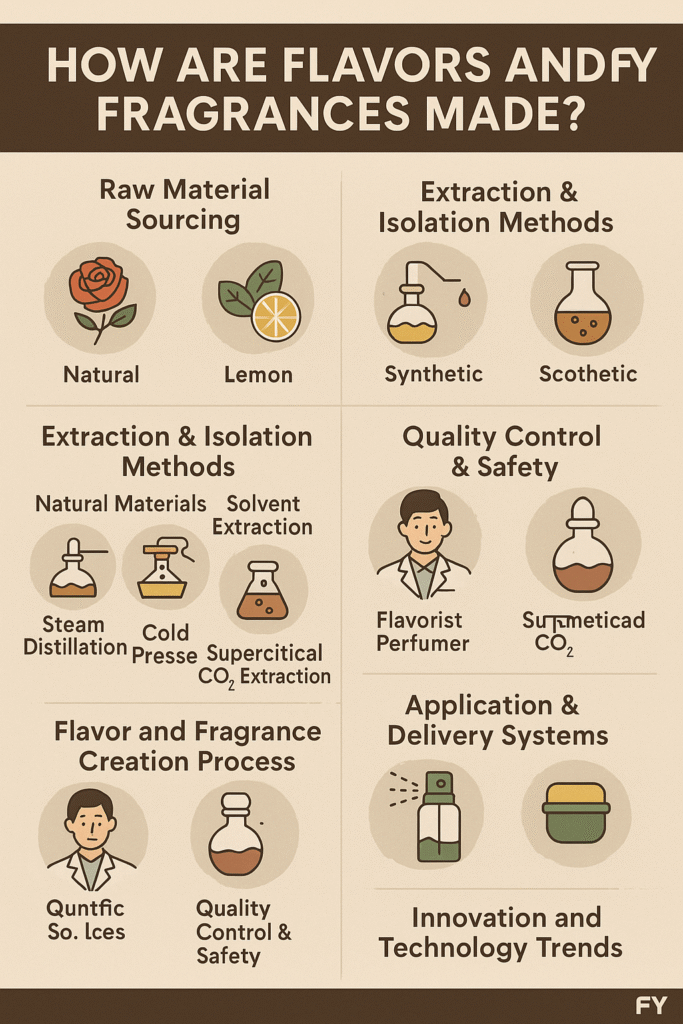

1️⃣ Introduction: Where Science Meets Sensory Experience

Every time you savor a juicy peach-flavored candy or inhale the fresh aroma of your fabric softener, you’re engaging with the work of flavorists e perfumers—the creative scientists behind the world of flavors and fragrances.

Em FY, a global supplier of B2B fragrance and flavor solutions, we decode, design, and deliver scents and tastes that drive consumer emotion and brand loyalty — all with innovation, safety, and scale in mind.

So how exactly are these magical compounds made? Let’s dive in.


2️⃣ Raw Material Sourcing: From Nature or Labs

Whether for flavor or fragrance, production begins with raw materials — and choosing the right ones is both an art and a science.

🔸 Flavors

  • Natural Sources: fruits, herbs, spices (e.g., vanilla beans, mint, citrus peel)
  • Nature-identical: compounds derived via fermentation (e.g., vanillin from rice bran)
  • Artificial: synthesized compounds not found in nature but safe and functional

🔸 Fragrances

  • Óleos essenciais: extracted from botanicals like lavender, rose, or sandalwood
  • Aroma molecules: lab-created compounds like Hedione ou Iso E Super
  • Animalic notes: historically used ambergris or musk — now largely synthetic

🔬 At FY, we carefully vet all raw materials for safety, performance, and regulatory compliance — including IFRA, REACH, and regional food safety standards.


3️⃣ Extraction & Isolation Methods

Different materials require different extraction techniques to preserve aroma or taste integrity:

  • Steam Distillation: used for essential oils (e.g., eucalyptus, lemon oil)
  • Cold Pressing: used for citrus oils like lime or bergamot
  • Solvent Extraction: for fragile flowers like jasmine or tuberose
  • CO₂ Supercritical Extraction: high-purity, solvent-free, eco-friendly
  • Fermentation & Bioconversion: emerging biotech solutions for sustainable aroma molecules

FY integrates green extraction technologies to minimize environmental impact while maintaining ingredient purity.


4️⃣ Chemical Synthesis for Consistency & Innovation

Many modern flavors and fragrances are synthetic — not due to cost-cutting, but because they are:

  • More stable
  • Easier to scale
  • Consistent batch-to-batch
  • Safer when allergens or instability are an issue

Example:

  • Ethyl vanillin (synthetic): 3x stronger than natural vanillin, often used in vanilla flavors
  • Linalool (synthetic or natural): a lavender-scented compound common in soaps

FY’s R&D team uses GC-MS analysis and digital scent mapping to design both synthetic e nature-identical solutions tailored to market needs.


5️⃣ Formulation & Blending: The Art of Balance

At the heart of every flavor or fragrance is a carefully crafted formula.

➤ Fragrance Blending

Perfumers at FY balance top, hearte base notes using fixatives, carriers, and creative intuition. These formulations are tested in real product bases — from detergents to skin care emulsions — to ensure stability and olfactive performance.

➤ Flavor Development

Flavorists design for:

  • Volatility and release in heat or cold
  • Mouthfeel and sweetness modulation
  • Aftertaste control for beverages, gums, and more

All flavors are evaluated using trained sensory panels and GC-O analysis (Gas Chromatography-Olfactometry).


6️⃣ Encapsulation & Delivery Technologies

To ensure longevity, stability, and targeted release, flavors and fragrances are often encapsulated:

  • Microencapsulação: for laundry beads and detergent scents
  • Spray-drying: for powdered drink flavors
  • Gelatin capsules: for flavor bursts in candies
  • Slow-release beads: for home and air care products

FY offers advanced encapsulation solutions for fabric care, beverages, oral care, and more.


7️⃣ Safety, Compliance & Quality Control

Ensuring safety is non-negotiable. FY rigorously follows:

✅ For Flavors

  • FEMA GRAS certification (U.S.)
  • EU Regulation 1334/2008
  • Organoleptic + toxicological testing
  • Heavy metal & solvent residue analysis

✅ For Fragrances

  • IFRA Compliance (International Fragrance Association)
  • REACH registration (EU)
  • Allergen declarations
  • Stability and compatibility testing across pH, surfactants, alcohol, etc.

8️⃣ FY’s Innovation: Sustainability in Scent & Taste

FY is committed to sustainable manufacturing, including:

  • Using upcycled ingredients (e.g., citrus peel waste into limonene)
  • Offering biodegradable fixatives and green solvents
  • AI-assisted formulation platforms for predictive prototyping
  • Digital GC-MS scent matching for reducing development cycles

From raw material to shelf-ready scent, FY ensures every step is transparent, safe, and built for the future.


9️⃣ Conclusion: The Journey from Molecule to Emotion

Creating a flavor or fragrance is not just about chemistry — it’s about evoking emotion, enhancing product experiencee amplifying brand identity.

At FY, we combine science, artistry, and decades of experience to help brands around the world craft sensory signatures that stick in memory and build loyalty.

📩 Want to co-create your next signature scent or flavor?
Contact FY for custom formulation, sampling, and global regulatory support.


❓ Friendly FAQ Section

🔸 What’s the difference between natural and synthetic fragrances?

Natural fragrances come from essential oils and extracts; synthetics are lab-made molecules. Both can be safe and effective when used correctly.

🔸 Are synthetic flavors safe to consume?

Yes — synthetic flavors like ethyl vanillin are FEMA GRAS-approved and undergo strict food safety testing.

🔸 How does FY ensure fragrance safety?

FY follows IFRA Standards, allergen declarations, and global compliance (REACH, SDS, etc.), with in-house GC-MS and patch testing for formulation integrity.

🔸 Can I request a custom fragrance or flavor from FY?

Absolutely. FY offers tailored scent/flavor design, including sampling, matching, and localized regulatory documentation.


Posts Similares

  • The Science Behind Food Flavoring: How It Affects Taste and Nutrition

    The Science Behind Food Flavoring: How It Affects Taste and Nutrition Introduction Flavor drives choice. From the childhood comfort of banana candy to the savory satisfaction of a rich broth, flavor determines what we buy, what we eat, and often how healthy our diets end up being. But “flavor” is not a single thing —…

  • The Versatility and Application of Orange Flavoring Across Industries

    The Versatility and Application of Orange Flavoring Across Industries 1. Introduction Orange flavoring has become a cornerstone in food, beverage, and wellness formulations due to its vibrant, sweet-tangy citrus profile. From classic sodas to gourmet desserts and modern CBD tinctures, orange flavoring delivers a refreshing taste that resonates globally. As both natural and synthetic flavor…

  • Where Do Flavors Come From?

    Where Do Flavors Come From? Unveiling the Secrets of Modern Taste Creation Introduction: What Is Flavor? Flavor is more than just taste—it’s a multisensory experience combining aroma, taste, and mouthfeel. The sweetness of a candy or the cool freshness of toothpaste comes from meticulously crafted flavor systems. In industries such as food, beverage, oral care,…

  • Exploring the World of Aroma Chemicals

    Exploring the World of Aroma Chemicals Aroma chemicals are everywhere, yet often go unnoticed. They are the unsung heroes behind the scents and flavors we love. These compounds are crucial in creating fragrances and flavors in countless products. From perfumes to food, they play a vital role. Aroma chemicals can be natural or synthetic. Synthetic versions are more common due to their consistency and cost-effectiveness. The fragrance industry relies heavily on these chemicals. They ensure that scents are long-lasting and consistent across products. Flavoring agents, another type of aroma chemical, enhance the taste of food and beverages. They make our favorite treats even more enjoyable. The history of aroma chemicals is rich and fascinating. Ancient civilizations used natural extracts for scenting, laying the groundwork for modern perfumery. Today, the balance between natural and synthetic ingredients is key. This balance creates unique fragrance profiles that captivate our senses. As we explore the world of aroma chemicals, we uncover their impact on our daily lives. They shape our experiences and evoke emotions, making them indispensable.   What Are Aroma Chemicals? Aroma chemicals are specialized compounds used in creating scents and flavors. They are the building blocks of fragrance and flavor industries, essential in many products. These compounds can be derived from both natural and synthetic sources. Natural aroma compounds are extracted from plants or animal products, while synthetic ones are manufactured in labs. Synthetic aroma chemicals offer several advantages. They provide consistency, purity, and often a more cost-effective solution than their natural counterparts. Aroma chemicals are utilized in various applications. This includes perfumes, cosmetics, food products, and even cleaning supplies. They are selected based on their ability to enhance the user experience. Common uses of aroma chemicals include: Perfumes: creating distinctive and lasting scents. Food and beverages: enhancing flavors. Household products: masking odors. Cosmetics: adding pleasant fragrances. The science behind aroma chemicals is complex, involving intricate molecule interactions. This fascinating chemistry allows them to mimic natural scents effectively. A key aspect of their success lies in their ability to evoke emotions and trigger memories. This emotional connection is why aroma chemicals are so effective in marketing.   The History and Evolution of Aroma Chemicals The use of aroma chemicals can be traced back to ancient civilizations. Early societies used natural extracts for incense and personal scenting. During the Renaissance, advances in distillation improved the extraction of aromatic compounds. This period saw the rise of perfumery in Europe, laying the groundwork for modern developments. The 19th century marked a significant shift. Synthetic production techniques expanded the palette of available scents. This innovation revolutionized the industry, leading to mass-market fragrances. In the 20th century, chemistry and technology advanced further. New methods allowed for complex fragrance compositions, combining both natural and synthetic ingredients. Key milestones in aroma chemicals’ evolution include: Ancient times: Use of natural extracts. Renaissance: Improved distillation techniques. 19th century: Introduction of synthetic aroma compounds. 20th century: Complex fragrance formulations. The evolution of aroma chemicals reflects broader trends in science and technology. It has continually adapted to consumer preferences and industry demands. Today, the focus is on sustainability and innovation. Efforts are underway to create eco-friendly processes and new, sustainable aroma compounds. by Emile Mbunzama (https://unsplash.com/@emilembunzama) Natural vs. Synthetic Aroma Chemicals Aroma chemicals can be either natural or synthetic. Each type offers unique attributes and advantages in fragrance and flavor production. Natural aroma compounds are derived from plant and animal sources. Essential oils and extracts provide natural scent profiles. These compounds are often favored for their purity and aromatic qualities. Synthetic aroma chemicals, however, are created in laboratories. They replicate both familiar and novel scents. This method allows for cost-effective production and greater scent variety. Choosing between natural and synthetic aromas involves several considerations. Factors include cost, availability, scent longevity, and consumer preferences. Many products today blend both types for optimal results. Key differences between natural and synthetic aroma chemicals include: Natural: Sourced from plants and animals. Synthetic: Lab-created, often more consistent and durable. Scent Profile: Natural for purity, synthetic for variety. Cost: Natural can be pricier; synthetic is more economical. Availability: Natural sources can be limited. The balance between these two forms of aroma chemicals is crucial. It influences fragrance formulation and appeals to diverse consumer needs. Ultimately, the choice depends on the desired product attributes and market trends. Both natural and synthetic types continue to play vital roles in the industry. by Ela De Pure (https://unsplash.com/@eladepure) Key Types of Fragrance Compounds and Flavoring Agents Fragrance compounds are essential elements in perfumery and flavoring. They provide unique scent and taste profiles, enhancing product appeal. Esters are a common type of fragrance compound. They offer fruity and floral scents. Widely used in perfumes, they provide fresh, sweet aromas. Aldehydes are another vital group. They contribute to fresh and citrusy scents. Found in many household and personal care products, they bring a lively aroma. Ketones are notable for their versatility. They range from sweet to woody scents. Ketones add depth and complexity to many fragrances and flavors….

  • Exploring Global Cuisine: A Journey Through Flavour Food Traditions

    Exploring Global Cuisine: A Journey Through Flavour Food Traditions Flavour food traditions are a window into the soul of a culture. They tell stories of history, geography, and climate. Each region offers unique flavor combinations that reflect its identity.Natural food flavours come from herbs, spices, and fruits. These elements create the foundation of many global…

  • Microcapsule Technology and Its Application in Laundry

    Microcapsule Technology and Its Application in Laundry 1. Fundamentals of Microencapsulation Technology 1.1 Definition of Microcapsules Microcapsules are microscopic containers (size range: 10 nm–1000 μm) that encapsulate active ingredients (core materials) within polymeric walls via physical or chemical methods. Core value propositions include: Isolation & Protection: Prevent oxidation, volatilization, or degradation of core materials (e.g.,…

Deixe um comentário