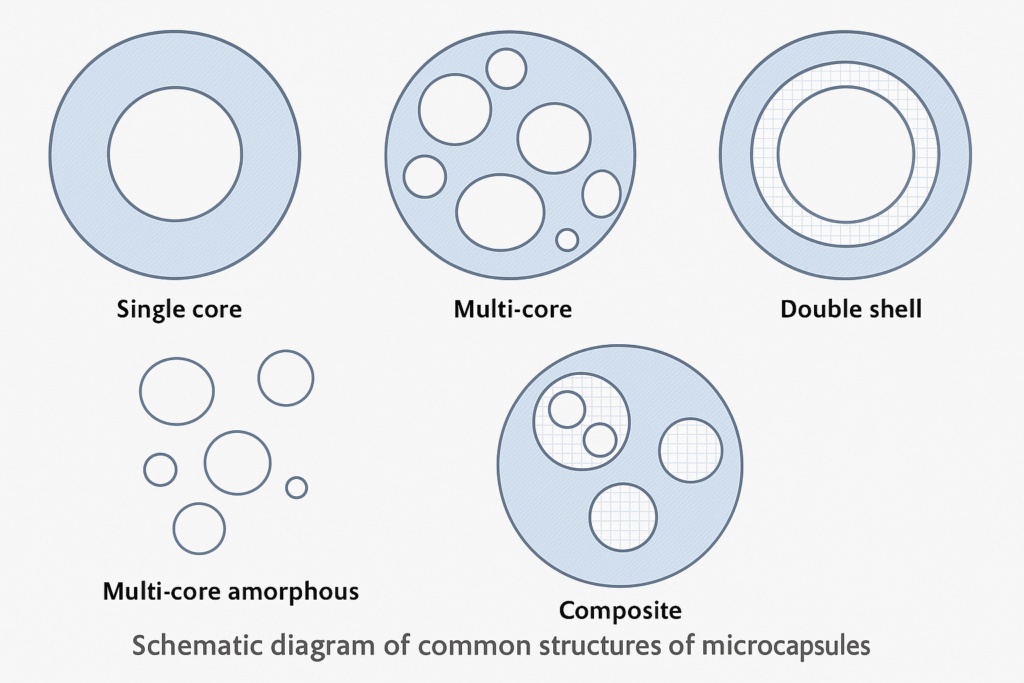
Microcapsule Technology and Its Application in Laundry

Microcapsule Technology and Its Application in Laundry

1. Fundamentals of Microencapsulation Technology

1.1 Definition of Microcapsules

Microcapsules are microscopic containers (size range: 10 nm–1000 μm) that encapsulate active ingredients (core materials) within polymeric walls via physical or chemical methods. Core value propositions include:

  • Isolation & Protection: Prevent oxidation, volatilization, or degradation of core materials (e.g., fragrances, vitamins).

  • Controlled Release: Precise payload release triggered by specific mechanisms (friction, pH, temperature, etc.).

  • Functional Integration: Enable compatibility and synergy of multiple active compounds.
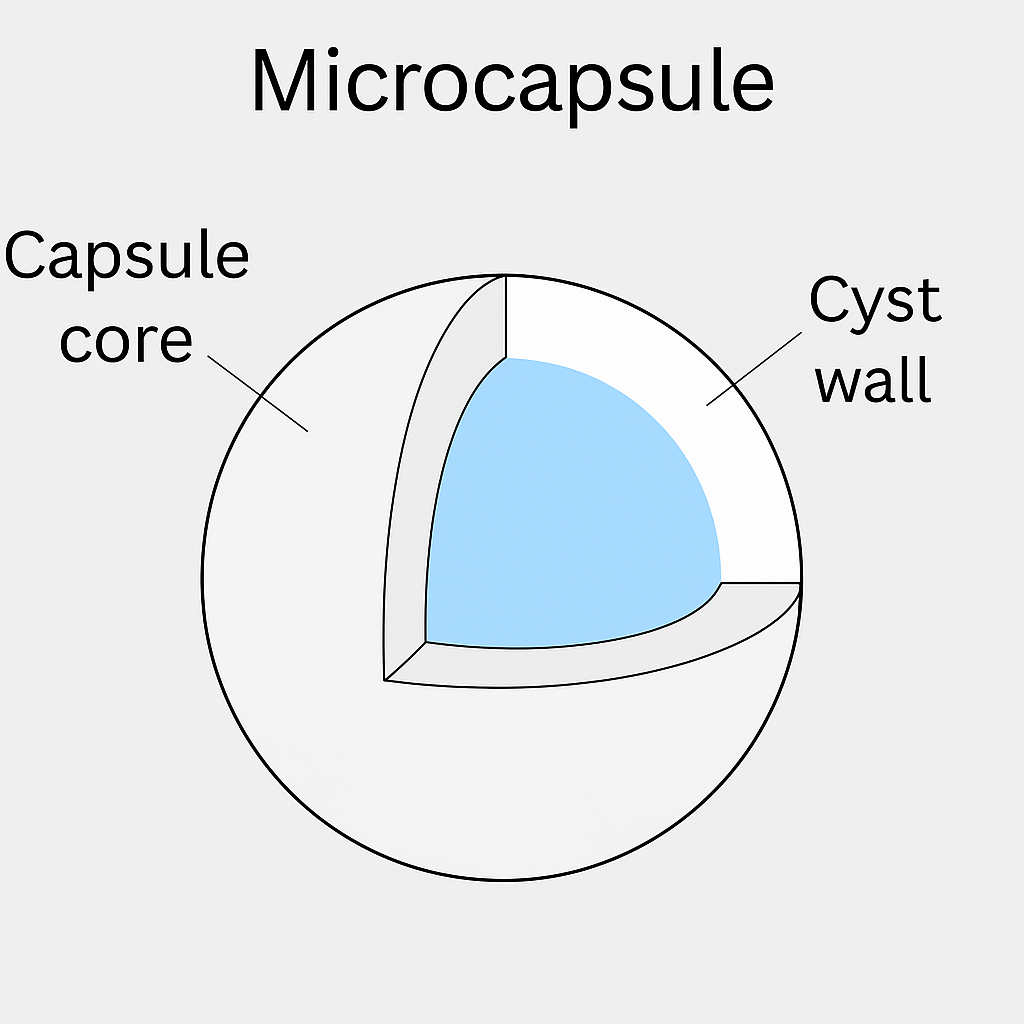
What are microcapsules

1.2 Composition of Microcapsules

Component Representative Materials Functional Requirements
Wall Material Gelatin, gum arabic, chitosan, PLA (polylactic acid), PVA (polyvinyl alcohol), melamine resin Mechanical strength, permeability, biocompatibility
Core Material Fragrance oils, vitamins, enzymes, antimicrobials, fabric softeners Stability, functionality
Additives Emulsifiers (Span/Tween series), crosslinkers (glutaraldehyde), plasticizers Enhance encapsulation efficiency

Microcapsule structure

1.3 Release Mechanisms

Mechanism Trigger Condition Application Example
Mechanical Rupture Friction, compression (during wear/folding) Fragrance capsules (release upon clothing friction)
Diffusion Release Wall dissolution/osmotic pressure Sustained-release fabric softeners
Environmental Response pH change (sweat), temperature, light Smart deodorant capsules (activated by sweat)
Biodegradation Enzymatic/microbial degradation Eco-friendly degradable wall materials

2. Advanced Features of FY Fragrance Microcapsules

2.1 Precise Particle Size Control

  • Scientific Basis: Particle size distribution (D50 value) directly impacts deposition efficiency and release kinetics.

    • <1 μm: Significant Brownian motion, easy suspension but poor deposition.

    • 10–50 μm: Optimal for laundry applications, balancing deposition and rinse resistance.

  • Technology: Microfluidic systems and membrane emulsification enable narrow size distribution.

2.2 Encapsulation Methods

  • Oil-in-Water (O/W): For essential oils/lipophilic actives; wall materials: PVA/polysaccharides.

  • Water-in-Oil (W/O): For hydrophilic compounds (e.g., vitamin B5); wall materials: polyester-based polymers.

  • Multiple Emulsions (W/O/W): Co-encapsulate hydrophilic/hydrophobic components (e.g., fragrance + enzymes) for staged release.

2.3 Morphology Adaptability

Morphology Product Carrier Advantage
Liquid Liquid detergents, softeners Easy dispersion, simple processing
Powder Laundry powders, gel pods High stability, low shipping cost
Paste Concentrated detergents High active ingredient loading

2.4 Enhanced Functionality

  • Sustained Release: Fragrance release curve design (72-hour longevity verified by GC-MS headspace analysis).

  • Formulation Compatibility: Resistant to surfactant interference (e.g., SLES, LAS), preventing storage leakage.

  • Cost Efficiency: Reduce high-value ingredient usage (e.g., rose oil) by 30%+ while maintaining sensory performance.

2.5 Safety & Sustainability

  • Raw Materials: Plant-derived walls (cellulose derivatives), natural crosslinkers (genipin replacing glutaraldehyde).

  • Certifications: EU ECOCERT, China Environmental Labeling; acute oral toxicity LD50 >5000 mg/kg.

  • Biodegradability: >90% degradation within 6 months (OECD 301B standard).

2.6 Triggered Release Mechanisms

  • Targeted Activation:

    • Thermoresponsive: Walls with temperature-sensitive polymers (e.g., PNIPAM), release softeners at dryer temperatures (60°C).

    • pH-Responsive: Carboxymethyl cellulose walls rupture at sweat pH (5.5) to release deodorizing agents.

3. Expanded Applications in Laundry & Fabric Care

3.1 Long-Lasting Fragrance

  • Enhanced Deposition: Cationic-modified capsules (+30% adsorption on negatively charged cotton).

  • Release Kinetics: Friction coefficient-release rate correlation (lab simulation: Martindale abrasion test).

3.2 Active Ingredient Protection

  • Vitamin C/E Encapsulation: Antioxidant protection increases shelf-life stability (>85% activity retention).

  • Enzyme Shielding: Protease/amylase encapsulation prevents surfactant-induced deactivation.

3.3 Performance Boost

  • Hair Care: Keratin capsules (<200 nm) penetrate hair cuticles for repair.

  • Fabric Care: Silicone oil capsules deposit in fiber interstices for lasting anti-wrinkle effects.

3.4 Odor Management

  • Malodor Neutralization: Cyclodextrin-sulfide complexes release deodorizers upon sweat exposure.

  • Unpleasant Masking: Fish-algae extract capsules release fresh notes during washing.

3.5 Sustainability

  • Wall Material Innovation: Polyhydroxyalkanoates (PHA) capsules degrade in seawater within <3 months.

  • Green Processing: Supercritical CO₂-based encapsulation replaces organic solvents.

4. Industry-Specific Requirements (Engineering Solutions)

4.1 Chemical Stability

Challenge Factor Solution Test Standard
High pH (9-11) Melamine/epoxy resin walls Core retention after 30 days @40°C
Surfactants Hydrophobic walls (PLA) + anti-permeation coatings Centrifugal stability (3000 rpm)
Chelators (EDTA) Metal-ion crosslinked walls (Ca²⁺-alginate) Chelator immersion test

4.2 Mechanical Robustness

  • Testing:

    • Washing Process: GB/T 3921-2008 abrasion test (<5% rupture after 200 cycles).

    • Wear Friction: Taber abrasion (CS-10 wheel, 500g load, 1000 revolutions).

  • Material Innovation: Polyurea walls (>200% elongation at break) replace brittle gelatin.

4.3 Suspension Stability

  • Anti-Aggregation Strategies:

    • Electrostatic Repulsion: Zeta potential control (|ζ| >30 mV).

    • Steric Hindrance: PVP (polyvinylpyrrolidone) surface modification.

  • Density Matching: Hollow glass microspheres (density 0.2 g/cm³) reduce settling.

4.4 Deposition & Adhesion

  • Fiber-Targeting Technology:

    • Cotton/Polyester: Anionic/cationic capsules tailored for specific fiber charges.

    • Hydrophobic Interaction: C16 alkyl chain-grafted walls.

4.5 Compatibility with Gel Pods

  • High-Salt Tolerance: <10% particle size change at NaCl >20%.

  • PVA Film Resistance: Controlled wall crosslinking prevents storage leakage.

5. Future Trends

  1. Smart Responsive Capsules:

    • Humidity-triggered release of anti-mold agents.

    • Light-activated release of UV protectants.

  2. Digital Integration:

    • QR-coded capsules for full supply chain traceability.

  3. Cross-Disciplinary Synergy:

    • Microcapsule + nanozyme systems for catalytic stain removal (e.g., lipase capsules for grease degradation).

Conclusion: Technological innovation drives fragrance experience upgrade

Microcapsule technology brings not only “longer-lasting fragrance” to cleaning products, but also a comprehensive upgrade of functionality, environmental protection and user experience. FY microcapsule fragrance products are becoming the preferred solution for high-end cleaning brands with their high adaptability, stability and safety. In the future, with the development of green chemistry and intelligent release technology, microcapsules will release huge potential in more areas of daily life.

Similar Posts

  • Fragrance Matching: How We Replicate World-Class Perfume Notes

    Fragrance Matching: How We Replicate World-Class Perfume Notes Turning iconic inspiration into cost-effective B2B scent solutions. 1️⃣ Introduction: Why Fragrance Matching Matters Fragrance is more than a pleasant scent — it’s a powerful emotional trigger and brand signature. In industries like home care, personal hygiene, and fine fragrance, the scent alone can define a product’s…

  • What Is Oud Fragrance? Origins, Scent Profile & Why It’s So Expensive

    🌿 What Is Oud Fragrance? Origins, Scent Profile & Why It’s So Expensive 🧭 Introduction: Oud — The Liquid Gold of Perfumery If you’ve ever browsed high-end perfumes or niche fragrances, chances are you’ve come across the word “oud.” Revered as one of the most luxurious and mysterious scent ingredients in the world, oud fragrance…

  • Premium Fragrances for Detergent and Soap — By F&Y

    Our company has successfully penetrated the daily chemical market in developing regions such as Africa and Latin America, offering high-cost performance and stable quality products. With years of experience in detergent and soap markets, our engineers excel in aroma selection and optimization, backed by comprehensive market research.     Fragrances for Detergent: 198462 Fresh Flower…

  • What Are Fragrance Notes?

    🌸 What Are Fragrance Notes? Understanding the Building Blocks of Every Perfume 🧼 1. Introduction: Why Fragrance Notes Matter Every scent tells a story. Whether it’s the sparkling freshness of citrus in the morning or the warm, sensual trail of musk in the evening, perfumes and fragrances unfold over time like chapters in a book….

  • Comprehensive Guide to Perfume Notes and Their Roles: A Deep Dive into Citrus, Floral, Woody, and More

    🌸 Perfume Notes and Their Classification: A Comprehensive Guide to Fragrance Families Perfume is an intricate art of blending various aromatic ingredients to create a sensory experience. The key to a great fragrance lies in understanding its notes. A note refers to the different layers of scent that emerge over time as the perfume settles…

  • Exploring the World of Aroma Chemicals

    Exploring the World of Aroma Chemicals Aroma chemicals are everywhere, yet often go unnoticed. They are the unsung heroes behind the scents and flavors we love. These compounds are crucial in creating fragrances and flavors in countless products. From perfumes to food, they play a vital role. Aroma chemicals can be natural or synthetic. Synthetic versions are more common due to their consistency and cost-effectiveness. The fragrance industry relies heavily on these chemicals. They ensure that scents are long-lasting and consistent across products. Flavoring agents, another type of aroma chemical, enhance the taste of food and beverages. They make our favorite treats even more enjoyable. The history of aroma chemicals is rich and fascinating. Ancient civilizations used natural extracts for scenting, laying the groundwork for modern perfumery. Today, the balance between natural and synthetic ingredients is key. This balance creates unique fragrance profiles that captivate our senses. As we explore the world of aroma chemicals, we uncover their impact on our daily lives. They shape our experiences and evoke emotions, making them indispensable.   What Are Aroma Chemicals? Aroma chemicals are specialized compounds used in creating scents and flavors. They are the building blocks of fragrance and flavor industries, essential in many products. These compounds can be derived from both natural and synthetic sources. Natural aroma compounds are extracted from plants or animal products, while synthetic ones are manufactured in labs. Synthetic aroma chemicals offer several advantages. They provide consistency, purity, and often a more cost-effective solution than their natural counterparts. Aroma chemicals are utilized in various applications. This includes perfumes, cosmetics, food products, and even cleaning supplies. They are selected based on their ability to enhance the user experience. Common uses of aroma chemicals include: Perfumes: creating distinctive and lasting scents. Food and beverages: enhancing flavors. Household products: masking odors. Cosmetics: adding pleasant fragrances. The science behind aroma chemicals is complex, involving intricate molecule interactions. This fascinating chemistry allows them to mimic natural scents effectively. A key aspect of their success lies in their ability to evoke emotions and trigger memories. This emotional connection is why aroma chemicals are so effective in marketing.   The History and Evolution of Aroma Chemicals The use of aroma chemicals can be traced back to ancient civilizations. Early societies used natural extracts for incense and personal scenting. During the Renaissance, advances in distillation improved the extraction of aromatic compounds. This period saw the rise of perfumery in Europe, laying the groundwork for modern developments. The 19th century marked a significant shift. Synthetic production techniques expanded the palette of available scents. This innovation revolutionized the industry, leading to mass-market fragrances. In the 20th century, chemistry and technology advanced further. New methods allowed for complex fragrance compositions, combining both natural and synthetic ingredients. Key milestones in aroma chemicals’ evolution include: Ancient times: Use of natural extracts. Renaissance: Improved distillation techniques. 19th century: Introduction of synthetic aroma compounds. 20th century: Complex fragrance formulations. The evolution of aroma chemicals reflects broader trends in science and technology. It has continually adapted to consumer preferences and industry demands. Today, the focus is on sustainability and innovation. Efforts are underway to create eco-friendly processes and new, sustainable aroma compounds. by Emile Mbunzama (https://unsplash.com/@emilembunzama) Natural vs. Synthetic Aroma Chemicals Aroma chemicals can be either natural or synthetic. Each type offers unique attributes and advantages in fragrance and flavor production. Natural aroma compounds are derived from plant and animal sources. Essential oils and extracts provide natural scent profiles. These compounds are often favored for their purity and aromatic qualities. Synthetic aroma chemicals, however, are created in laboratories. They replicate both familiar and novel scents. This method allows for cost-effective production and greater scent variety. Choosing between natural and synthetic aromas involves several considerations. Factors include cost, availability, scent longevity, and consumer preferences. Many products today blend both types for optimal results. Key differences between natural and synthetic aroma chemicals include: Natural: Sourced from plants and animals. Synthetic: Lab-created, often more consistent and durable. Scent Profile: Natural for purity, synthetic for variety. Cost: Natural can be pricier; synthetic is more economical. Availability: Natural sources can be limited. The balance between these two forms of aroma chemicals is crucial. It influences fragrance formulation and appeals to diverse consumer needs. Ultimately, the choice depends on the desired product attributes and market trends. Both natural and synthetic types continue to play vital roles in the industry. by Ela De Pure (https://unsplash.com/@eladepure) Key Types of Fragrance Compounds and Flavoring Agents Fragrance compounds are essential elements in perfumery and flavoring. They provide unique scent and taste profiles, enhancing product appeal. Esters are a common type of fragrance compound. They offer fruity and floral scents. Widely used in perfumes, they provide fresh, sweet aromas. Aldehydes are another vital group. They contribute to fresh and citrusy scents. Found in many household and personal care products, they bring a lively aroma. Ketones are notable for their versatility. They range from sweet to woody scents. Ketones add depth and complexity to many fragrances and flavors….

ใส่ความเห็น