Canton Fair and the Fragrance Industry: Opportunities and Challenges in Globalization

Canton Fair and the Fragrance Industry: Opportunities and Challenges in Globalization

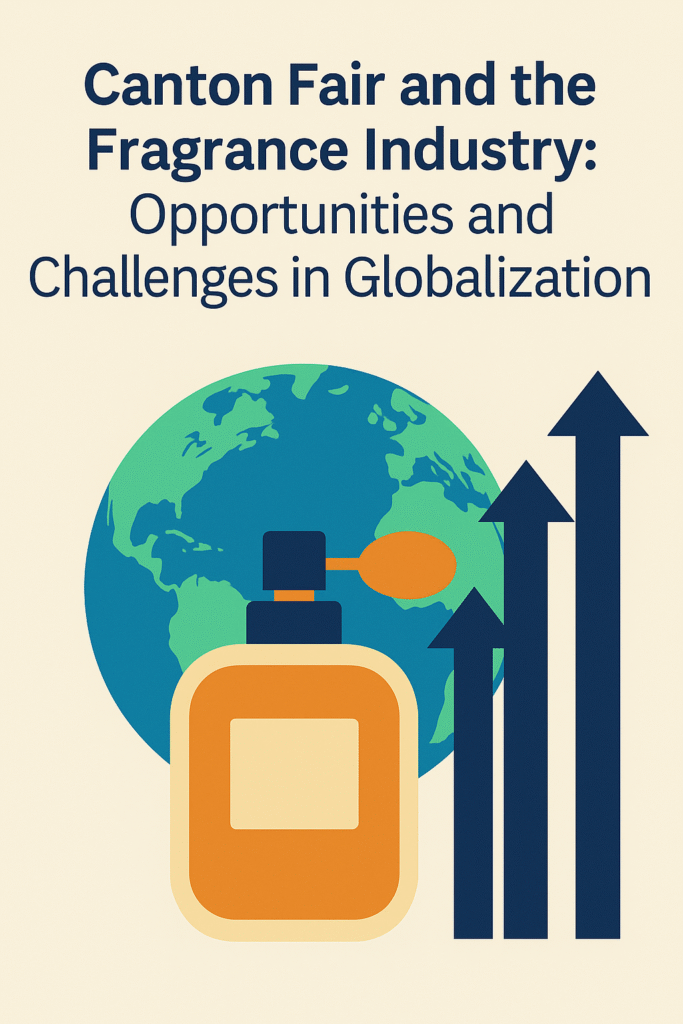
The Canton Fair (China Import and Export Fair) is a key event in global trade, providing an excellent platform for fragrance companies to showcase their products and expand their markets. This article explores the role of fragrance manufacturers in the Canton Fair, analyzes global fragrance market trends, and presents strategies for fragrance companies to leverage the fair for international growth.Canton-fair.

Overview of the Canton Fair

The Canton Fair, held twice a year in Guangzhou, is one of the largest and most influential trade exhibitions in the world. Covering a wide range of industries including electronics, machinery, building materials, consumer goods, food, and medical products, the Canton Fair attracts exhibitors and buyers from over 200 countries and regions. The event facilitates transactions that amount to billions of dollars annually. For the fragrance industry, this fair is a key platform for product showcasing, networking, and establishing new business relationships.


Global Fragrance Market Trends

The global fragrance market has experienced consistent growth and is expected to continue expanding in the coming years. According to Grand View Research, the market size was valued at USD 54.52 billion in 2023 and is forecast to reach USD 74.76 billion by 2030, with a compound annual growth rate (CAGR) of 4.7% from 2024 to 2030.

Key Drivers of Growth:

  • Increasing Demand for Personal Care and Household Products: The rising demand for fragranced products in personal care and cleaning products is driving the fragrance market.
  • Natural and Organic Products: The shift towards organic and sustainable products is fueling the demand for natural fragrances.
  • Growth in Emerging Markets: Asia-Pacific, particularly China and India, is seeing rapid growth, contributing to the increasing market size.

With digital sales channels expanding, fragrance companies can also leverage e-commerce platforms to boost global sales.


How Fragrance Companies Can Benefit from the Canton Fair

1. Showcase Products and Enhance Brand Awareness

The Canton Fair provides fragrance companies with the opportunity to showcase their products to a global audience. By participating in the fair, companies can demonstrate their products’ features and benefits through live demos and sample displays, increasing brand recognition in the international market.

2. Expand Markets and Build Customer Relationships

One of the key advantages of the Canton Fair is the ability to connect with buyers from all over the world. Fragrance manufacturers can meet potential customers from various regions, including emerging markets such as Southeast Asia, Africa, and South America, providing an avenue for global market expansion.

3. Network and Collaborate on Innovation

The fair is not only a sales platform but also an opportunity for technical exchange. Fragrance companies can network with other industry leaders to learn about market trends, exchange ideas, and explore potential collaborations on new product development.


Leveraging the Canton Fair for Global Expansion: Key Strategies

1. Targeted Exhibition Strategy

Fragrance companies should carefully select exhibition zones and booth placements based on their target markets. For example, fragrance products for the food industry should be exhibited in the food section, while personal care and cleaning products should be placed in the daily goods section. Tailoring the exhibition to specific industries helps attract the right audience.

2. Enhance Brand Image

Building a strong, professional brand presence is crucial at the Canton Fair. Fragrance companies should focus on booth design, effective promotional materials, and well-trained staff to convey a professional image. In addition, leveraging social media and digital tools during the fair can help maximize visibility and extend the reach of the company’s branding efforts.

3. Develop Strong Customer Relationships

The fair provides an opportunity to engage directly with potential customers. It’s important for fragrance companies to understand their clients’ needs and provide tailored solutions. Following up with customers post-event is equally important for fostering long-term relationships and securing repeat business.

4. Diversify Cooperation Models

In addition to product sales, fragrance companies can explore joint ventures, co-branded projects, and collaborations on research and development. These partnerships can enhance innovation and provide companies with new avenues for growth in the global market.


The Future of the Fragrance Industry and the Canton Fair

The fragrance industry is poised for continued growth, driven by trends in sustainability, consumer demand for natural ingredients, and the expansion of emerging markets. The Canton Fair will remain a vital platform for fragrance companies to connect with global buyers, explore new business opportunities, and stay ahead of industry trends.

Key Trends Shaping the Future of the Fragrance Industry:

  • Sustainability: Growing demand for eco-friendly and sustainable products is influencing fragrance formulations, making it essential for companies to innovate and meet consumer expectations.
  • Digitalization: The rise of e-commerce and digital platforms provides fragrance companies with new ways to reach customers and market their products internationally.
  • Customization: Consumers are increasingly seeking personalized fragrance experiences, which offers fragrance companies the opportunity to diversify their product lines and meet individual preferences.

Conclusion: Why Fragrance Companies Should Participate in the Canton Fair

The Canton Fair offers fragrance companies a unique opportunity to expand their global reach, showcase innovative products, and build valuable customer relationships. By adopting a well-planned exhibition strategy and leveraging the fair’s networking potential, fragrance companies can position themselves for long-term success in the growing global market.

With the fragrance market continuing to expand, especially in emerging regions, the Canton Fair is an invaluable platform for fragrance companies to explore new business opportunities and strengthen their presence in the international marketplace.
 

Similar Posts

  • How to Choose a Long-Lasting Home Fragrance: A Complete Guide

    How to Choose a Long-Lasting Home Fragrance: A Complete Guide Introduction: Why Home Fragrance Matters A well-chosen home fragrance can transform your living space, elevate your mood, and express your personal style. Beyond simply masking odors, scents can soothe, energize, or bring back fond memories. As consumer awareness grows, long-lasting home fragrances have become more…

  • How is the market investment situation in the fragrance industry?

    What is the outlook for the fragrance market? The flavor industry belongs to one of the fine chemical industry sub-industries, at present, Europe, the United States, and Japan have become the world’s most advanced flavor and fragrance industry centers. After more than 100 years of development, the international has formed a leading flavor product to…

  • Importance of flavors in the food industry

    Importance of flavors in the food industry Introduction With the rapid development of the food industry, people have put forward higher requirements for the flavor, taste and overall sensory experience of food. In this process, flavors, as an important food additive, have played an irreplaceable role in improving food flavor, enhancing appetite, extending food shelf…

  • Premium Fragrances for Detergent and Soap — By F&Y

    Our company has successfully penetrated the daily chemical market in developing regions such as Africa and Latin America, offering high-cost performance and stable quality products. With years of experience in detergent and soap markets, our engineers excel in aroma selection and optimization, backed by comprehensive market research.     Fragrances for Detergent: 198462 Fresh Flower…

  • The Versatility and Application of Orange Flavoring Across Industries

    The Versatility and Application of Orange Flavoring Across Industries 1. Introduction Orange flavoring has become a cornerstone in food, beverage, and wellness formulations due to its vibrant, sweet-tangy citrus profile. From classic sodas to gourmet desserts and modern CBD tinctures, orange flavoring delivers a refreshing taste that resonates globally. As both natural and synthetic flavor…

  • Exploring the World of Aroma Chemicals

    Exploring the World of Aroma Chemicals Aroma chemicals are everywhere, yet often go unnoticed. They are the unsung heroes behind the scents and flavors we love. These compounds are crucial in creating fragrances and flavors in countless products. From perfumes to food, they play a vital role. Aroma chemicals can be natural or synthetic. Synthetic versions are more common due to their consistency and cost-effectiveness. The fragrance industry relies heavily on these chemicals. They ensure that scents are long-lasting and consistent across products. Flavoring agents, another type of aroma chemical, enhance the taste of food and beverages. They make our favorite treats even more enjoyable. The history of aroma chemicals is rich and fascinating. Ancient civilizations used natural extracts for scenting, laying the groundwork for modern perfumery. Today, the balance between natural and synthetic ingredients is key. This balance creates unique fragrance profiles that captivate our senses. As we explore the world of aroma chemicals, we uncover their impact on our daily lives. They shape our experiences and evoke emotions, making them indispensable.   What Are Aroma Chemicals? Aroma chemicals are specialized compounds used in creating scents and flavors. They are the building blocks of fragrance and flavor industries, essential in many products. These compounds can be derived from both natural and synthetic sources. Natural aroma compounds are extracted from plants or animal products, while synthetic ones are manufactured in labs. Synthetic aroma chemicals offer several advantages. They provide consistency, purity, and often a more cost-effective solution than their natural counterparts. Aroma chemicals are utilized in various applications. This includes perfumes, cosmetics, food products, and even cleaning supplies. They are selected based on their ability to enhance the user experience. Common uses of aroma chemicals include: Perfumes: creating distinctive and lasting scents. Food and beverages: enhancing flavors. Household products: masking odors. Cosmetics: adding pleasant fragrances. The science behind aroma chemicals is complex, involving intricate molecule interactions. This fascinating chemistry allows them to mimic natural scents effectively. A key aspect of their success lies in their ability to evoke emotions and trigger memories. This emotional connection is why aroma chemicals are so effective in marketing.   The History and Evolution of Aroma Chemicals The use of aroma chemicals can be traced back to ancient civilizations. Early societies used natural extracts for incense and personal scenting. During the Renaissance, advances in distillation improved the extraction of aromatic compounds. This period saw the rise of perfumery in Europe, laying the groundwork for modern developments. The 19th century marked a significant shift. Synthetic production techniques expanded the palette of available scents. This innovation revolutionized the industry, leading to mass-market fragrances. In the 20th century, chemistry and technology advanced further. New methods allowed for complex fragrance compositions, combining both natural and synthetic ingredients. Key milestones in aroma chemicals’ evolution include: Ancient times: Use of natural extracts. Renaissance: Improved distillation techniques. 19th century: Introduction of synthetic aroma compounds. 20th century: Complex fragrance formulations. The evolution of aroma chemicals reflects broader trends in science and technology. It has continually adapted to consumer preferences and industry demands. Today, the focus is on sustainability and innovation. Efforts are underway to create eco-friendly processes and new, sustainable aroma compounds. by Emile Mbunzama (https://unsplash.com/@emilembunzama) Natural vs. Synthetic Aroma Chemicals Aroma chemicals can be either natural or synthetic. Each type offers unique attributes and advantages in fragrance and flavor production. Natural aroma compounds are derived from plant and animal sources. Essential oils and extracts provide natural scent profiles. These compounds are often favored for their purity and aromatic qualities. Synthetic aroma chemicals, however, are created in laboratories. They replicate both familiar and novel scents. This method allows for cost-effective production and greater scent variety. Choosing between natural and synthetic aromas involves several considerations. Factors include cost, availability, scent longevity, and consumer preferences. Many products today blend both types for optimal results. Key differences between natural and synthetic aroma chemicals include: Natural: Sourced from plants and animals. Synthetic: Lab-created, often more consistent and durable. Scent Profile: Natural for purity, synthetic for variety. Cost: Natural can be pricier; synthetic is more economical. Availability: Natural sources can be limited. The balance between these two forms of aroma chemicals is crucial. It influences fragrance formulation and appeals to diverse consumer needs. Ultimately, the choice depends on the desired product attributes and market trends. Both natural and synthetic types continue to play vital roles in the industry. by Ela De Pure (https://unsplash.com/@eladepure) Key Types of Fragrance Compounds and Flavoring Agents Fragrance compounds are essential elements in perfumery and flavoring. They provide unique scent and taste profiles, enhancing product appeal. Esters are a common type of fragrance compound. They offer fruity and floral scents. Widely used in perfumes, they provide fresh, sweet aromas. Aldehydes are another vital group. They contribute to fresh and citrusy scents. Found in many household and personal care products, they bring a lively aroma. Ketones are notable for their versatility. They range from sweet to woody scents. Ketones add depth and complexity to many fragrances and flavors….

Жооп калтыруу