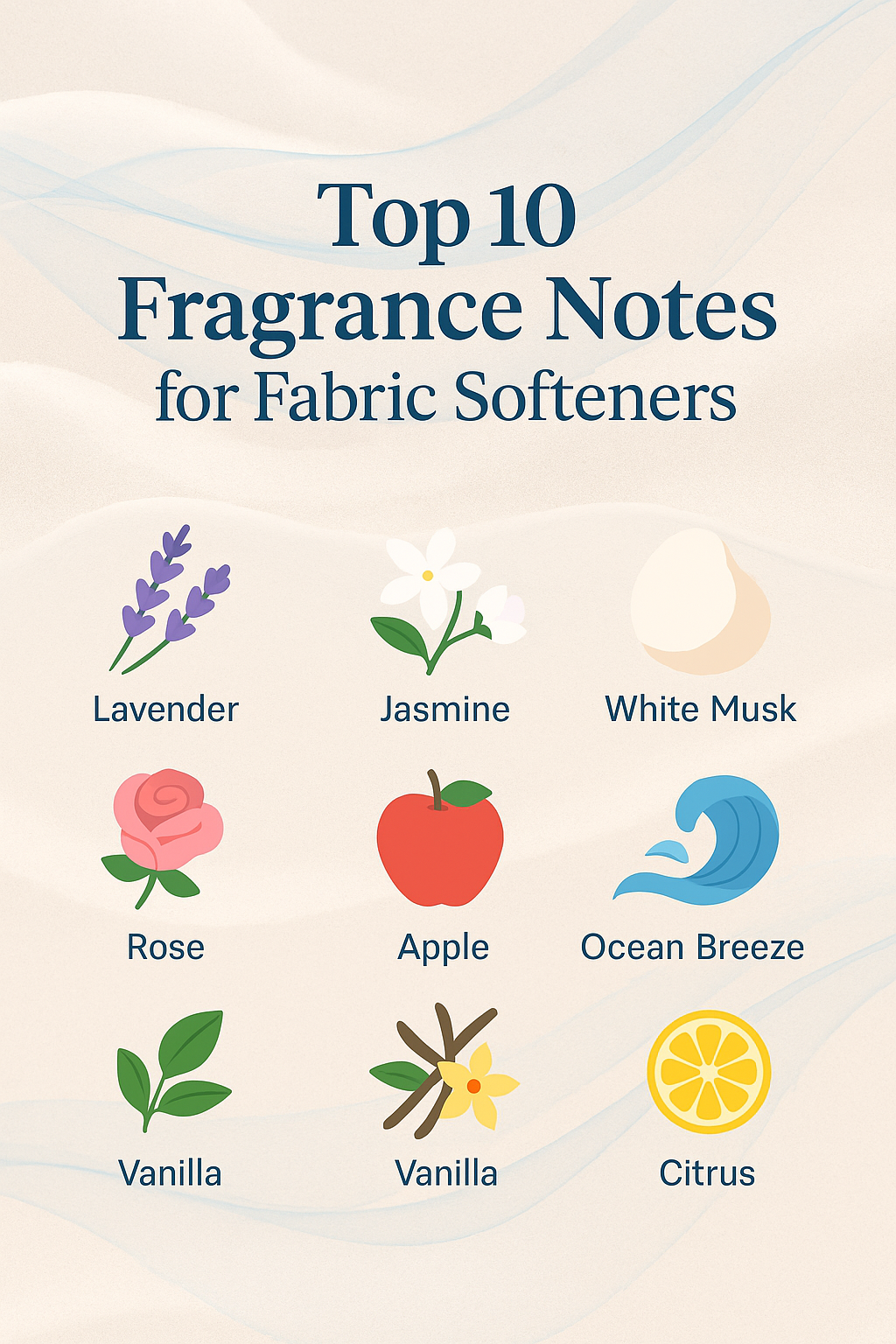
Top 10 Fragrance Notes for Fabric Softeners

Top 10 Fragrance Notes for Fabric Softeners in 2025

🧴 Top 10 Fragrance Notes for Fabric Softeners: Consumer Favorites & Trends

Fabric softeners are no longer just about softness—they’re scent-driven experiences. In fact, fragrance is the #1 driver of consumer loyalty in laundry care products, according to a Nielsen Clean Home Care Report (2021). The right fragrance note can evoke freshness, comfort, elegance—or all three at once.

So, what fragrance notes do consumers love most in their fabric softeners? Here’s a breakdown of the top 10 notes used by leading brands and why they matter.Top 10 Fragrance Notes for Fabric Softeners

🌿 1. Lavender – The Timeless Calming Note

Lavender remains one of the most widely used fragrance notes in laundry care globally. Known for its calming and fresh floral aroma, lavender is associated with clean linens, serenity, and wellness.

  • Popular in: Downy Infusions Calm, Comfort Pure, Woolite Delicates
  • Fragrance type: Floral, herbal
  • Why it works: Universally accepted and psychologically linked to “clean”
  • Source: Fragrance Foundation Europe, 2023 [1]

🌼 2. Jasmine – A Sophisticated Floral Favorite

Jasmine adds an elegant floral complexity and is a middle note with exceptional staying power. It’s used to elevate softeners into more premium sensory experiences.

  • Popular in: Comfort Intense, Snuggle Exhilarations
  • Fragrance type: White floral
  • Why it works: Combines freshness with a luxurious feel
  • Note: Synthetic jasmine is often used due to IFRA allergen compliance [2]

🧺 3. Cotton / Linen Accord – Clean & Neutral

Cotton accords mimic the smell of sun-dried fabric, offering a soft, neutral aroma. These notes are often preferred by consumers seeking fragrance that feels “natural” or “barely there.”

  • Popular in: Method Fabric Softener, Seventh Generation Free & Clear
  • Fragrance type: Soft musky, aldehydic
  • Why it works: Reinforces the idea of clean without overpowering scent

🪵 4. White Musk – Clean, Skin-Like Softness

White musk acts as a base note and helps other ingredients linger longer on fabrics. It also evokes a comforting, skin-like scent that blends well with almost any fragrance theme.

  • Popular in: Comfort Classic, Lenor Outdoorable
  • Fragrance type: Musky
  • Why it works: Enhances longevity and softness perception
  • Source: IFRA Global Report, 2022 [3]

🍃 5. Green Tea – Refreshing and Lightweight

Green tea accords bring a zen-like freshness to laundry. With subtle herbal-green notes, it appeals especially to the “natural” and “sensitive skin” market segments.

  • Popular in: Ecover, Attitude, Kao Laundry Japan
  • Fragrance type: Green, tea-like
  • Why it works: Offers light scent with eco-lifestyle positioning

🌹 6. Rose – Soft and Powdery Floral

While once considered “old-fashioned,” rose has made a comeback in modern formulations with powdery and fruity adaptations.

  • Popular in: Downy Romance, Comfort Rose Bloom
  • Fragrance type: Floral, powdery
  • Why it works: Strong scent association with love, care, and tradition
  • Note: Often used in “romantic” or “caring” fragrance lines

🍏 7. Apple – Crisp, Fruity Freshness

Apple adds a fresh, juicy twist to floral compositions. It brings youthful energy to laundry fragrances and is highly appreciated by family-oriented consumers.

  • Popular in: Snuggle Apple Cinnamon, Comfort Apple Blossom
  • Fragrance type: Fruity-green
  • Why it works: Universal appeal; pairs well with florals and soft musks

🌊 8. Ocean Breeze – Aquatic & Invigorating

Aquatic or “oceanic” notes bring a refreshing, sporty sensation to fabric care. These are ideal for activewear softeners or unisex variants.

  • Popular in: Lenor Ocean Escape, Downy Fresh Protect Active
  • Fragrance type: Aquatic, citrus-marine
  • Why it works: Evokes energy, freshness, and a modern lifestyle
  • Source: Firmenich Global Scent Index, 2023 [4]

🍦 9. Vanilla – Cozy and Comforting Base Note

Vanilla adds warmth and sweetness to laundry care, especially in winter-themed or baby-focused products. It’s often used to round out fruity and floral blends.

  • Popular in: Suavitel Vanilla, Comfort Pure & Gentle
  • Fragrance type: Gourmand, sweet amber
  • Why it works: Universally pleasant and comforting
  • Note: Commonly used in microencapsulated delivery systems for long-lasting effect

🍋 10. Citrus (Lemon, Bergamot, Orange) – Clean Burst of Freshness

Citrus top notes like lemon or bergamot add brightness and zest. They’re often the first impression after washing and blend beautifully with both floral and aquatic hearts.

  • Popular in: Downy Citrus Spice, Comfort Citrus Burst
  • Fragrance type: Fresh citrus
  • Why it works: Signals freshness; often used in morning-fresh themes
  • Source: Symrise Scent Trend Insights, 2022 [5]

🌍 Regional Scent Preferences in Fabric Softeners

Region Preferred Notes
Europe Lavender, white musk, powdery florals
South America Rose, apple, fruity florals
Southeast Asia Jasmine, green tea, citrus
Middle East Rose, musk, oud (luxury segment)

🧪 Innovations: How Are These Notes Delivered?

Modern fabric softeners use microencapsulation to trap fragrance oils inside biodegradable shells that break during wear, ensuring longer scent release. This makes base notes like musk or vanilla more effective over time. Many brands now offer IFRA-compliant and allergen-reduced fragrance options.


✅ Final Thoughts: The Scent of Softness Matters

From lavender’s classic comfort to green tea’s modern minimalism, fragrance notes do more than just smell good—they build emotional loyalty. Choosing the right fragrance isn’t just about aroma—it’s about brand identity, regional preference, and performance.

Whether you’re a home care brand, fragrance developer, or distributor, these notes can help craft a signature laundry experience that truly lasts.


📚 References

  1. Fragrance Foundation Europe – [2023 Consumer Report on Home Scents]
  2. IFRA Transparency Guidelines – https://ifrafragrance.org
  3. IFRA Global Fragrance Regulation Overview, 2022
  4. Firmenich Global Scent Index, Q1–2023
  5. Symrise Scent Trend Insights – Fabric & Laundry Care Edition, 2022

Similar Posts

  • The Science of Microencapsulated Fragrances in Cleaning Products

      🧪 The Science of Microencapsulated Fragrances in Cleaning Products How Advanced Scent Technology Delivers Long-Lasting Freshness 🔍 Introduction: Why Fragrance Longevity Matters In today’s highly competitive cleaning products market, fragrance is more than just a pleasant addition—it’s a key factor in consumer satisfaction and brand loyalty. Customers don’t just want their laundry or home…

  • What Are Fragrance Notes?

    🌸 What Are Fragrance Notes? Understanding the Building Blocks of Every Perfume 🧼 1. Introduction: Why Fragrance Notes Matter Every scent tells a story. Whether it’s the sparkling freshness of citrus in the morning or the warm, sensual trail of musk in the evening, perfumes and fragrances unfold over time like chapters in a book….

  • Is Fragrance in Cosmetics Safe? Facts, Science & Regulations

    🧴 Is Fragrance in Cosmetics Safe? Breaking Down the Facts Fragrance is found in nearly every cosmetic product—from lotions to lipsticks to serums. It enhances the sensory experience and contributes to brand identity. But increasingly, consumers are asking: Is fragrance in cosmetics actually safe? Let’s explore what “fragrance” really means on product labels, what the…

  • Enhance Your Southeast Asian Culinary Creations with Ginger Powder Flavor – A Focus on the Malaysian Market

    Experience the zesty, authentic taste of fresh ginger with our high-quality Ginger Powder Flavor. This versatile ingredient is crafted to meet the needs of food manufacturers looking to enrich their products with the distinct, spicy notes of ginger, particularly in the Malaysian market. 1. Versatile Applications in Food Manufacturing Our Ginger Powder Flavor is expertly…

  • Exploring the World of Aroma Chemicals

    Exploring the World of Aroma Chemicals Aroma chemicals are everywhere, yet often go unnoticed. They are the unsung heroes behind the scents and flavors we love. These compounds are crucial in creating fragrances and flavors in countless products. From perfumes to food, they play a vital role. Aroma chemicals can be natural or synthetic. Synthetic versions are more common due to their consistency and cost-effectiveness. The fragrance industry relies heavily on these chemicals. They ensure that scents are long-lasting and consistent across products. Flavoring agents, another type of aroma chemical, enhance the taste of food and beverages. They make our favorite treats even more enjoyable. The history of aroma chemicals is rich and fascinating. Ancient civilizations used natural extracts for scenting, laying the groundwork for modern perfumery. Today, the balance between natural and synthetic ingredients is key. This balance creates unique fragrance profiles that captivate our senses. As we explore the world of aroma chemicals, we uncover their impact on our daily lives. They shape our experiences and evoke emotions, making them indispensable.   What Are Aroma Chemicals? Aroma chemicals are specialized compounds used in creating scents and flavors. They are the building blocks of fragrance and flavor industries, essential in many products. These compounds can be derived from both natural and synthetic sources. Natural aroma compounds are extracted from plants or animal products, while synthetic ones are manufactured in labs. Synthetic aroma chemicals offer several advantages. They provide consistency, purity, and often a more cost-effective solution than their natural counterparts. Aroma chemicals are utilized in various applications. This includes perfumes, cosmetics, food products, and even cleaning supplies. They are selected based on their ability to enhance the user experience. Common uses of aroma chemicals include: Perfumes: creating distinctive and lasting scents. Food and beverages: enhancing flavors. Household products: masking odors. Cosmetics: adding pleasant fragrances. The science behind aroma chemicals is complex, involving intricate molecule interactions. This fascinating chemistry allows them to mimic natural scents effectively. A key aspect of their success lies in their ability to evoke emotions and trigger memories. This emotional connection is why aroma chemicals are so effective in marketing.   The History and Evolution of Aroma Chemicals The use of aroma chemicals can be traced back to ancient civilizations. Early societies used natural extracts for incense and personal scenting. During the Renaissance, advances in distillation improved the extraction of aromatic compounds. This period saw the rise of perfumery in Europe, laying the groundwork for modern developments. The 19th century marked a significant shift. Synthetic production techniques expanded the palette of available scents. This innovation revolutionized the industry, leading to mass-market fragrances. In the 20th century, chemistry and technology advanced further. New methods allowed for complex fragrance compositions, combining both natural and synthetic ingredients. Key milestones in aroma chemicals’ evolution include: Ancient times: Use of natural extracts. Renaissance: Improved distillation techniques. 19th century: Introduction of synthetic aroma compounds. 20th century: Complex fragrance formulations. The evolution of aroma chemicals reflects broader trends in science and technology. It has continually adapted to consumer preferences and industry demands. Today, the focus is on sustainability and innovation. Efforts are underway to create eco-friendly processes and new, sustainable aroma compounds. by Emile Mbunzama (https://unsplash.com/@emilembunzama) Natural vs. Synthetic Aroma Chemicals Aroma chemicals can be either natural or synthetic. Each type offers unique attributes and advantages in fragrance and flavor production. Natural aroma compounds are derived from plant and animal sources. Essential oils and extracts provide natural scent profiles. These compounds are often favored for their purity and aromatic qualities. Synthetic aroma chemicals, however, are created in laboratories. They replicate both familiar and novel scents. This method allows for cost-effective production and greater scent variety. Choosing between natural and synthetic aromas involves several considerations. Factors include cost, availability, scent longevity, and consumer preferences. Many products today blend both types for optimal results. Key differences between natural and synthetic aroma chemicals include: Natural: Sourced from plants and animals. Synthetic: Lab-created, often more consistent and durable. Scent Profile: Natural for purity, synthetic for variety. Cost: Natural can be pricier; synthetic is more economical. Availability: Natural sources can be limited. The balance between these two forms of aroma chemicals is crucial. It influences fragrance formulation and appeals to diverse consumer needs. Ultimately, the choice depends on the desired product attributes and market trends. Both natural and synthetic types continue to play vital roles in the industry. by Ela De Pure (https://unsplash.com/@eladepure) Key Types of Fragrance Compounds and Flavoring Agents Fragrance compounds are essential elements in perfumery and flavoring. They provide unique scent and taste profiles, enhancing product appeal. Esters are a common type of fragrance compound. They offer fruity and floral scents. Widely used in perfumes, they provide fresh, sweet aromas. Aldehydes are another vital group. They contribute to fresh and citrusy scents. Found in many household and personal care products, they bring a lively aroma. Ketones are notable for their versatility. They range from sweet to woody scents. Ketones add depth and complexity to many fragrances and flavors….

  • Popcorn Powder Flavour: Elevating Snack Aromas in Southeast Asia through Malaysian Exports

    Unpack the Theatre Experience Our Popcorn Powder Flavour masterfully recreates the rich, buttery essence of freshly popped popcorn, offering food manufacturers an innovative solution for adding that authentic cinema-style taste to their snacks. Application in Food Manufacturing Transforming Snacks into Crowd Pleasers Our Popcorn Powder Flavour is meticulously formulated to blend seamlessly into various snack…

ใส่ความเห็น