Understanding Aroma Chemicals in the Fragrance and Flavor Industry

Understanding Aroma Chemicals in the Fragrance and Flavor Industry

What Are Aroma Chemicals?

Aroma chemicals are the building blocks of fragrances, present in both natural and synthetic forms. While the word “chemical” often carries a negative connotation, it is important to recognize that everything around us — from our bodies to the food we eat — consists of chemicals. Aroma chemicals are no exception, and they are essential for crafting the scents and flavors that consumers enjoy daily.

In the fragrance and flavor industry, aroma chemicals provide the foundation for perfumes, colognes, candles, personal care products, and even flavored foods and beverages. They define the sensory profile of a product and allow manufacturers to achieve consistency, complexity, and consumer appeal.Understanding Aroma Chemicals in the Fragrance and Flavor Industry
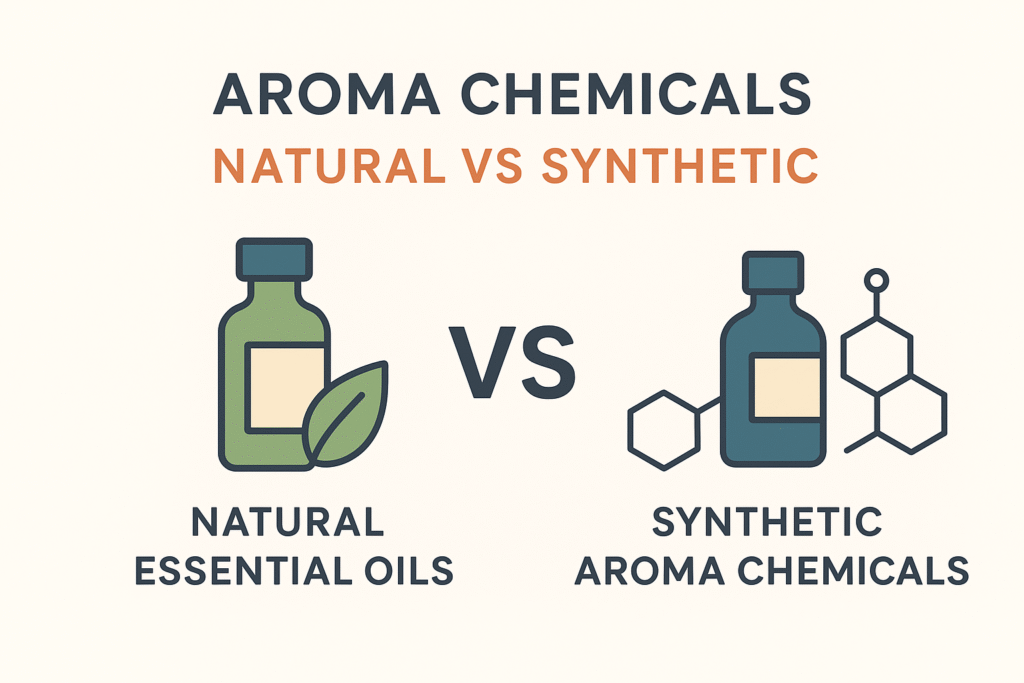

Natural Essential Oils as Sources of Aroma Chemicals

Extraction Methods

Natural aroma chemicals are primarily derived from essential oils, which are concentrated volatile compounds extracted from plants. Common techniques include steam distillation, cold pressing, and solvent extraction.

Environmental Factors Influencing Aroma

The aroma profile of essential oils is highly variable and influenced by:

  • Soil quality
  • Sunlight exposure
  • Water availability
  • Seasonal and geographic conditions

For example, lavender grown in France may have a slightly different aroma profile than lavender grown in Bulgaria, even though both produce essential oils rich in Linalool.

Benefits and Challenges of Natural Oils

  • Advantages: Complex scent profiles, consumer preference for “natural” labels, strong marketing appeal.
  • Disadvantages: Inconsistent quality across batches, potential presence of toxic compounds, limited supply depending on harvest conditions.

Synthetic Aroma Chemicals in Fragrance Development

Sources of Synthetic Compounds

Synthetic aroma chemicals can be created through two main pathways:

  • Chemically modified natural extracts: Altering natural compounds to enhance or stabilize them.
  • Petrochemical derivatives: Utilizing fractions from crude oil to synthesize fragrance ingredients.

Advantages of Synthetic Aroma Chemicals

  • Consistent quality and stable supply
  • Ability to replicate or enhance natural aromas
  • Removal of harmful or undesirable components present in natural oils
  • Cost-effectiveness and scalability

Limitations of Synthetic Compounds

  • May lack the nuanced complexity of natural oils
  • Dependence on non-renewable resources
  • Negative perception among consumers who prefer “natural” ingredients

Comparing Natural vs Synthetic Aroma Chemicals

Key Differences

  1. Consistency: Synthetic chemicals remain uniform, while natural oils can vary widely.
  2. Safety: Some natural oils contain allergens or toxins, whereas synthetic alternatives can be purified.
  3. Cost and Sustainability: Natural oils are limited by agricultural cycles, while synthetics can be mass-produced.
  4. Consumer Perception: Natural oils often carry a higher marketing value, while synthetics provide reliability.

Case Examples

  • Linalool: Found in lavender essential oil. Natural Linalool may vary due to growing conditions, while synthetic Linalool ensures consistent aroma quality.
  • D-limonene: Found in citrus oils. Natural D-limonene can oxidize and irritate the skin, whereas synthetic versions are more stable and safer for use in cosmetics.

Applications in the Fragrance and Flavor Industry

Aroma chemicals are not limited to fine perfumery. Their applications extend into:

  • Personal care products: Soaps, shampoos, lotions
  • Home care: Candles, air fresheners, cleaning agents
  • Food and beverages: Flavor compounds in sweets, snacks, and drinks
  • Pharmaceuticals: Masking unpleasant tastes or enhancing consumer acceptance

This wide range of uses highlights the importance of both natural and synthetic aroma chemicals in delivering consistent, safe, and enjoyable sensory experiences.


The Future of Aroma Chemicals

Blending Natural and Synthetic

The industry trend is moving toward hybrid formulations, where natural essential oils are paired with synthetic aroma chemicals. This approach balances complexity with stability and cost efficiency, creating unique fragrance identities.

Safety and Sustainability Innovations

  • Removing harmful substances from natural oils through advanced purification.
  • Exploring renewable sources for synthetics, such as bio-based feedstocks.
  • Educating consumers to shift perception from “natural vs synthetic” to “safe and effective.”

Customization and Innovation

Brands are increasingly demanding custom aroma solutions to differentiate themselves in competitive markets. By combining natural and synthetic aroma chemicals, companies can create signature fragrances that align with brand identity, cultural preferences, and emerging trends.


FAQs on Aroma Chemicals

  • What are the differences between natural essential oils and synthetic aroma chemicals?
    Natural oils are complex but inconsistent, while synthetics are stable and predictable.
  • How do environmental factors influence the aroma profile of essential oils?
    Growing conditions such as soil, sunlight, and water affect chemical composition and scent.
  • What methods are used to extract aroma chemicals from essential oils?
    Common methods include steam distillation, cold pressing, and solvent extraction.
  • Are synthetic aroma chemicals safe to use in fragrances and flavors?
    Yes, when regulated and tested. In some cases, synthetics are safer than natural oils because they eliminate harmful compounds.

Conclusion

Aroma chemicals — whether natural or synthetic — are at the heart of the fragrance and flavor industry. Natural essential oils bring complexity and storytelling potential, while synthetic aroma chemicals ensure consistency, safety, and scalability. Together, they enable brands to innovate, create memorable experiences, and meet evolving consumer expectations.

As the industry continues to evolve, the future lies in leveraging both natural and synthetic components to design fragrances and flavors that are not only creative but also safe, sustainable, and truly distinctive.

Similar Posts

  • Sustainable Fragrance Solutions: What Brands Are Doing Right

    🌿 Sustainable Fragrance Solutions: What Brands Are Doing Right Sustainability has become a defining force in the fragrance industry. With growing environmental concerns, consumer awareness, and regulatory pressure, fragrance brands and suppliers are reimagining how scents are created—from ingredient sourcing to production, formulation, and packaging. In this article, we explore what “sustainable fragrance” actually means,…

  • Comprehensive Guide to Perfume Notes and Their Roles: A Deep Dive into Citrus, Floral, Woody, and More

    🌸 Perfume Notes and Their Classification: A Comprehensive Guide to Fragrance Families Perfume is an intricate art of blending various aromatic ingredients to create a sensory experience. The key to a great fragrance lies in understanding its notes. A note refers to the different layers of scent that emerge over time as the perfume settles…

  • what is the difference between fragrance and perfume

    What’s the Difference Between Fragrance and Perfume? Understanding Terminology, Usage, and Safety in the Scent Industry 🔍 Introduction: Why the Confusion Exists In the world of personal care, cosmetics, and fine fragrances, the terms “fragrance” and “perfume” are often used interchangeably. You’ll find them on labels, marketing materials, and ingredient lists — but do they…

  • Top 10 Fragrance Trends Shaping 2025 | FY Flavors & Fragrances

    Top 10 Fragrance Trends Shaping 2025 How culture, science & sustainability are rewriting the scent rule‑book — and what it means for FY’s next creations. 1. Neo Gourmand 2.0 – Dessert Gets Sophisticated Classic cupcake sweetness is out; think roasted hazelnut praline laced with saffron or salty caramel spiked with black sesame. Search interest for “gourmand perfume” is…

  • Importance of flavors in the food industry

    Importance of flavors in the food industry Introduction With the rapid development of the food industry, people have put forward higher requirements for the flavor, taste and overall sensory experience of food. In this process, flavors, as an important food additive, have played an irreplaceable role in improving food flavor, enhancing appetite, extending food shelf…

  • Exploring the World of Aroma Chemicals

    Exploring the World of Aroma Chemicals Aroma chemicals are everywhere, yet often go unnoticed. They are the unsung heroes behind the scents and flavors we love. These compounds are crucial in creating fragrances and flavors in countless products. From perfumes to food, they play a vital role. Aroma chemicals can be natural or synthetic. Synthetic versions are more common due to their consistency and cost-effectiveness. The fragrance industry relies heavily on these chemicals. They ensure that scents are long-lasting and consistent across products. Flavoring agents, another type of aroma chemical, enhance the taste of food and beverages. They make our favorite treats even more enjoyable. The history of aroma chemicals is rich and fascinating. Ancient civilizations used natural extracts for scenting, laying the groundwork for modern perfumery. Today, the balance between natural and synthetic ingredients is key. This balance creates unique fragrance profiles that captivate our senses. As we explore the world of aroma chemicals, we uncover their impact on our daily lives. They shape our experiences and evoke emotions, making them indispensable.   What Are Aroma Chemicals? Aroma chemicals are specialized compounds used in creating scents and flavors. They are the building blocks of fragrance and flavor industries, essential in many products. These compounds can be derived from both natural and synthetic sources. Natural aroma compounds are extracted from plants or animal products, while synthetic ones are manufactured in labs. Synthetic aroma chemicals offer several advantages. They provide consistency, purity, and often a more cost-effective solution than their natural counterparts. Aroma chemicals are utilized in various applications. This includes perfumes, cosmetics, food products, and even cleaning supplies. They are selected based on their ability to enhance the user experience. Common uses of aroma chemicals include: Perfumes: creating distinctive and lasting scents. Food and beverages: enhancing flavors. Household products: masking odors. Cosmetics: adding pleasant fragrances. The science behind aroma chemicals is complex, involving intricate molecule interactions. This fascinating chemistry allows them to mimic natural scents effectively. A key aspect of their success lies in their ability to evoke emotions and trigger memories. This emotional connection is why aroma chemicals are so effective in marketing.   The History and Evolution of Aroma Chemicals The use of aroma chemicals can be traced back to ancient civilizations. Early societies used natural extracts for incense and personal scenting. During the Renaissance, advances in distillation improved the extraction of aromatic compounds. This period saw the rise of perfumery in Europe, laying the groundwork for modern developments. The 19th century marked a significant shift. Synthetic production techniques expanded the palette of available scents. This innovation revolutionized the industry, leading to mass-market fragrances. In the 20th century, chemistry and technology advanced further. New methods allowed for complex fragrance compositions, combining both natural and synthetic ingredients. Key milestones in aroma chemicals’ evolution include: Ancient times: Use of natural extracts. Renaissance: Improved distillation techniques. 19th century: Introduction of synthetic aroma compounds. 20th century: Complex fragrance formulations. The evolution of aroma chemicals reflects broader trends in science and technology. It has continually adapted to consumer preferences and industry demands. Today, the focus is on sustainability and innovation. Efforts are underway to create eco-friendly processes and new, sustainable aroma compounds. by Emile Mbunzama (https://unsplash.com/@emilembunzama) Natural vs. Synthetic Aroma Chemicals Aroma chemicals can be either natural or synthetic. Each type offers unique attributes and advantages in fragrance and flavor production. Natural aroma compounds are derived from plant and animal sources. Essential oils and extracts provide natural scent profiles. These compounds are often favored for their purity and aromatic qualities. Synthetic aroma chemicals, however, are created in laboratories. They replicate both familiar and novel scents. This method allows for cost-effective production and greater scent variety. Choosing between natural and synthetic aromas involves several considerations. Factors include cost, availability, scent longevity, and consumer preferences. Many products today blend both types for optimal results. Key differences between natural and synthetic aroma chemicals include: Natural: Sourced from plants and animals. Synthetic: Lab-created, often more consistent and durable. Scent Profile: Natural for purity, synthetic for variety. Cost: Natural can be pricier; synthetic is more economical. Availability: Natural sources can be limited. The balance between these two forms of aroma chemicals is crucial. It influences fragrance formulation and appeals to diverse consumer needs. Ultimately, the choice depends on the desired product attributes and market trends. Both natural and synthetic types continue to play vital roles in the industry. by Ela De Pure (https://unsplash.com/@eladepure) Key Types of Fragrance Compounds and Flavoring Agents Fragrance compounds are essential elements in perfumery and flavoring. They provide unique scent and taste profiles, enhancing product appeal. Esters are a common type of fragrance compound. They offer fruity and floral scents. Widely used in perfumes, they provide fresh, sweet aromas. Aldehydes are another vital group. They contribute to fresh and citrusy scents. Found in many household and personal care products, they bring a lively aroma. Ketones are notable for their versatility. They range from sweet to woody scents. Ketones add depth and complexity to many fragrances and flavors….

Жооп калтыруу