aceite de fragancia-aceite esencial

¿Cuál es la diferencia entre aceite de fragancia y aceite esencial?

🌿 ¿Cuál es la diferencia entre aceite de fragancia y aceite esencial?aceite de fragancia-aceite esencial

🧭 Introduction: Similar Names, Different Natures

If you’ve ever browsed candles, diffusers, or skincare labels, you’ve probably seen both “fragrance oil” and “essential oil.” While they may seem similar—both are aromatic oils—they’re very different in terms of origin, composition, usage, and safety.

In this guide, we’ll break down everything you need to know to choose the right oil for your personal, DIY, or commercial needs.


🌱 What Is an Essential Oil?

Essential oils are pure, natural extracts obtained from flowers, leaves, bark, roots, or peels of plants through distillation or cold-pressing. They capture the “essence” or aroma of the plant and often contain therapeutic compounds.

🌿 Common Essential Oils:

  • Lavender oil – relaxing, skin-soothing
  • Peppermint oil – cooling, refreshing, energizing
  • Eucalyptus oil – cleansing, respiratory support
  • Lemon oil – uplifting, antimicrobial

They’re widely used in aromatherapy, massage, natural skincare, and holistic wellness.


🧪 What Is a Fragrance Oil?

Aceites aromáticos are synthetic or blended oils made from a mix of natural extracts and laboratory-created aroma compounds. They are designed to mimic specific scents or create unique ones not found in nature—like “Fresh Linen,” “Bubblegum,” or “Ocean Breeze.”

🔬 Characteristics of Fragrance Oils:

  • Made for long-lasting, stable scent performance
  • More versatile in crafting candles, soaps, perfumes
  • Can replicate complex multi-note profiles (top/mid/base)

Fragrance oils shine in commercial perfumery and DIY scented products because they’re cheaper, stronger, and more consistent.


⚖️ Fragrance Oil vs. Essential Oil: Key Differences

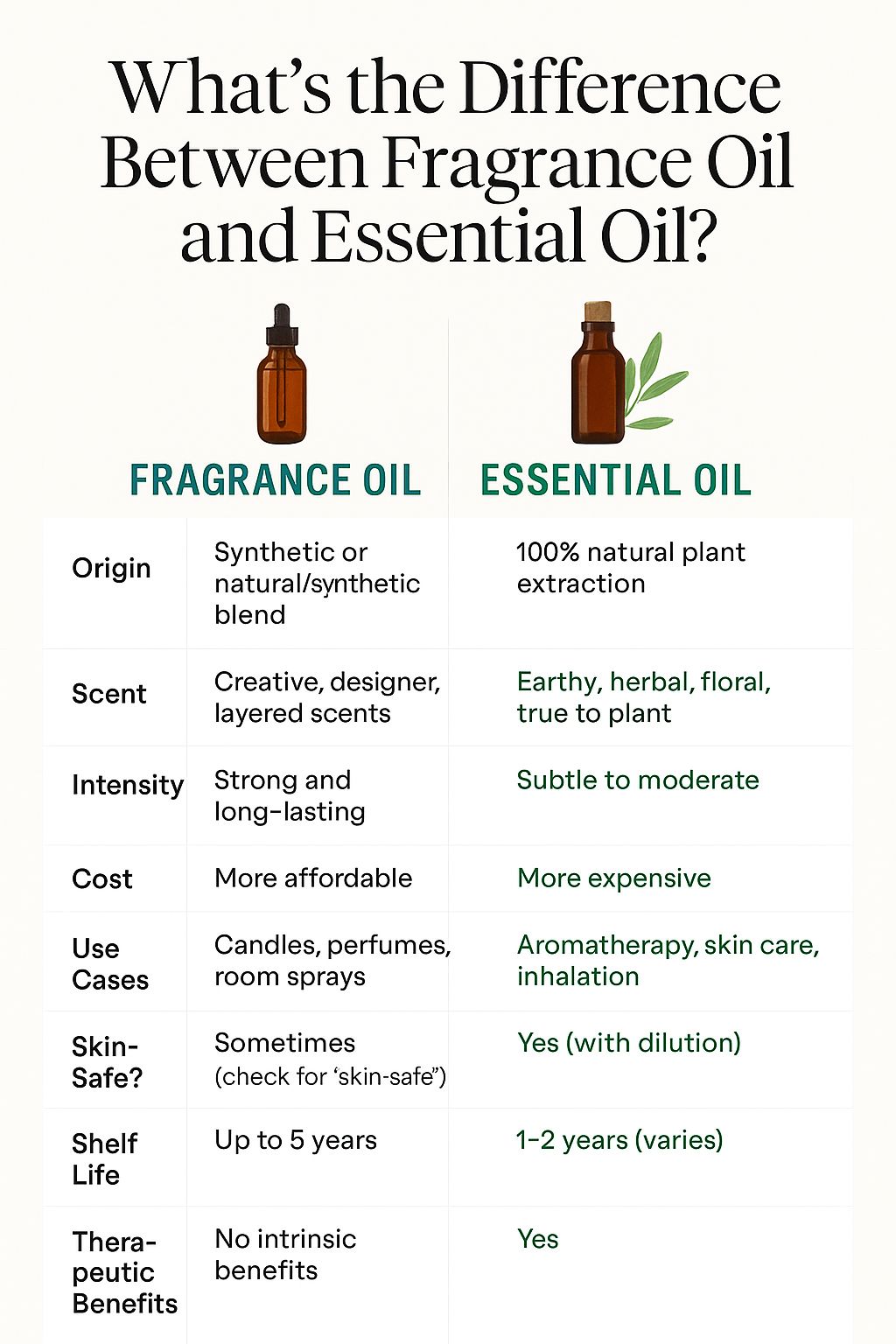
Característica Essential Oil Fragrance Oil
Origin 100% natural plant extraction Synthetic or natural/synthetic blend
Scent Earthy, herbal, floral, true to plant Creative, designer, layered scents
Intensity Subtle to moderate Strong and long-lasting
Coste More expensive More affordable
Use Cases Aromatherapy, skin care, inhalation Candles, perfumes, room sprays
Skin-safe? Yes (with dilution) Sometimes (check for “skin-safe”)
Vida útil 1–2 years (varies) Up to 5 years
Therapeutic Benefits Yes No intrinsic benefits

🎯 When Should You Use Each One?

✅ Use Essential Oils When:

  • You want natural, unadulterated ingredients
  • You’re doing aromatherapy, massage, or skincare
  • You’re seeking emotional or physical health support
  • You have sensitive skin or want clean label products

✅ Use Fragrance Oils When:

  • You’re making candles, wax melts, or home sprays
  • You want a scent that lasts longer and projects better
  • You need a specific scent profile not available naturally
  • You’re on a budget-conscious project

⚠️ Are Fragrance Oils Safe?

While synthetic, most commercial fragrance oils are safe when manufactured to IFRA (International Fragrance Association) standards. However:

  • They’re not always skin-safe, unless labeled specifically
  • Not suitable for diffusers or direct inhalation
  • May contain phthalates or allergens, depending on the brand

By contrast, essential oils are natural, but can still cause skin irritation or allergic reactions if undiluted.

🔍 Tip: Always check for certifications like “skin-safe,” “phthalate-free,” or “IFRA-compliant.”


🏷️ How to Tell Them Apart on Labels

Because marketing can be vague, here are clues to help you identify what you’re buying:

  • Essential Oil → Look for terms like 100% pure, steam distilled, botanical name (e.g., Citrus limon for lemon)
  • Fragrance Oil → Look for terms like fragrance, parfum, perfume oil, aroma oilo type oil

🧴 Can You Mix Them?

Yes! Many artisans and formulators blend essential oils and fragrance oils to get the therapeutic effects of the former and the lasting scent of the latter.

Example: A candle might contain lavender essential oil blended with a lavender vanilla fragrance oil to enhance both wellness and aroma strength.


✅ Final Thoughts: Purpose Defines Preference

Neither essential oil nor fragrance oil is inherently better—they serve different purposes:

  • Essential oils are ideal for those seeking purity, plant-based wellness, and minimalism.
  • Aceites aromáticos excel in scent creativity, consistency, and affordability.

👉 Choose based on your goal—healing, scent, budget, or aesthetics. When in doubt, start with sample sizes and always read labels carefully.

 

Publicaciones Similares

  • Las mejores fragancias para detergentes: Cómo elegir el aroma adecuado

      🧺 Best Fragrances for Detergents: How to Choose the Right Scent When consumers buy laundry detergents, one factor consistently ranks among the top: fragrance. The right scent doesn’t just clean clothes—it enhances brand loyalty, evokes emotional comfort, and even shapes perceptions of cleanliness. But with so many scent options, how do formulators, brands, and…

  • Exploring the World of Aroma Chemicals

    Exploring the World of Aroma Chemicals Aroma chemicals are everywhere, yet often go unnoticed. They are the unsung heroes behind the scents and flavors we love. These compounds are crucial in creating fragrances and flavors in countless products. From perfumes to food, they play a vital role. Aroma chemicals can be natural or synthetic. Synthetic versions are more common due to their consistency and cost-effectiveness. The fragrance industry relies heavily on these chemicals. They ensure that scents are long-lasting and consistent across products. Flavoring agents, another type of aroma chemical, enhance the taste of food and beverages. They make our favorite treats even more enjoyable. The history of aroma chemicals is rich and fascinating. Ancient civilizations used natural extracts for scenting, laying the groundwork for modern perfumery. Today, the balance between natural and synthetic ingredients is key. This balance creates unique fragrance profiles that captivate our senses. As we explore the world of aroma chemicals, we uncover their impact on our daily lives. They shape our experiences and evoke emotions, making them indispensable.   What Are Aroma Chemicals? Aroma chemicals are specialized compounds used in creating scents and flavors. They are the building blocks of fragrance and flavor industries, essential in many products. These compounds can be derived from both natural and synthetic sources. Natural aroma compounds are extracted from plants or animal products, while synthetic ones are manufactured in labs. Synthetic aroma chemicals offer several advantages. They provide consistency, purity, and often a more cost-effective solution than their natural counterparts. Aroma chemicals are utilized in various applications. This includes perfumes, cosmetics, food products, and even cleaning supplies. They are selected based on their ability to enhance the user experience. Common uses of aroma chemicals include: Perfumes: creating distinctive and lasting scents. Food and beverages: enhancing flavors. Household products: masking odors. Cosmetics: adding pleasant fragrances. The science behind aroma chemicals is complex, involving intricate molecule interactions. This fascinating chemistry allows them to mimic natural scents effectively. A key aspect of their success lies in their ability to evoke emotions and trigger memories. This emotional connection is why aroma chemicals are so effective in marketing.   The History and Evolution of Aroma Chemicals The use of aroma chemicals can be traced back to ancient civilizations. Early societies used natural extracts for incense and personal scenting. During the Renaissance, advances in distillation improved the extraction of aromatic compounds. This period saw the rise of perfumery in Europe, laying the groundwork for modern developments. The 19th century marked a significant shift. Synthetic production techniques expanded the palette of available scents. This innovation revolutionized the industry, leading to mass-market fragrances. In the 20th century, chemistry and technology advanced further. New methods allowed for complex fragrance compositions, combining both natural and synthetic ingredients. Key milestones in aroma chemicals’ evolution include: Ancient times: Use of natural extracts. Renaissance: Improved distillation techniques. 19th century: Introduction of synthetic aroma compounds. 20th century: Complex fragrance formulations. The evolution of aroma chemicals reflects broader trends in science and technology. It has continually adapted to consumer preferences and industry demands. Today, the focus is on sustainability and innovation. Efforts are underway to create eco-friendly processes and new, sustainable aroma compounds. by Emile Mbunzama (https://unsplash.com/@emilembunzama) Natural vs. Synthetic Aroma Chemicals Aroma chemicals can be either natural or synthetic. Each type offers unique attributes and advantages in fragrance and flavor production. Natural aroma compounds are derived from plant and animal sources. Essential oils and extracts provide natural scent profiles. These compounds are often favored for their purity and aromatic qualities. Synthetic aroma chemicals, however, are created in laboratories. They replicate both familiar and novel scents. This method allows for cost-effective production and greater scent variety. Choosing between natural and synthetic aromas involves several considerations. Factors include cost, availability, scent longevity, and consumer preferences. Many products today blend both types for optimal results. Key differences between natural and synthetic aroma chemicals include: Natural: Sourced from plants and animals. Synthetic: Lab-created, often more consistent and durable. Scent Profile: Natural for purity, synthetic for variety. Cost: Natural can be pricier; synthetic is more economical. Availability: Natural sources can be limited. The balance between these two forms of aroma chemicals is crucial. It influences fragrance formulation and appeals to diverse consumer needs. Ultimately, the choice depends on the desired product attributes and market trends. Both natural and synthetic types continue to play vital roles in the industry. by Ela De Pure (https://unsplash.com/@eladepure) Key Types of Fragrance Compounds and Flavoring Agents Fragrance compounds are essential elements in perfumery and flavoring. They provide unique scent and taste profiles, enhancing product appeal. Esters are a common type of fragrance compound. They offer fruity and floral scents. Widely used in perfumes, they provide fresh, sweet aromas. Aldehydes are another vital group. They contribute to fresh and citrusy scents. Found in many household and personal care products, they bring a lively aroma. Ketones are notable for their versatility. They range from sweet to woody scents. Ketones add depth and complexity to many fragrances and flavors….

  • Fragancia microencapsulada - F&Y (Guangdong) Biotechnology Co.,LTD

    Company Profile We provide high-end functional fragrance products and technical services. Technology and creativity are the core of F&Y, and we are willing to promote industry upgrading with a comprehensive market perspective. Main business: Perfume Fragrance, Functional Fragrance, and Microencapsulated Fragrance. Principle Of Microencapsulated Fragrance Microencapsulated Fragrance is a kind of microencapsulated product of fragrance…

  • What Are Fragrance Notes?

    🌸 What Are Fragrance Notes? Understanding the Building Blocks of Every Perfume 🧼 1. Introduction: Why Fragrance Notes Matter Every scent tells a story. Whether it’s the sparkling freshness of citrus in the morning or the warm, sensual trail of musk in the evening, perfumes and fragrances unfold over time like chapters in a book….

  • La Feria de Cantón y la industria de las fragancias: Oportunidades y retos de la globalización

    Canton Fair and the Fragrance Industry: Opportunities and Challenges in Globalization The Canton Fair (China Import and Export Fair) is a key event in global trade, providing an excellent platform for fragrance companies to showcase their products and expand their markets. This article explores the role of fragrance manufacturers in the Canton Fair, analyzes global…

Deja un comentario