Fragancia y sabor

Explicación de 7 tipos de métodos de producción de fragancias y aromas

🌿 7 Types of Modern Fragrance & Flavor Production Explained

In today’s fast-evolving world of flavors and fragrances, the term “natural” is no longer the only benchmark of quality. Whether it’s the soothing aroma in a luxury perfume, the fruity burst in your favorite candy, or the comforting flavor of vanilla in a dessert — the science behind these sensory experiences has become increasingly sophisticated.

This article explores the 7 primary types of modern fragrance and flavor production, their technical characteristics, and real-world applications.Fragancia y sabor

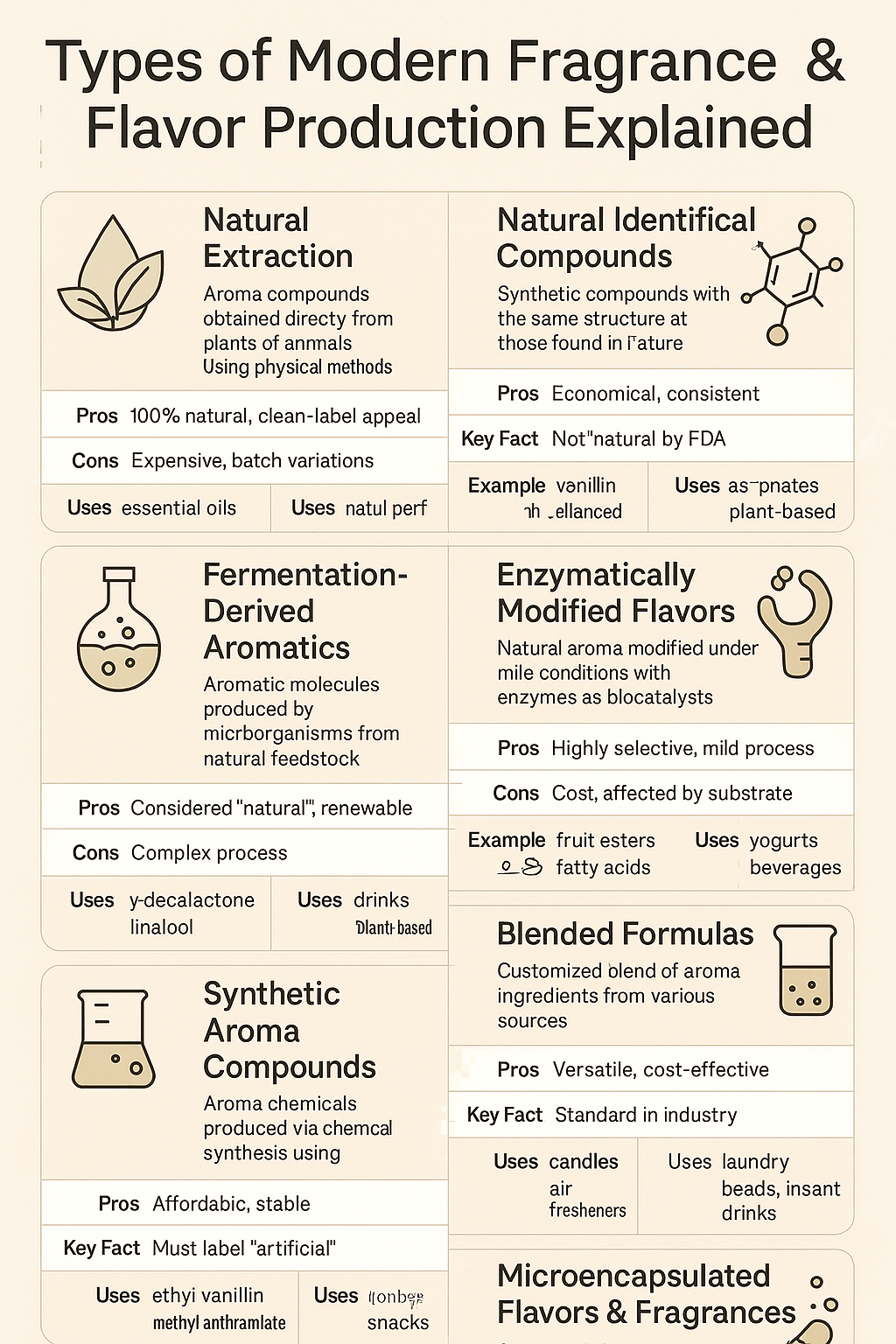
🧪 1. Natural Extraction

Definition: Natural extraction involves the physical separation of aroma compounds from plants or animals through non-chemical methods like steam distillation, cold pressing, or CO₂ supercritical extraction.

Common examples:

  • Lemon oil (cold-pressed from peel)
  • Rose essential oil (steam-distilled from petals)
  • Vetiver root extract

Pros:

  • 100% natural origin
  • Highly marketable for clean-label claims
  • Preferred in aromatherapy and natural cosmetics

Cons:

  • Expensive, climate-dependent
  • Aroma consistency varies by batch
  • Prone to oxidation and limited shelf life

Best for: Essential oils, natural perfumes, premium beverages, therapeutic applications


🧬 2. Natural Identical Compounds

Definition: These are synthetically produced aroma compounds that are chemically identical to those found in nature. Though made in labs, their molecular structure is the same as their natural counterpart.

Example: Vanillin (the main component of vanilla flavor), synthesized from guaiacol or lignin.

Key Facts:

  • Accepted as “natural-identical” in EU regulations
  • Not allowed to be labeled as “natural” in FDA (USA) guidelines
  • More affordable and consistent than natural extracts

Used in: Flavored yogurts, bakery products, mainstream perfumes


🧫 3. Fermentation-Derived Aromatics

Definition: These are aroma compounds biosynthesized using microorganisms such as yeast, bacteria, or fungi. The microbes convert natural feedstocks like glucose, corn syrup, or plant oils into fragrant molecules.

Popular fermentation-derived compounds:

  • R-(–)-Linalool
  • Natural vanillin from ferulic acid
  • γ-Decalactone (peach-like aroma)

Advantages:

  • Considered “natural” under EU and US regulations
  • Environmentally friendly and renewable
  • Batch-to-batch consistency with scalable output

Common uses: Functional drinks, plant-based foods, natural cosmetics


⚗️ 4. Enzymatically Modified Flavors

Definition: This method uses enzymes as biocatalysts to transform naturally derived molecules into desired flavor compounds under mild, eco-friendly conditions.

Typical applications:

  • Converting alcohols to esters (fruity notes)
  • Modifying fatty acids to creamy or dairy-like flavors
  • Mimicking ripened fruit aroma

Benefits:

  • High selectivity, minimal byproducts
  • Lower temperature and energy use than synthetic chemistry
  • Potential for “natural” labeling if the substrate is natural

Used in: Yogurts, fruit-based beverages, infant foods, dairy-alternative products


🧫 5. Synthetic Aroma Compounds

Definition: Fully synthetic compounds made through chemical synthesis, typically from petrochemical feedstocks.

Examples:

  • Ethyl vanillin (stronger than vanillin)
  • Methyl anthranilate (grape flavor)
  • Iso E Super (used in perfumery)

Why use synthetic flavors?

  • Affordable, scalable, and highly stable
  • Customizable for novel scent profiles
  • Used where natural sourcing is impractical

Regulatory status: Must be labeled as “artificial flavor” or “fragrance” depending on jurisdiction

Common in: Mass-market perfumes, snacks, sodas, household products


🎨 6. Blended Formulas (Composite Flavors & Fragrances)

Definition: These are custom formulations created by combining various natural, natural-identical, and/or synthetic compounds to produce a desired aroma profile.

Features:

  • Can mimic complex natural odors (e.g., “fresh-cut grass,” “white musk”)
  • May contain dozens to hundreds of ingredients
  • Standard practice in commercial flavor and fragrance development

Advantages:

  • Highly flexible and performance-optimized
  • Enables cost, stability, and sensorial customization
  • Essential for developing top/middle/base notes in perfumery

Used in: All consumer goods sectors — from food to air fresheners


🧴 7. Microencapsulated Flavors & Fragrances

Definition: This is not a production method for the aroma itself, but a delivery system in which flavors or fragrances are encapsulated in microcapsules (e.g., starch, gelatin, or polymers).

Function:

  • Protects aroma from heat, light, oxidation
  • Enables controlled or time-release of aroma (e.g., burst while chewing, or in wash cycles)

Examples:

  • Fragrance beads in laundry detergents
  • Flavor capsules in chewing gum or instant drinks
  • Shelf-stable flavor sachets for instant noodles

Benefits:

  • Extended shelf life
  • Reduced volatility
  • Ideal for long-distribution consumer goods

🧠 Choosing the Right Type for Your Application

Goal / Use Case Best Type(s) Recommended
💄 Luxury cosmetics / aromatherapy Natural Extraction, Enzymatic
🍹 Beverage flavors Fermentation-Derived, Blends
🧼 Detergents, soaps Synthetic, Encapsulated
🍬 Candy, snacks Synthetic, Natural Identical
🧃 Clean-label foods Natural Extract, Fermented
🍼 Infant and medical nutrition Enzymatically Modified

✅ Conclusion: Science & Nature in Harmony

Modern flavor and fragrance manufacturing is no longer just about squeezing oils from flowers or boiling spices. It’s a precise, regulated, and often biotech-driven field. Whether your product calls for a clean-label peach flavor or a long-lasting synthetic musk, there’s a production method built for that need.

By understanding the seven core types of aroma production, brands and consumers alike can make informed, intentional, and sustainable choices in how scent and flavor shape their experiences.


Publicaciones Similares

  • Exploring the World of Aroma Chemicals

    Exploring the World of Aroma Chemicals Aroma chemicals are everywhere, yet often go unnoticed. They are the unsung heroes behind the scents and flavors we love. These compounds are crucial in creating fragrances and flavors in countless products. From perfumes to food, they play a vital role. Aroma chemicals can be natural or synthetic. Synthetic versions are more common due to their consistency and cost-effectiveness. The fragrance industry relies heavily on these chemicals. They ensure that scents are long-lasting and consistent across products. Flavoring agents, another type of aroma chemical, enhance the taste of food and beverages. They make our favorite treats even more enjoyable. The history of aroma chemicals is rich and fascinating. Ancient civilizations used natural extracts for scenting, laying the groundwork for modern perfumery. Today, the balance between natural and synthetic ingredients is key. This balance creates unique fragrance profiles that captivate our senses. As we explore the world of aroma chemicals, we uncover their impact on our daily lives. They shape our experiences and evoke emotions, making them indispensable.   What Are Aroma Chemicals? Aroma chemicals are specialized compounds used in creating scents and flavors. They are the building blocks of fragrance and flavor industries, essential in many products. These compounds can be derived from both natural and synthetic sources. Natural aroma compounds are extracted from plants or animal products, while synthetic ones are manufactured in labs. Synthetic aroma chemicals offer several advantages. They provide consistency, purity, and often a more cost-effective solution than their natural counterparts. Aroma chemicals are utilized in various applications. This includes perfumes, cosmetics, food products, and even cleaning supplies. They are selected based on their ability to enhance the user experience. Common uses of aroma chemicals include: Perfumes: creating distinctive and lasting scents. Food and beverages: enhancing flavors. Household products: masking odors. Cosmetics: adding pleasant fragrances. The science behind aroma chemicals is complex, involving intricate molecule interactions. This fascinating chemistry allows them to mimic natural scents effectively. A key aspect of their success lies in their ability to evoke emotions and trigger memories. This emotional connection is why aroma chemicals are so effective in marketing.   The History and Evolution of Aroma Chemicals The use of aroma chemicals can be traced back to ancient civilizations. Early societies used natural extracts for incense and personal scenting. During the Renaissance, advances in distillation improved the extraction of aromatic compounds. This period saw the rise of perfumery in Europe, laying the groundwork for modern developments. The 19th century marked a significant shift. Synthetic production techniques expanded the palette of available scents. This innovation revolutionized the industry, leading to mass-market fragrances. In the 20th century, chemistry and technology advanced further. New methods allowed for complex fragrance compositions, combining both natural and synthetic ingredients. Key milestones in aroma chemicals’ evolution include: Ancient times: Use of natural extracts. Renaissance: Improved distillation techniques. 19th century: Introduction of synthetic aroma compounds. 20th century: Complex fragrance formulations. The evolution of aroma chemicals reflects broader trends in science and technology. It has continually adapted to consumer preferences and industry demands. Today, the focus is on sustainability and innovation. Efforts are underway to create eco-friendly processes and new, sustainable aroma compounds. by Emile Mbunzama (https://unsplash.com/@emilembunzama) Natural vs. Synthetic Aroma Chemicals Aroma chemicals can be either natural or synthetic. Each type offers unique attributes and advantages in fragrance and flavor production. Natural aroma compounds are derived from plant and animal sources. Essential oils and extracts provide natural scent profiles. These compounds are often favored for their purity and aromatic qualities. Synthetic aroma chemicals, however, are created in laboratories. They replicate both familiar and novel scents. This method allows for cost-effective production and greater scent variety. Choosing between natural and synthetic aromas involves several considerations. Factors include cost, availability, scent longevity, and consumer preferences. Many products today blend both types for optimal results. Key differences between natural and synthetic aroma chemicals include: Natural: Sourced from plants and animals. Synthetic: Lab-created, often more consistent and durable. Scent Profile: Natural for purity, synthetic for variety. Cost: Natural can be pricier; synthetic is more economical. Availability: Natural sources can be limited. The balance between these two forms of aroma chemicals is crucial. It influences fragrance formulation and appeals to diverse consumer needs. Ultimately, the choice depends on the desired product attributes and market trends. Both natural and synthetic types continue to play vital roles in the industry. by Ela De Pure (https://unsplash.com/@eladepure) Key Types of Fragrance Compounds and Flavoring Agents Fragrance compounds are essential elements in perfumery and flavoring. They provide unique scent and taste profiles, enhancing product appeal. Esters are a common type of fragrance compound. They offer fruity and floral scents. Widely used in perfumes, they provide fresh, sweet aromas. Aldehydes are another vital group. They contribute to fresh and citrusy scents. Found in many household and personal care products, they bring a lively aroma. Ketones are notable for their versatility. They range from sweet to woody scents. Ketones add depth and complexity to many fragrances and flavors….

  • Cómo elegir una fragancia duradera para el hogar: Guía completa

    How to Choose a Long-Lasting Home Fragrance: A Complete Guide Introduction: Why Home Fragrance Matters A well-chosen home fragrance can transform your living space, elevate your mood, and express your personal style. Beyond simply masking odors, scents can soothe, energize, or bring back fond memories. As consumer awareness grows, long-lasting home fragrances have become more…

  • El diverso mundo de las fragancias: De la perfumería fina al marketing olfativo

    Fragrances have the power to evoke emotions, trigger memories, and create a lasting impression. From luxurious fine perfumes to the fresh scents in household detergents, fragrances play a crucial role in our daily lives. This article explores the various types of fragrances, their characteristics, and their applications in different industries. A. Fine Perfumery Description and…

  • dominar el arte de solubilizar fragancias en el champú: una guía completa

    The Scent of Success: How Fragrance Fuels Detergent Companies’ Triumph Fragrance is more than just a pleasant smell; it’s a powerful tool that can shape consumer preferences, build brand identities, and ultimately drive sales. In the competitive world of laundry detergents, the right scent can elevate a product from ordinary to unforgettable. This article explores…

  • Aroma de palomitas de maíz en polvo: elevar el aroma de los aperitivos en el sudeste asiático a través de las exportaciones malasias

    Unpack the Theatre Experience Our Popcorn Powder Flavour masterfully recreates the rich, buttery essence of freshly popped popcorn, offering food manufacturers an innovative solution for adding that authentic cinema-style taste to their snacks. Application in Food Manufacturing Transforming Snacks into Crowd Pleasers Our Popcorn Powder Flavour is meticulously formulated to blend seamlessly into various snack…

  • ¿Qué papel desempeñan los saboristas en la producción alimentaria?

      🧪 What Role Do Flavorists Play in Food Production? Powered by FY Flavor & Fragrance Manufacturing In today’s competitive food industry, flavor can be the defining factor between a product that fails and one that becomes a household favorite. Behind the scenes, flavorists—also known as food flavor chemists—play a critical role in the creation,…

Deja un comentario