What is Fragrance? Understanding Its Role in Everyday Life

🌸 What is Fragrance? Understanding Its Role in Everyday Life

导言

When most people hear the word “fragrance”, they immediately think of 香水. But fragrance is far more than that. It is the invisible thread that connects memories, emotions, and everyday experiences. From the refreshing scent of lemon in a dishwashing liquid to the calming aroma of lavender in a candle, fragrance influences how we perceive products and environments.

In consumer goods, fragrance is not just a decorative element – it is a functional and strategic ingredient that enhances user experience, builds brand identity, and even affects purchasing decisions. This article explores the true meaning of fragrance, its sources, applications, safety considerations, and its growing importance in modern lifestyles.What is Fragrance

What is Fragrance?

Fragrance refers to a mixture of natural extracts and synthetic aromatic compounds that creates a distinctive scent. These scents are carefully designed to be pleasant, recognizable, and stable when applied in products.

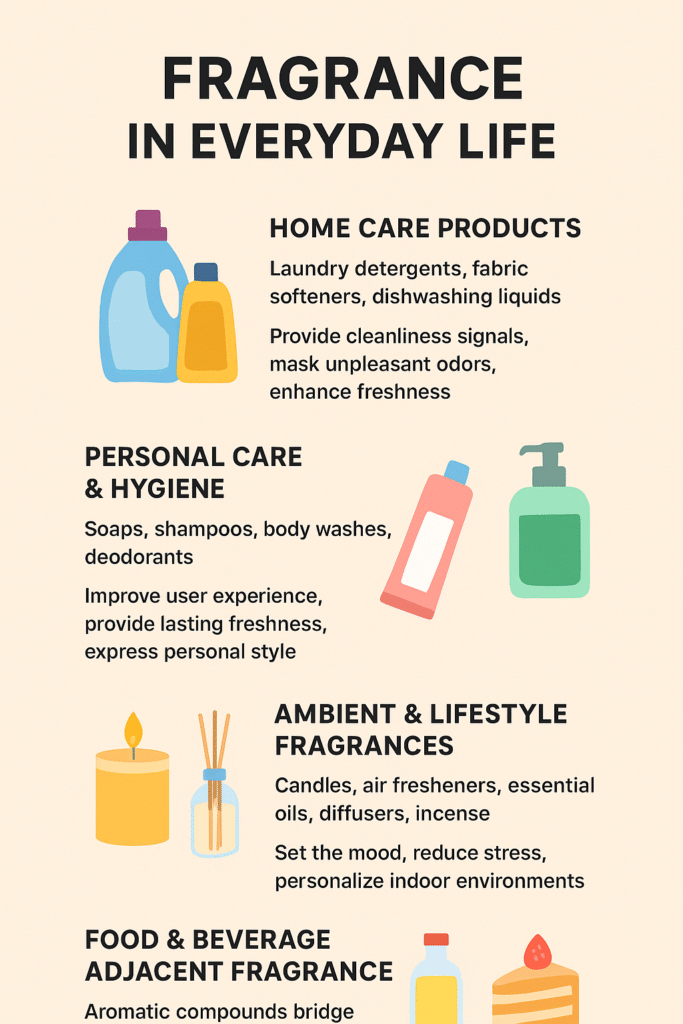
While 香水 is a fragrance designed for personal wear, the term “fragrance” covers a much wider scope. It includes all scented formulations used in:

  • Home products: air fresheners, candles, reed diffusers
  • Personal care: body washes, shampoos, lotions
  • Household cleaning: detergents, dishwashing liquids, disinfectants
  • Industrial and commercial uses: ambient scenting in hotels, offices, and retail spaces

👉 In short, fragrance is not limited to luxury; it is integrated into our daily routines and living environments.


Sources of Fragrance

1. Natural Sources

Natural fragrances are derived from plants and botanical extracts. Some common examples include:

  • Lavender oil → soothing and relaxing
  • Citrus oils (lemon, orange, bergamot) → fresh and energizing
  • Jasmine and rose extracts → floral elegance
  • Herbs and spices (mint, cinnamon, clove) → invigorating and warm

Natural fragrance appeals to consumers who associate it with purity and sustainability. However, challenges like cost, supply chain stability, and allergen risks mean natural fragrances are often blended with synthetics.

2. Synthetic Sources

Synthetic fragrances are created through aroma chemistry, replicating or enhancing natural scents. They offer:

  • 稳定性 → more resistant to heat, light, and oxidation
  • Affordability → cost-effective compared to rare natural oils
  • Innovation → access to scents not found in nature

For example, molecules like aldehydes provide a “clean” scent widely used in detergents, while esters deliver fruity notes for beverages or home care. Synthetic fragrances ensure consistency and scalability for global consumer products.


Applications of Fragrance in Everyday Life

1. Home Fragrance

Fragrance transforms living spaces into comfort zones. Products include:

  • Candles → lavender for relaxation, vanilla for warmth
  • Diffusers & sprays → refreshing citrus or herbal notes for freshness
  • Aromatherapy oils → wellness and mood enhancement

Home fragrance has become a fast-growing market, especially in regions like Asia, the Middle East, and South America, where consumers increasingly value emotional well-being through scent.

2. Cleaning and Laundry Products

Have you ever wondered why you prefer one detergent over another, even when cleaning performance is similar? The answer is fragrance.

  • Detergents & fabric softeners: floral or fruity notes that signal cleanliness
  • Dishwashing liquids: lemon, orange, or lime to suggest freshness and grease-cutting power
  • Surface cleaners: pine, mint, or oceanic scents that reinforce hygiene perception

Fragrance makes cleaning feel more effective and rewarding – turning a chore into a pleasant sensory ritual.

3. Personal Care Products

From shower gels to shampoos, fragrance plays a central role in consumer experience:

  • Shampoos: tropical or floral scents that linger in hair
  • Lotions and creams: soft notes like rose, jasmine, or almond for comfort
  • Toothpaste & oral care: minty freshness that communicates cleanliness

Even “fragrance-free” products often contain masking agents to neutralize unwanted base odors. This shows just how essential scent is to perception.


Fragrance and Consumer Psychology

Fragrance is not only about smell – it is about how we feel. Studies show that:

  • Emotions: Citrus notes boost alertness, while lavender lowers stress.
  • Memory recall: Scents are strongly tied to memory; a whiff of jasmine can remind someone of their childhood garden.
  • Brand identity: Signature scents help companies build loyalty. For example, hotels often use unique ambient fragrances to differentiate their guest experience.

In business, fragrance becomes an invisible marketing tool that creates emotional connections with consumers.


Safety and Regulatory Compliance

The fragrance industry operates under strict global standards to ensure consumer safety and sustainability.

  1. IFRA (International Fragrance Association) → sets safety guidelines for fragrance ingredients.
  2. REACH (EU regulation) → ensures chemicals are safe for human health and the environment.
  3. Allergen labeling → required in many regions to protect sensitive consumers.

Additionally, there is a growing demand for sustainable fragrances, including biodegradable molecules and eco-friendly extraction technologies. This ensures the fragrance industry evolves responsibly while meeting consumer expectations.


Future Trends in Fragrance

  1. Personalized fragrances → AI-driven customization based on individual mood and preferences.
  2. Functional fragrances → scents designed not only to smell good but to improve well-being (anti-stress, sleep aid, antibacterial).
  3. Green chemistry → bio-based, sustainable aroma molecules replacing petrochemical sources.
  4. Cross-industry innovation → fragrance integration in smart homes, automotive interiors, and wearable devices.

结论

Fragrance is much more than a pleasant smell – it is a powerful element shaping our daily lives. It enhances home comfort, elevates cleaning routines, builds brand identity, and influences emotions and memories.

For businesses in the flavor and fragrance industry, fragrance is both a science and an art. It requires technical expertise, regulatory compliance, and creative innovation to meet consumer needs worldwide.

As a global supplier of food flavors and daily-use fragrances, FY Chemicals is committed to creating safe, high-quality, and innovative fragrance solutions that help brands stand out in competitive markets.

👉 In a world where consumers seek comfort, wellness, and sustainability, fragrance remains the invisible force that transforms ordinary products into extraordinary experiences.


🌟 FAQ

1. What’s the difference between fragrance and perfume?
Perfume is a personal product worn on the skin, while fragrance is a broader term that applies to scents in everyday products and environments.

2. Are synthetic fragrances safe?
Yes—when developed under global regulations such as IFRA StandardsREACH, synthetic fragrances are safe and widely used.

3. Why do detergents and soaps have fragrance?
Fragrance not only masks unpleasant smells but also gives consumers a sense of cleanliness and comfort.

4. How does fragrance influence mood?
Scent interacts with the brain’s limbic system, directly tied to emotions and memories, which explains why certain aromas calm us while others energize us.

5. What is “scent branding”?
It’s the use of signature scents by brands (in stores, hotels, or products) to create a recognizable and emotional connection with customers.

 

类似文章

  • 香水师每种香味背后的艺术与科学

    Perfumers: The Art and Science Behind Every Scent How creativity, chemistry, and compliance shape modern fragrances Introduction A perfumer—often called a nose—designs fragrances that are emotionally resonant, technically robust, and legally compliant. Beyond poetic accords and brand storytelling, modern perfumers operate at the intersection of sensory art, analytical chemistry, and regulatory science. They balance natural…

  • 影响 2025 年的十大香水趋势 | FY Flavors & Frarances

    Top 10 Fragrance Trends Shaping 2025 How culture, science & sustainability are rewriting the scent rule‑book — and what it means for FY’s next creations. 1. Neo Gourmand 2.0 – Dessert Gets Sophisticated Classic cupcake sweetness is out; think roasted hazelnut praline laced with saffron or salty caramel spiked with black sesame. Search interest for “gourmand perfume” is…

  • Decoding Synthetic Fragrance Regulations 2025: Compliance Essentials & Strategic Insights

    Decoding Synthetic Fragrance Regulations 2025: Compliance Essentials & Strategic Insights Introduction The synthetic fragrance industry is entering 2025 with a rapidly evolving regulatory landscape. From allergen labeling updates in the EU to cosmetic modernization laws in the US and stricter compliance frameworks in China, fragrance businesses face new requirements that directly impact formulation, labeling, and…

  • Exploring the World of Aroma Chemicals

    Exploring the World of Aroma Chemicals Aroma chemicals are everywhere, yet often go unnoticed. They are the unsung heroes behind the scents and flavors we love. These compounds are crucial in creating fragrances and flavors in countless products. From perfumes to food, they play a vital role. Aroma chemicals can be natural or synthetic. Synthetic versions are more common due to their consistency and cost-effectiveness. The fragrance industry relies heavily on these chemicals. They ensure that scents are long-lasting and consistent across products. Flavoring agents, another type of aroma chemical, enhance the taste of food and beverages. They make our favorite treats even more enjoyable. The history of aroma chemicals is rich and fascinating. Ancient civilizations used natural extracts for scenting, laying the groundwork for modern perfumery. Today, the balance between natural and synthetic ingredients is key. This balance creates unique fragrance profiles that captivate our senses. As we explore the world of aroma chemicals, we uncover their impact on our daily lives. They shape our experiences and evoke emotions, making them indispensable.   What Are Aroma Chemicals? Aroma chemicals are specialized compounds used in creating scents and flavors. They are the building blocks of fragrance and flavor industries, essential in many products. These compounds can be derived from both natural and synthetic sources. Natural aroma compounds are extracted from plants or animal products, while synthetic ones are manufactured in labs. Synthetic aroma chemicals offer several advantages. They provide consistency, purity, and often a more cost-effective solution than their natural counterparts. Aroma chemicals are utilized in various applications. This includes perfumes, cosmetics, food products, and even cleaning supplies. They are selected based on their ability to enhance the user experience. Common uses of aroma chemicals include: Perfumes: creating distinctive and lasting scents. Food and beverages: enhancing flavors. Household products: masking odors. Cosmetics: adding pleasant fragrances. The science behind aroma chemicals is complex, involving intricate molecule interactions. This fascinating chemistry allows them to mimic natural scents effectively. A key aspect of their success lies in their ability to evoke emotions and trigger memories. This emotional connection is why aroma chemicals are so effective in marketing.   The History and Evolution of Aroma Chemicals The use of aroma chemicals can be traced back to ancient civilizations. Early societies used natural extracts for incense and personal scenting. During the Renaissance, advances in distillation improved the extraction of aromatic compounds. This period saw the rise of perfumery in Europe, laying the groundwork for modern developments. The 19th century marked a significant shift. Synthetic production techniques expanded the palette of available scents. This innovation revolutionized the industry, leading to mass-market fragrances. In the 20th century, chemistry and technology advanced further. New methods allowed for complex fragrance compositions, combining both natural and synthetic ingredients. Key milestones in aroma chemicals’ evolution include: Ancient times: Use of natural extracts. Renaissance: Improved distillation techniques. 19th century: Introduction of synthetic aroma compounds. 20th century: Complex fragrance formulations. The evolution of aroma chemicals reflects broader trends in science and technology. It has continually adapted to consumer preferences and industry demands. Today, the focus is on sustainability and innovation. Efforts are underway to create eco-friendly processes and new, sustainable aroma compounds. by Emile Mbunzama (https://unsplash.com/@emilembunzama) Natural vs. Synthetic Aroma Chemicals Aroma chemicals can be either natural or synthetic. Each type offers unique attributes and advantages in fragrance and flavor production. Natural aroma compounds are derived from plant and animal sources. Essential oils and extracts provide natural scent profiles. These compounds are often favored for their purity and aromatic qualities. Synthetic aroma chemicals, however, are created in laboratories. They replicate both familiar and novel scents. This method allows for cost-effective production and greater scent variety. Choosing between natural and synthetic aromas involves several considerations. Factors include cost, availability, scent longevity, and consumer preferences. Many products today blend both types for optimal results. Key differences between natural and synthetic aroma chemicals include: Natural: Sourced from plants and animals. Synthetic: Lab-created, often more consistent and durable. Scent Profile: Natural for purity, synthetic for variety. Cost: Natural can be pricier; synthetic is more economical. Availability: Natural sources can be limited. The balance between these two forms of aroma chemicals is crucial. It influences fragrance formulation and appeals to diverse consumer needs. Ultimately, the choice depends on the desired product attributes and market trends. Both natural and synthetic types continue to play vital roles in the industry. by Ela De Pure (https://unsplash.com/@eladepure) Key Types of Fragrance Compounds and Flavoring Agents Fragrance compounds are essential elements in perfumery and flavoring. They provide unique scent and taste profiles, enhancing product appeal. Esters are a common type of fragrance compound. They offer fruity and floral scents. Widely used in perfumes, they provide fresh, sweet aromas. Aldehydes are another vital group. They contribute to fresh and citrusy scents. Found in many household and personal care products, they bring a lively aroma. Ketones are notable for their versatility. They range from sweet to woody scents. Ketones add depth and complexity to many fragrances and flavors….

  • Microcapsule Technology and Its Application in Laundry

    Microcapsule Technology and Its Application in Laundry 1. Fundamentals of Microencapsulation Technology 1.1 Definition of Microcapsules Microcapsules are microscopic containers (size range: 10 nm–1000 μm) that encapsulate active ingredients (core materials) within polymeric walls via physical or chemical methods. Core value propositions include: Isolation & Protection: Prevent oxidation, volatilization, or degradation of core materials (e.g.,…

  • 什么是香调?

    🌸 What Are Fragrance Notes? Understanding the Building Blocks of Every Perfume 🧼 1. Introduction: Why Fragrance Notes Matter Every scent tells a story. Whether it’s the sparkling freshness of citrus in the morning or the warm, sensual trail of musk in the evening, perfumes and fragrances unfold over time like chapters in a book….

发表回复