🌿 Soluciones de fragancias sostenibles: Lo que las marcas están haciendo bien
Sustainability has become a defining force in the fragrance industry. With growing environmental concerns, consumer awareness, and regulatory pressure, fragrance brands and suppliers are reimagining how scents are created—from ingredient sourcing to production, formulationy packaging.
In this article, we explore what “sustainable fragrance” actually means, what top brands are doing right, and how fragrance innovation is aligning with the future of clean, ethical, and eco-conscious product development
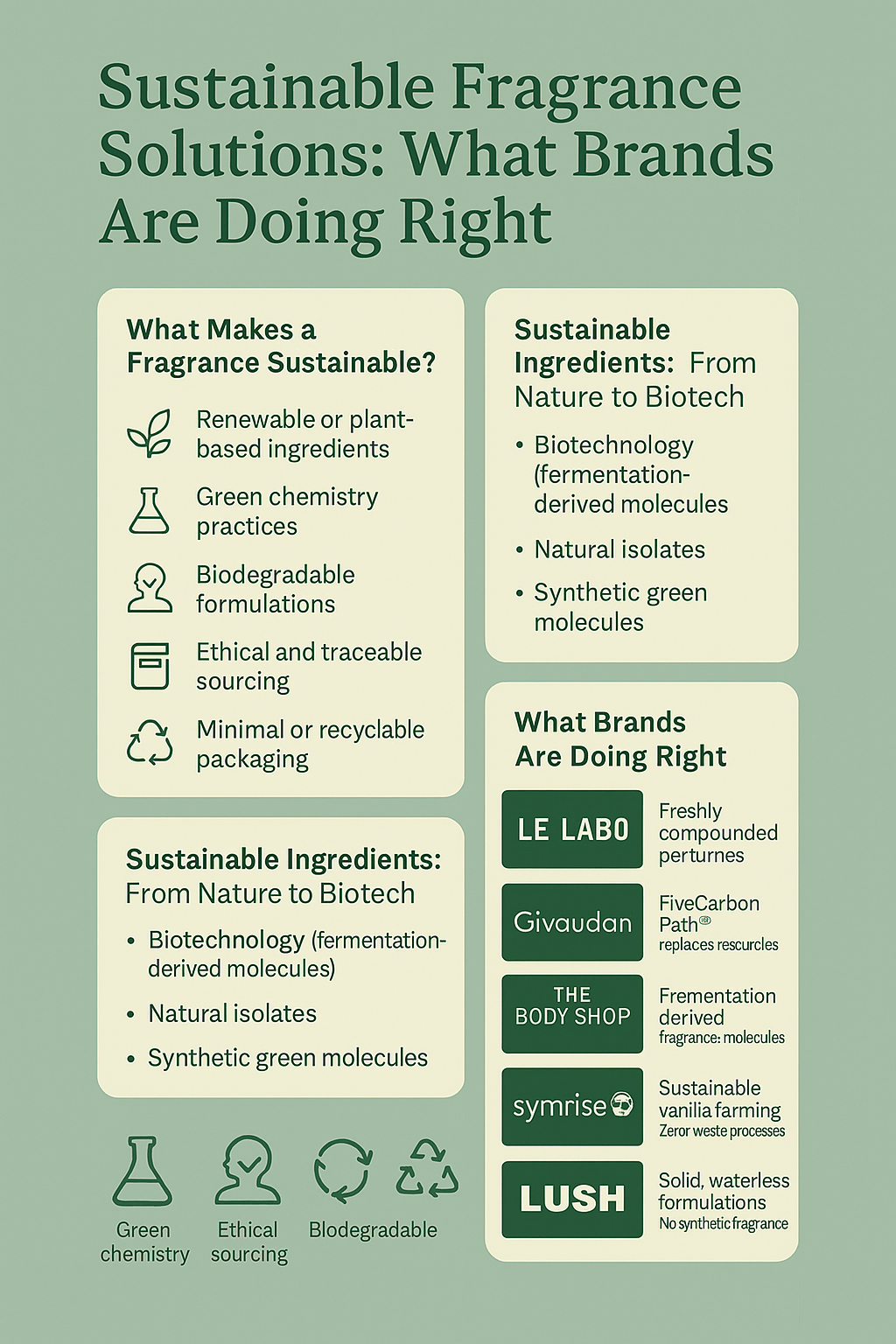
✅ What Makes a Fragrance “Sustainable”?
Sustainability in fragrance involves reducing environmental and ethical impacts across the entire lifecycle of a scent. A fragrance can be considered sustainable if it features:
- 🌱 Renewable or plant-based ingredients
- 🧪 Green chemistry practices (low-energy synthesis, solvent-free processes)
- ♻️ Biodegradable formulations
- 👩🌾 Ethical and traceable sourcing
- 📦 Minimal or recyclable packaging
- ✅ Compliance with safety and environmental certifications (e.g. IFRA, Ecocert, COSMOS)
💡 Importantly, “natural” does not always equal “sustainable.” Some natural ingredients (e.g., rose oil, sandalwood) require large volumes of plant matter or are tied to endangered ecosystems.
🔬 Sustainable Ingredients: From Nature to Biotech
As demand for sustainable fragrances rises, formulators are moving beyond traditional methods like distillation or solvent extraction. Today’s innovation focuses on:
🔁 Biotechnology (White Biotech)
Fragrance molecules are now being produced via fermentation of sugar, yeast, or plant-based feedstocks, mimicking compounds found in nature. For example:
- Vanillin from rice bran instead of petrochemicals or vanilla pods
- Civet, musk, or ambergris mimics without harming animals
🌿 Natural Isolates
Extracting single aromatic molecules from essential oils without using whole plant matter, reducing waste and enhancing stability.
🧬 Synthetic Green Molecules
Eco-friendly synthetics designed to degrade easily in nature and reduce toxicity, especially in home care applications.
🌍 What Brands Are Doing Right: Industry Leaders in Action
Let’s look at real-world examples of brands implementing sustainable fragrance solutions:
1. Le Labo
- Offers freshly compounded perfumes to reduce overproduction and waste.
- Uses minimalist, refillable packaging and emphasizes vegan & cruelty-free practices.
- Partners with Grasse-based artisans for responsibly sourced ingredients.
2. Givaudan
- Introduced FiveCarbon Path™ to replace fossil fuel–based raw materials with renewable carbon sources.
- Invests in white biotechnology, such as fermentation-derived fragrance molecules.
- Launched the Scentaurus™ platform for biodegradable aroma technologies.
3. The Body Shop
- Sources ethically from community trade programs for fragrance components like coconut and moringa.
- Ensures all ingredients are IFRA-compliant, vegan, and cruelty-free.
- Introduced fragrance-free and allergy-friendly product lines in response to sensitive skin demands.
4. Symrise
- Operates sustainable vanilla farms in Madagascar to ensure full traceability.
- Pioneers zero-waste processes using citrus by-products in fragrance creation.
- Focuses on biodegradable, nature-identical molecules through enzyme catalysis.
5. Lush
- Known for its commitment to solid perfumes and waterless formulations.
- Avoids synthetic fragrance altogether, relying solely on essential oils and absolutes.
- Reduces plastic and uses recyclable tins for all solid scent products.
📦 Packaging & Lifecycle Innovation
Sustainability isn’t just about what’s inside the bottle. Brands are also focusing on:
- Microencapsulation using biodegradable shells
- Solid fragrance formats that eliminate the need for bottles and sprayers
- Carbon-efficient local sourcing and short supply chains
- QR-code traceability for ingredient origins
⚠️ Challenges in Building Truly Sustainable Fragrances
Even with progress, brands face key obstacles:
- Greenwashing risk: Vague terms like “clean fragrance” are not regulated and often misused.
- Sourcing limitations: Natural doesn’t always scale, especially for mass production.
- Consumer perception: Many consumers still fear synthetic ingredients, even if they’re greener.
To overcome these challenges, transparency and education are vital.
🛒 What Buyers and Brands Should Look For
When assessing a sustainable fragrance offering, look for:
✅ Clear ingredient sourcing and carbon footprint disclosure
✅ Certifications like IFRA, RSPO, COSMOS, or USDA Organic
✅ Use of biodegradable, vegan, and cruelty-free components
✅ Brands that publish Life Cycle Assessment (LCA) data
✅ Partnerships with biotech or green chemistry fragrance houses
🔮 Future Trends in Sustainable Fragrance Innovation
As sustainability continues to influence purchasing decisions, expect to see:
- AI-optimized fragrance formulations to reduce energy and raw material use
- Blockchain traceability for full transparency from field to bottle
- Solvent-free natural scent capture via CO₂ extraction or headspace tech
- Fragrance as function: combining scent with antimicrobial or mood-enhancing effects
✅ Final Thoughts: Sustainability Is a Scent Strategy
Fragrance is no longer just about luxury or identity—it’s a statement of responsibility. Brands that embrace sustainable fragrance innovation are not only meeting consumer demands but also leading the industry toward a more ethical and resilient future.
Whether it’s through green chemistry, ethical sourcing, or biotech innovation, sustainable fragrance is here to stay—and it smells like progress.