Where Do Flavors Come From?

Where Do Flavors Come From? Unveiling the Secrets of Modern Taste Creation

Introduction: What Is Flavor?

Flavor is more than just taste—it’s a multisensory experience combining aroma, taste, and mouthfeel. The sweetness of a candy or the cool freshness of toothpaste comes from meticulously crafted flavor systems. In industries such as food, beverage, oral care, and pharmaceuticals, flavor plays a critical role.

As a global leader in the flavor and fragrance industry, FY Flavors & Fragrances combines nature and science to create safe, sustainable, and culturally resonant flavor solutions for markets across Africa, Southeast Asia, the Middle East, and South America.
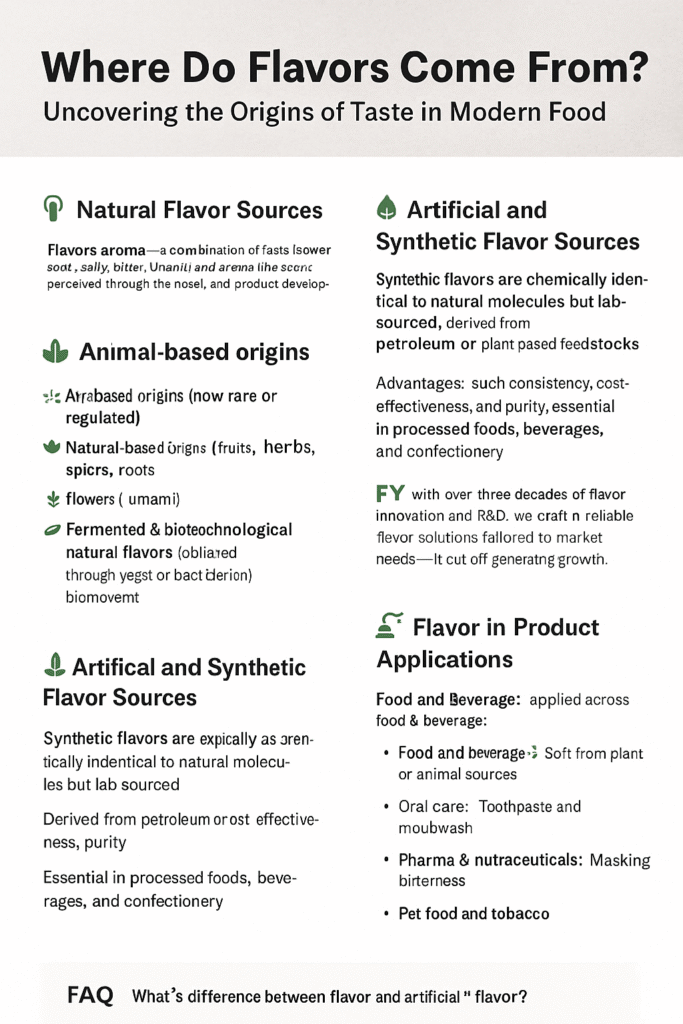
Where do flavors come from


Natural Flavor Sources

🌿 Plant-Based Ingredients

Natural flavors often come from various plant parts, including:

  • Fruits: Citrus peels, berries, mango
  • Herbs: Mint, basil, thyme
  • Spices: Clove, cinnamon, cardamom
  • Flowers: Jasmine, rose, orange blossom
  • Roots: Ginger, turmeric, licorice

These components are typically extracted through distillation, expression, or solvent extraction. FY prioritizes ethical sourcing and works closely with global farming cooperatives.

🐾 Animal-Derived Ingredients (Rare Today)

Previously used in perfumes and some flavorings, ingredients such as castoreum or civet have been replaced by synthetic or biotech-based versions for ethical and regulatory reasons.

🧫 Biotechnological Innovations

Through fermentation and enzyme engineering, FY develops natural-identical flavor molecules using yeast or bacteria. Examples include:

  • Fermentation-derived vanillin
  • Gamma-decalactone (peach flavor)
  • Methylbutyrate (apple note)

Artificial and Synthetic Flavor Sources

🔬 What Are They?

Synthetic flavors are compounds created in the lab that mimic natural molecules. They are:

  • Chemically identical to their natural counterparts
  • Derived from petroleum or plant-based raw materials
  • Stable and reproducible across batches

💼 Why Use Them?

  • Weather-independent production
  • High heat stability (important in baking, extrusion, etc.)
  • Cost-effective for large-scale applications

FY uses green chemistry techniques to reduce environmental impact and ensure high purity and safety in all synthetic flavor offerings.


How Flavors Are Made at FY

🧪 Natural Extraction Methods

FY uses tailored technologies depending on the source:

  • Steam Distillation: Ideal for mint, eucalyptus, lavender
  • Cold Pressing: Used for extracting citrus oils
  • Solvent Extraction: Common for delicate florals like jasmine
  • Supercritical CO₂ Extraction: Clean, solvent-free, and ideal for high-end applications

🧬 Artificial Synthesis & AI

FY’s R&D team leverages:

  • Proprietary molecule libraries
  • AI algorithms for trend prediction and flavor matching
  • Molecular modeling to anticipate aroma interactions in complex food systems

👃 The Role of Flavorists

Our expert team of flavorists works at the intersection of science, artistry, and consumer insight to create:

  • Balanced sensory profiles (top, heart, base notes)
  • Multilayered flavor expressions
  • Customized solutions for specific formats: RTD beverages, gummies, syrups, toothpastes, etc.

Industry Applications

FY flavors are found in:

  • 🍧 Азық-түлік және сусындар: Fruit juices, dairy, confectionery, snacks, sauces, baked goods
  • 🦷 Oral Care: Toothpaste, mouthwash, breath sprays, dental floss
  • 💊 Supplements: Vitamin gummies, effervescent tablets, protein powders
  • 🐶 Pet Nutrition: Enhanced palatability for kibbles and wet food
  • 🚬 Tobacco Alternatives: Herbal shisha, nicotine-free sticks, oral pouches

Safety and Compliance

FY meets or exceeds international regulatory and safety standards:

  • FEMA GRAS (U.S. flavor safety body)
  • IFRA (Fragrance industry regulations)
  • REACH (EU chemical safety regulation)
  • Halal / Kosher / Vegan Certified products
  • In-house labs equipped with GC-MS, HPLC, FTIR
  • Dedicated sensory evaluation panels

All products come with documentation: Safety Data Sheets (SDS), TDS, Certificate of Analysis (COA), and allergen declarations.


Trends & Innovation at FY

  • Clean Label: Simplified ingredient lists, recognizable sources
  • 🌱 Plant-Based/Vegan Expansion: Supporting plant-based meats, milks, desserts
  • 🤖 AI-Based Customization: Predictive design for taste preferences by region or demographic
  • 🌏 Localized Flavor Systems: For African spiced teas, Southeast Asian mango-coconut blends, Middle Eastern cardamom-saffron pairings

FY also collaborates with universities and innovation labs to stay ahead of market shifts and regulatory evolution.


Conclusion

Behind every delicious bite or refreshing sip is a complex journey of sourcing, extraction, innovation, and sensory design. FY bridges nature and technology to ensure that brands deliver exceptional taste experiences—consistently and responsibly.

From clean-label juice blends to vegan oral care flavors, FY is shaping the next generation of global flavor innovation.


FAQ

Q1: Are FY’s flavors safe?
Yes. All flavors are thoroughly tested and comply with FEMA GRAS, IFRA, REACH, and applicable national regulations.

Q2: Do you offer custom flavors?
Absolutely. FY specializes in co-creating flavor systems with brands to meet cultural preferences, application formats, and consumer trends.

Q3: Are vegan and halal flavors available?
Yes. FY has an extensive range of certified Halal, Kosher, and Vegan flavor solutions.

Q4: Where are FY’s natural flavors sourced from?
From global partners including citrus farms, herb plantations, and sustainable spice networks—with full traceability.

Q5: What are your best flavors for oral care?
Popular examples include Tea Mint, Herbal Lemon, Fresh Cooling Spearmint, and Sweet Herbal Citrus—all optimized for fluoride and surfactant systems.



 

Similar Posts

  • Popcorn Powder Flavour: Elevating Snack Aromas in Southeast Asia through Malaysian Exports

    Unpack the Theatre Experience Our Popcorn Powder Flavour masterfully recreates the rich, buttery essence of freshly popped popcorn, offering food manufacturers an innovative solution for adding that authentic cinema-style taste to their snacks. Application in Food Manufacturing Transforming Snacks into Crowd Pleasers Our Popcorn Powder Flavour is meticulously formulated to blend seamlessly into various snack…

  • Best Fragrances for Detergents: How to Choose the Right Scent

      🧺 Best Fragrances for Detergents: How to Choose the Right Scent When consumers buy laundry detergents, one factor consistently ranks among the top: fragrance. The right scent doesn’t just clean clothes—it enhances brand loyalty, evokes emotional comfort, and even shapes perceptions of cleanliness. But with so many scent options, how do formulators, brands, and…

  • The Science of Flavor Chemistry: What You Need to Know

    The Science of Flavor Chemistry: What You Need to Know (with FY’s practical experience embedded) One-sentence quick read: Flavor chemistry studies the chemical basis of aroma + taste + mouthfeel, and applies natural and/or synthetic flavor molecules to meet targeted product goals—striking the best balance among stability, reproducibility, cost, and compliance. As a flavor and…

  • The Science of Microencapsulated Fragrances in Cleaning Products

      🧪 The Science of Microencapsulated Fragrances in Cleaning Products How Advanced Scent Technology Delivers Long-Lasting Freshness 🔍 Introduction: Why Fragrance Longevity Matters In today’s highly competitive cleaning products market, fragrance is more than just a pleasant addition—it’s a key factor in consumer satisfaction and brand loyalty. Customers don’t just want their laundry or home…

  • Top 5 Myths About Synthetic Fragrance Debunked

    Top 5 Myths About Synthetic Fragrance Debunked Introduction Fragrances have always played an essential role in human culture, from ancient rituals using natural resins to modern perfumes designed by luxury houses. However, the rise of synthetic fragrances has brought with it a wave of misconceptions. Many consumers assume that anything “synthetic” must be unsafe, artificial,…

  • Exploring the World of Aroma Chemicals

    Exploring the World of Aroma Chemicals Aroma chemicals are everywhere, yet often go unnoticed. They are the unsung heroes behind the scents and flavors we love. These compounds are crucial in creating fragrances and flavors in countless products. From perfumes to food, they play a vital role. Aroma chemicals can be natural or synthetic. Synthetic versions are more common due to their consistency and cost-effectiveness. The fragrance industry relies heavily on these chemicals. They ensure that scents are long-lasting and consistent across products. Flavoring agents, another type of aroma chemical, enhance the taste of food and beverages. They make our favorite treats even more enjoyable. The history of aroma chemicals is rich and fascinating. Ancient civilizations used natural extracts for scenting, laying the groundwork for modern perfumery. Today, the balance between natural and synthetic ingredients is key. This balance creates unique fragrance profiles that captivate our senses. As we explore the world of aroma chemicals, we uncover their impact on our daily lives. They shape our experiences and evoke emotions, making them indispensable.   What Are Aroma Chemicals? Aroma chemicals are specialized compounds used in creating scents and flavors. They are the building blocks of fragrance and flavor industries, essential in many products. These compounds can be derived from both natural and synthetic sources. Natural aroma compounds are extracted from plants or animal products, while synthetic ones are manufactured in labs. Synthetic aroma chemicals offer several advantages. They provide consistency, purity, and often a more cost-effective solution than their natural counterparts. Aroma chemicals are utilized in various applications. This includes perfumes, cosmetics, food products, and even cleaning supplies. They are selected based on their ability to enhance the user experience. Common uses of aroma chemicals include: Perfumes: creating distinctive and lasting scents. Food and beverages: enhancing flavors. Household products: masking odors. Cosmetics: adding pleasant fragrances. The science behind aroma chemicals is complex, involving intricate molecule interactions. This fascinating chemistry allows them to mimic natural scents effectively. A key aspect of their success lies in their ability to evoke emotions and trigger memories. This emotional connection is why aroma chemicals are so effective in marketing.   The History and Evolution of Aroma Chemicals The use of aroma chemicals can be traced back to ancient civilizations. Early societies used natural extracts for incense and personal scenting. During the Renaissance, advances in distillation improved the extraction of aromatic compounds. This period saw the rise of perfumery in Europe, laying the groundwork for modern developments. The 19th century marked a significant shift. Synthetic production techniques expanded the palette of available scents. This innovation revolutionized the industry, leading to mass-market fragrances. In the 20th century, chemistry and technology advanced further. New methods allowed for complex fragrance compositions, combining both natural and synthetic ingredients. Key milestones in aroma chemicals’ evolution include: Ancient times: Use of natural extracts. Renaissance: Improved distillation techniques. 19th century: Introduction of synthetic aroma compounds. 20th century: Complex fragrance formulations. The evolution of aroma chemicals reflects broader trends in science and technology. It has continually adapted to consumer preferences and industry demands. Today, the focus is on sustainability and innovation. Efforts are underway to create eco-friendly processes and new, sustainable aroma compounds. by Emile Mbunzama (https://unsplash.com/@emilembunzama) Natural vs. Synthetic Aroma Chemicals Aroma chemicals can be either natural or synthetic. Each type offers unique attributes and advantages in fragrance and flavor production. Natural aroma compounds are derived from plant and animal sources. Essential oils and extracts provide natural scent profiles. These compounds are often favored for their purity and aromatic qualities. Synthetic aroma chemicals, however, are created in laboratories. They replicate both familiar and novel scents. This method allows for cost-effective production and greater scent variety. Choosing between natural and synthetic aromas involves several considerations. Factors include cost, availability, scent longevity, and consumer preferences. Many products today blend both types for optimal results. Key differences between natural and synthetic aroma chemicals include: Natural: Sourced from plants and animals. Synthetic: Lab-created, often more consistent and durable. Scent Profile: Natural for purity, synthetic for variety. Cost: Natural can be pricier; synthetic is more economical. Availability: Natural sources can be limited. The balance between these two forms of aroma chemicals is crucial. It influences fragrance formulation and appeals to diverse consumer needs. Ultimately, the choice depends on the desired product attributes and market trends. Both natural and synthetic types continue to play vital roles in the industry. by Ela De Pure (https://unsplash.com/@eladepure) Key Types of Fragrance Compounds and Flavoring Agents Fragrance compounds are essential elements in perfumery and flavoring. They provide unique scent and taste profiles, enhancing product appeal. Esters are a common type of fragrance compound. They offer fruity and floral scents. Widely used in perfumes, they provide fresh, sweet aromas. Aldehydes are another vital group. They contribute to fresh and citrusy scents. Found in many household and personal care products, they bring a lively aroma. Ketones are notable for their versatility. They range from sweet to woody scents. Ketones add depth and complexity to many fragrances and flavors….

Добавить комментарий