
Mastering Flavor Pairing and Custom Flavor Development with FY Flavors & Fragrances
Crafting Tailored Taste Experiences for Product Differentiation and Market Success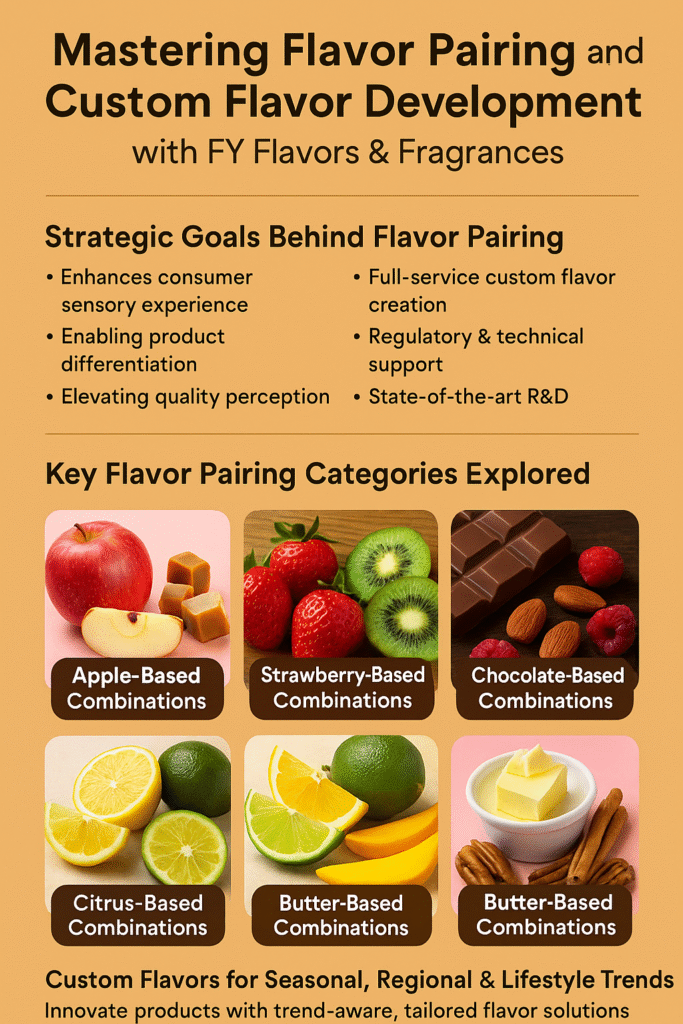
Introduction: The Power of Flavor Pairing and Customization
In today’s saturated consumer goods market, flavor has become more than just a sensory element — it’s a strategic asset. From beverage brands seeking a signature profile to confectionery companies aiming to stand out with exotic pairings, flavor is now a tool for identity and innovation.
At the forefront of this evolution is FY Flavors & Fragrances, a leading manufacturer specializing in custom flavors, high-performance flavor pairing solutions, and industry-specific formulations. FY empowers businesses across food, beverage, and personal care sectors to elevate their products by crafting unique flavor experiences that resonate with modern consumers.
Whether your goal is to create a nostalgic treat or a trend-forward health drink, flavor pairing and custom flavor development are your keys to unlocking long-term brand differentiation.
Why Flavor Pairing Matters in Product Innovation
1. Enhance Consumer Sensory Experience
Flavor pairing is not random; it’s based on scientific harmony between flavor compounds. By pairing complementary profiles — such as strawberry with kiwi, or chocolate with raspberry — brands can deliver a multi-layered, memorable experience.
2. Enable Product Differentiation
In an era of hyper-competition, standing out requires more than packaging. Unique flavor combinations can define your brand personality and capture niche markets.
3. Elevate Quality Perception
Premium flavor experiences signal product quality. A butter pecan rum cupcake or a lemon ginger iced tea doesn’t just taste great — it communicates sophistication and attention to detail.
4. Strengthen Brand Identity
Signature flavor pairings become brand markers. Think of mango-chili energy drinks or lavender-honey syrups — the flavor becomes part of your story.
✅ SEO Tip: Keywords like “flavor pairing,” “custom flavors,” and “unique flavor combinations” appear naturally in strategic locations like headings and first paragraphs.
FY’s Expertise in Custom Flavor Development
✔️ Over 260 Flavor Types
FY Flavors & Fragrances offers a wide array of synthetic and natural-identical flavors, covering fruits, spices, creams, chocolates, herbs, and exotic ingredients.
✔️ Full-Service Custom Flavor Creation
FY’s team collaborates directly with R&D teams, chefs, and marketers to develop custom flavors that align with your formulation, application, and branding goals. Whether you need a heat-stable, sugar-free coconut rum flavor or a dairy-free apple maple extract, FY can deliver.
✔️ Regulatory & Technical Support
All custom flavors comply with IFRA, Halaly ISO standards. Documentation for export and bulk use is available. FY also supports allergen-free, vegan, and GMO-free requests.
✔️ State-of-the-Art R&D
With in-house GC-MS analysis, sensory panels, and microencapsulation technology, FY ensures your custom flavors are not only delicious but stable and scalable.
Popular Flavor Pairing Categories with Custom Potential
Flavor pairing is a canvas — and FY’s capabilities allow clients to paint with unlimited color. Below are several classic pairing categories made modern through customization.
🍎 Apple-Based Combinations
Apple is nostalgic and versatile — but with customized pairing, it evolves beyond cider and pie.
Popular Pairings:
- Apple + Caramel
- Apple + Cinnamon
- Apple + Maple
- Apple + Cherry
- Apple + Cranberry
Aplicaciones:
Hot beverages, cereal bars, gummies, apple cider vinegar drinks.
Custom Flavor Notes:
- Acid-stable apple base for shelf-stable beverages.
- Microencapsulated cinnamon for extended release.
- Vegan caramel profiles without dairy notes.
🍓 Strawberry-Based Combinations
Strawberry delivers sweetness and color — ideal for playful or health-conscious formulations.
Popular Pairings:
- Strawberry + Banana
- Strawberry + Kiwi
- Strawberry + Guava
Aplicaciones:
Yogurts, smoothies, breakfast biscuits, sports nutrition.
Custom Flavor Innovations:
- Reduced-sugar strawberry for diabetic-friendly use.
- Banana note toned with vanilla cream for dairy mimicry.
- Stable in low pH systems (≤3.5) for ready-to-drink beverages.
🍫 Chocolate-Based Combinations
Chocolate remains king in indulgence categories — but with global twists, it stays fresh.
Popular Pairings:
- Chocolate + Almond
- Chocolate + Raspberry
- Chocolate + Mint
- Chocolate + Hazelnut
- Chocolate + Cherry
Aplicaciones:
Ice cream, filled cookies, protein bars, flavored milk.
Custom Flavor Options:
- Dark chocolate base with layered nut notes.
- Non-cocoa, allergen-free cocoa alternatives.
- Mint chocolate flavor with adjustable cooling intensity.
🔍 Related query: What are some innovative chocolate flavor pairings offered by FY Flavors?
🍋 Citrus-Based Combinations
Citrus brings brightness and cleansing acidity — great for refreshing products and functional beverages.
Popular Pairings:
- Jalapeño + Lime
- Lemon + Ginger
- Mango + Orange
- Lemon + Basil
- Lime + Coconut
Aplicaciones:
Seltzers, energy drinks, salad dressings, marinades.
Custom Citrus Innovations:
- Encapsulated lime to prevent browning.
- Essential oil–enriched lemon zest notes.
- Sweet mango modifiers for juice concentrates.
🧈 Butter-Based Combinations
Buttery notes represent comfort — perfect for nostalgic, festive, or bakery concepts.
Popular Pairings:
- Butter + Mint
- Butter + Pecan
- Butter + Rum
- Butter + Cinnamon
Aplicaciones:
Cookies, pancake syrups, popcorn seasoning, nut butters.
Custom Development Examples:
- Alcohol-free rum flavor with buttery base.
- Warm spice enhancers like brown sugar or clove.
- Vegan butter flavoring with creamy mouthfeel.
Custom Flavors for Seasonal, Regional & Lifestyle Trends
Beyond static pairings, FY develops custom flavors for:
| Category | Custom Solution Examples |
|---|---|
| Seasonal Launches | Pumpkin chai latte, Cranberry rosemary cider |
| Functional Foods | Citrus adaptogen blends, Mint + magnesium gummies |
| Regional Appeal | Mango chili for LATAM, Rose milk for MENA, Yuzu ginger for APAC |
| Lifestyle Labels | Keto bakery flavors, Vegan meat seasonings, Alcohol-free spirits |
Each formulation is co-developed with clients to balance cost, complexity, and target sensory profile.
FY’s Custom Flavor Creation Process
- Brief Collection
Gather your flavor vision, application, claims, and region. - R&D Collaboration
FY’s team analyzes feasibility, regulatory needs, and sensory direction. - Prototype & Sample
You receive 1–3 rounds of flavor samples within days. - Optimization & Approval
Adjust flavor strength, solubility, or secondary notes as needed. - Scale-Up & Production
Finalized custom flavor is scaled for bulk with full documentation.
🔍 SEO Tip: Repetition of key phrases like “custom flavor development,” “flavor pairing,” and “tailored flavor solutions” aids organic ranking without keyword stuffing.
Conclusion: Build Your Next Signature Flavor with FY
Flavor is more than taste — it’s emotion, memory, and brand identity. Through expert flavor pairing and full-service custom flavor development, FY Flavors & Fragrances enables you to go beyond the expected and create products consumers remember.
Whether you’re innovating a seasonal limited edition, launching a functional snack, or refreshing a heritage brand, FY is your strategic partner in flavor design.
👉 Ready to create your custom flavor?
Contact FY today for a free consultation, request a sample set, or begin your co-development journey.
FAQ Section (Structured Data Ready)
Q1: What is custom flavor development?
A: It’s the process of creating a tailor-made flavor to meet specific formulation needs, branding goals, or consumer expectations — offered by manufacturers like FY Flavors & Fragrances.
Q2: How long does it take to develop a custom flavor?
A: Typically 5–15 business days for sampling, depending on complexity. FY offers fast iteration and flexible prototyping.
Q3: Can I get allergen-free or vegan custom flavors?
A: Yes. FY provides custom flavors that are allergen-free, Halal-certified, vegan, and compliant with international regulations.
Q4: Do you offer custom flavors for beverages and confectionery?
A: Absolutely. FY specializes in flavor customization for dairy, drinks, confections, baked goods, snacks, and more.