The Versatility and Application of Orange Flavoring Across Industries

The Versatility and Application of Orange Flavoring Across Industries

1. Introduction

Orange flavoring has become a cornerstone in food, beverage, and wellness formulations due to its vibrant, sweet-tangy citrus profile. From classic sodas to gourmet desserts and modern CBD tinctures, orange flavoring delivers a refreshing taste that resonates globally. As both natural and synthetic flavor technologies evolve, manufacturers increasingly turn to orange as a versatile and cost-effective solution that guarantees consistency, sensory appeal, and consumer satisfaction.Orange Flavoring

2. Why Orange Flavoring Is So Popular

Orange is universally loved for its brightness and familiarity. Its flavor evokes feelings of freshness, warmth, and nostalgia—often associated with childhood juices, festive treats, or sunny summer afternoons. Unlike more polarizing flavors, orange has a broad demographic appeal and blends effortlessly into various culinary traditions, from Western desserts to Asian sauces.

The chemical complexity of orange—comprising fruity esters, citric acid notes, and light floral undertones—makes it suitable for countless applications. Whether used as a base or accent, it elevates products without overpowering them.


3. Orange Flavoring in the Beverage Industry

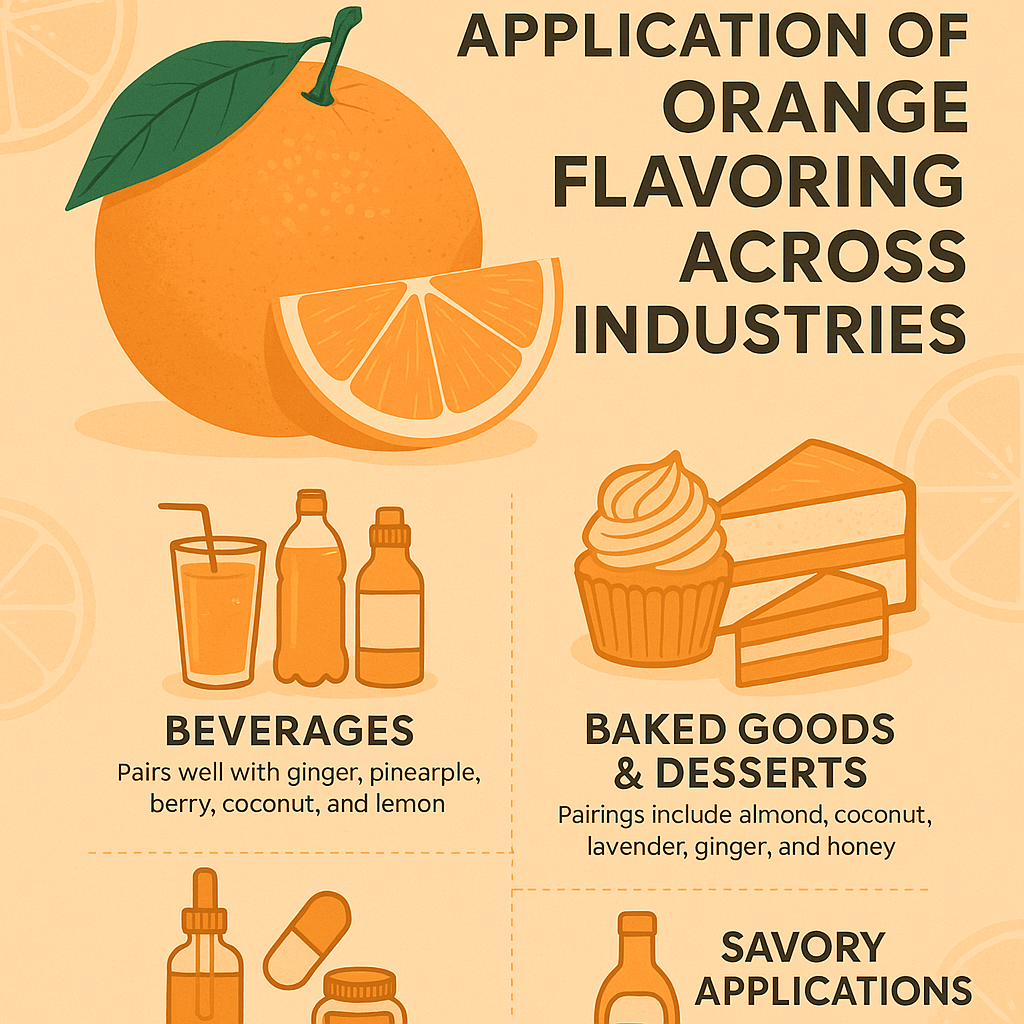
Orange flavoring is a beverage industry staple, found in sodas, energy drinks, sports beverages, flavored waters, mocktails, and teas. Its ability to pair with both sweet and spicy ingredients makes it indispensable in flavor development.

Common pairings include:

  • Ginger: Adds warmth and complexity.
  • Pineapple & Berry: Boosts tropical appeal.
  • Coconut & Lemon: Enhances creamy and citrus tones.

Manufacturers use orange flavoring not only for its taste but also for its aroma and color association. It provides a “perceived health benefit” when used in functional drinks like vitamin waters or probiotic beverages, aligning with wellness trends.

🔍 How does orange flavor pair in the beverage industry?
Orange pairs exceptionally well with tropical and spice elements, creating a wide array of drink possibilities—from refreshing to energizing.


4. Orange Flavoring in Baked Goods and Desserts

Orange flavor is widely used in baking and frozen desserts. It enhances:

  • Muffins, cakes, and scones with subtle citrus brightness.
  • Glazes, fillings, and frostings with an aromatic uplift.
  • Ice creams and frozen yogurts with a creamy, fruity contrast.

Recommended pairings for baking:

  • Almond: Brings nutty warmth.
  • Lavender: Introduces floral sophistication.
  • Honey or Ginger: Adds depth and a comforting sweetness.

Whether in sponge cakes or dairy-based confections, orange delivers a clean and tangy balance that awakens the palate.

🔍 What are the benefits of using orange flavoring in baking?
It enhances freshness, complements spices and nuts, and helps deliver a more dynamic sensory experience in baked goods.


5. Orange Flavor in Confectionery Products

In the candy industry, orange flavoring helps create dynamic taste experiences:

  • Gummies and jellies: Tangy yet approachable for all age groups.
  • Chocolates and bars: Contrasts sweetness with citrus sharpness.
  • Hard candies: Long-lasting flavor retention and color synergy.

Popular combinations include vanilla, mint, coconut, and berry, offering endless innovation opportunities for modern confectioners. For example, orange-mint lollipops or chocolate-orange protein bars have become trendy due to their layered flavor profiles.


6. Orange Flavor in Savory Applications

Beyond sweets and beverages, orange flavoring contributes to savory profiles in:

  • Salad dressings and vinaigrettes
  • Barbecue sauces and glazes
  • Marinades for poultry or tofu
  • Fusion condiments in Asian and Middle Eastern dishes

Pairings like chili-orange, honey-orangeو garlic-orange highlight its potential in balancing umami, spice, and acidity. This versatility allows chefs and food scientists to create modern savory products that surprise and delight.


7. Orange Flavoring in the CBD and Wellness Industry

As the CBD and wellness markets grow, flavor becomes crucial in masking hemp’s bitterness. Orange flavoring is ideal for this purpose because of its naturally strong and pleasant profile.

Applications include:

  • CBD gummies
  • Tinctures and oils
  • Functional shots and beverages
  • Aromatherapy blends

Consumers associate citrus flavors with detox, immunity, and energy, which aligns perfectly with the wellness messaging of CBD and nootropic products.

🔍 Can orange flavoring enhance CBD products?
Absolutely. It masks bitter notes while boosting the perception of health and vitality—key for consumer acceptance.


8. Technical and Commercial Advantages

Orange flavoring offers several operational and cost advantages:

Benefit Details
الاتساق Ensures flavor uniformity across batches.
Cost-effectiveness Cheaper than real fruit; reduced waste and spoilage.
Flexibility Available in oil-soluble, water-soluble, and encapsulated forms.
مدة الصلاحية Longer stability compared to natural juices or extracts.
الاستدامة Synthetic options reduce agricultural dependency and carbon footprint.

These advantages make orange flavoring especially appealing for large-scale manufacturers targeting global distribution.


9. Innovative Product Variants

Flavorists and manufacturers are continuously innovating within the orange flavor spectrum. Some notable trends include:

  • Blood Orange: More intense, slightly bitter, and sophisticated.
  • Orange Zest Oil: Adds realism and authenticity.
  • Mandarin/Tangerine Notes: Sweeter and more delicate.
  • Natural-identical flavors: Synthetic compounds that match the molecular structure of natural orange.
  • Microencapsulation technology: Protects flavor integrity and releases flavor during processing or consumption.

These innovations help companies tailor flavor experiences based on product category, target audience, and branding strategy.


10. Conclusion

Orange flavoring is far more than just a citrus note—it is a multifaceted ingredient that bridges industries, satisfies consumer expectations, and supports global innovation. From baked goods to beverages, confections to CBD, orange continues to drive new product development and flavor exploration.

For flavor manufacturers like FY Flavors & Fragrances, orange represents an essential tool in crafting vibrant, memorable, and high-performance flavor solutions for diverse markets.


Frequently Asked Questions (FAQ)

Q1: Why use synthetic orange flavor instead of real orange juice?
A: Synthetic orange flavor offers consistency, longer shelf life, lower cost, and is easier to control in large-scale production.

Q2: Is orange flavoring suitable for vegan or allergen-free products?
A: Yes. Many orange flavorings, especially synthetic or natural-identical variants, can be formulated to be vegan and allergen-free.

Q3: How can I request a customized orange flavor for my brand?
A: Companies like FY Flavors & Fragrances offer personalized flavor design services. You can contact us for free samples and custom formulation solutions.


موضوعات ذات صلة

  • Exploring the World of Aroma Chemicals

    Exploring the World of Aroma Chemicals Aroma chemicals are everywhere, yet often go unnoticed. They are the unsung heroes behind the scents and flavors we love. These compounds are crucial in creating fragrances and flavors in countless products. From perfumes to food, they play a vital role. Aroma chemicals can be natural or synthetic. Synthetic versions are more common due to their consistency and cost-effectiveness. The fragrance industry relies heavily on these chemicals. They ensure that scents are long-lasting and consistent across products. Flavoring agents, another type of aroma chemical, enhance the taste of food and beverages. They make our favorite treats even more enjoyable. The history of aroma chemicals is rich and fascinating. Ancient civilizations used natural extracts for scenting, laying the groundwork for modern perfumery. Today, the balance between natural and synthetic ingredients is key. This balance creates unique fragrance profiles that captivate our senses. As we explore the world of aroma chemicals, we uncover their impact on our daily lives. They shape our experiences and evoke emotions, making them indispensable.   What Are Aroma Chemicals? Aroma chemicals are specialized compounds used in creating scents and flavors. They are the building blocks of fragrance and flavor industries, essential in many products. These compounds can be derived from both natural and synthetic sources. Natural aroma compounds are extracted from plants or animal products, while synthetic ones are manufactured in labs. Synthetic aroma chemicals offer several advantages. They provide consistency, purity, and often a more cost-effective solution than their natural counterparts. Aroma chemicals are utilized in various applications. This includes perfumes, cosmetics, food products, and even cleaning supplies. They are selected based on their ability to enhance the user experience. Common uses of aroma chemicals include: Perfumes: creating distinctive and lasting scents. Food and beverages: enhancing flavors. Household products: masking odors. Cosmetics: adding pleasant fragrances. The science behind aroma chemicals is complex, involving intricate molecule interactions. This fascinating chemistry allows them to mimic natural scents effectively. A key aspect of their success lies in their ability to evoke emotions and trigger memories. This emotional connection is why aroma chemicals are so effective in marketing.   The History and Evolution of Aroma Chemicals The use of aroma chemicals can be traced back to ancient civilizations. Early societies used natural extracts for incense and personal scenting. During the Renaissance, advances in distillation improved the extraction of aromatic compounds. This period saw the rise of perfumery in Europe, laying the groundwork for modern developments. The 19th century marked a significant shift. Synthetic production techniques expanded the palette of available scents. This innovation revolutionized the industry, leading to mass-market fragrances. In the 20th century, chemistry and technology advanced further. New methods allowed for complex fragrance compositions, combining both natural and synthetic ingredients. Key milestones in aroma chemicals’ evolution include: Ancient times: Use of natural extracts. Renaissance: Improved distillation techniques. 19th century: Introduction of synthetic aroma compounds. 20th century: Complex fragrance formulations. The evolution of aroma chemicals reflects broader trends in science and technology. It has continually adapted to consumer preferences and industry demands. Today, the focus is on sustainability and innovation. Efforts are underway to create eco-friendly processes and new, sustainable aroma compounds. by Emile Mbunzama (https://unsplash.com/@emilembunzama) Natural vs. Synthetic Aroma Chemicals Aroma chemicals can be either natural or synthetic. Each type offers unique attributes and advantages in fragrance and flavor production. Natural aroma compounds are derived from plant and animal sources. Essential oils and extracts provide natural scent profiles. These compounds are often favored for their purity and aromatic qualities. Synthetic aroma chemicals, however, are created in laboratories. They replicate both familiar and novel scents. This method allows for cost-effective production and greater scent variety. Choosing between natural and synthetic aromas involves several considerations. Factors include cost, availability, scent longevity, and consumer preferences. Many products today blend both types for optimal results. Key differences between natural and synthetic aroma chemicals include: Natural: Sourced from plants and animals. Synthetic: Lab-created, often more consistent and durable. Scent Profile: Natural for purity, synthetic for variety. Cost: Natural can be pricier; synthetic is more economical. Availability: Natural sources can be limited. The balance between these two forms of aroma chemicals is crucial. It influences fragrance formulation and appeals to diverse consumer needs. Ultimately, the choice depends on the desired product attributes and market trends. Both natural and synthetic types continue to play vital roles in the industry. by Ela De Pure (https://unsplash.com/@eladepure) Key Types of Fragrance Compounds and Flavoring Agents Fragrance compounds are essential elements in perfumery and flavoring. They provide unique scent and taste profiles, enhancing product appeal. Esters are a common type of fragrance compound. They offer fruity and floral scents. Widely used in perfumes, they provide fresh, sweet aromas. Aldehydes are another vital group. They contribute to fresh and citrusy scents. Found in many household and personal care products, they bring a lively aroma. Ketones are notable for their versatility. They range from sweet to woody scents. Ketones add depth and complexity to many fragrances and flavors….

  • العطور الاصطناعية مقابل العطور الطبيعية

    🌿 Synthetic vs. Natural Fragrances: Pros, Cons & Industry Trends In the world of modern perfumery, cosmetics, and personal care, the debate between natural and synthetic fragrances is louder than ever. Some consumers look for labels that say “all-natural,” while others are more focused on safety, longevity, and performance. But what exactly is the difference…

  • عالم النكهة: استكشاف جوهر التذوق

    Flavor is a sensory experience that combines taste, smell, and texture to create a perception of food or drink. It’s a multi-dimensional concept that goes beyond simple taste, encompassing a complex interplay of sensations that can evoke memories, emotions, and cultural connections. Taste: The basic tastes—sweet, sour, salty, bitter, and umami—are detected by taste buds…

  • Where Do Flavors Come From?

    Where Do Flavors Come From? Unveiling the Secrets of Modern Taste Creation Introduction: What Is Flavor? Flavor is more than just taste—it’s a multisensory experience combining aroma, taste, and mouthfeel. The sweetness of a candy or the cool freshness of toothpaste comes from meticulously crafted flavor systems. In industries such as food, beverage, oral care,…

  • ما الدور الذي يلعبه خبراء النكهات في إنتاج الأغذية

      🧪 What Role Do Flavorists Play in Food Production? Powered by FY Flavor & Fragrance Manufacturing In today’s competitive food industry, flavor can be the defining factor between a product that fails and one that becomes a household favorite. Behind the scenes, flavorists—also known as food flavor chemists—play a critical role in the creation,…

  • What is Fragrance? Understanding Its Role in Everyday Life

    🌸 What is Fragrance? Understanding Its Role in Everyday Life Introduction When most people hear the word “fragrance”, they immediately think of perfume. But fragrance is far more than that. It is the invisible thread that connects memories, emotions, and everyday experiences. From the refreshing scent of lemon in a dishwashing liquid to the calming…

اترك تعليقاً