Decoding Synthetic Fragrance Regulations 2025: Compliance Essentials & Strategic Insights

Decoding Synthetic Fragrance Regulations 2025: Compliance Essentials & Strategic Insights

مقدمة

The synthetic fragrance industry is entering 2025 with a rapidly evolving regulatory landscape. From allergen labeling updates in the EU إلى cosmetic modernization laws in the US و stricter compliance frameworks in China, fragrance businesses face new requirements that directly impact formulation, labeling, and market access.

At FY Flavors & Fragrances (FY Chem Group), we closely track global regulatory updates to help our partners not only comply with these frameworks but also transform them into opportunities for innovation and brand growth.


Why Synthetic Fragrance Regulations Are Becoming Stricter

  1. Complex Formulations – Synthetic fragrances may contain hundreds of components, making safety evaluation critical.
  2. Allergen & Health Risks – Regulators are expanding allergen disclosure lists and restricting sensitizers.
  3. Environmental Sustainability – Pressure is mounting to reduce VOCs, PFAS, and microplastics that pose long-term ecological risks.

Key Regulations in Major Markets

European Union (EU)

  • IFRA 51st Amendment (2023–2025 transition): Introduced 48 new restriction standards and prohibited certain ingredients due to genotoxicity and phototoxicity. Full compliance deadlines extend to October 2025 (Ecomundo).
  • Expanded Allergen Labeling (Regulation 2023/154): Mandatory disclosure increased from 24 allergens to more than 80 (Noviconnect).
  • REACH Annex XVII Updates: New restrictions on PFHxA, siloxanes, and microplastics (Eqgest).

United States

  • FDA Oversight & MoCRA: The Modernization of Cosmetics Regulation Act (MoCRA) strengthens safety assessments, facility registration, and labeling.
  • EPA & TSCA Requirements: New chemicals must be notified and approved before market entry.

China

  • NMPA Updates: New cosmetic safety technical standards emphasize fragrance ingredient testing.
  • Customs Oversight: Importers face tighter product registration and labeling compliance.

Other Markets

  • Japan & Canada: Largely aligned with EU but with local variations.
  • UK: Post-Brexit regulation mirrors EU, with additional restrictions in allergen disclosure.

Emerging Regulatory Priorities

  1. Allergen Disclosure Expansion – Lower thresholds for declaration.
  2. PFAS & Persistent Pollutants – Gradual phase-outs under REACH.
  3. VOC & Environmental Controls – Stricter rules on air-quality impacts.

Compliance Strategies for Enterprises

At FY Chem Group, we recommend a three-layered compliance strategy:

  • Ingredient Transparency: Build a digital ingredient database linked to IFRA/REACH classifications.
  • Proactive Engagement: Participate in IFRA working groups to anticipate new restrictions.
  • Product Documentation: Keep SDS (Safety Data Sheets) and labels updated with new allergen lists.
  • Third-Party Certification: Partner with accredited labs to validate global compliance.

Challenges & Opportunities

  • Challenges: Rising compliance costs, complex international labeling requirements, and increased testing obligations.
  • Opportunities: Development of bio-based fragrance molecules, enhanced consumer trust through transparency, and differentiation via green innovation.

Future Outlook

Looking ahead, regulators are expected to further tighten restrictions on sensitizers, PFAS, and VOCs while introducing digital compliance frameworks for faster cross-border checks. Companies that treat compliance as a strategic driver—not just a legal hurdle—will lead the market.

At FY Flavors & Fragrances, we see compliance as a catalyst for innovation. Our R&D team is actively developing sustainable, bio-based fragrance alternatives that meet IFRA, REACH, and FDA standards, while maintaining cost-effectiveness and sensory quality for our global clients.


الخاتمة

Regulatory compliance is no longer optional in the fragrance industry—it is the gateway to market access and consumer trust. By embracing compliance-driven innovation, fragrance companies can secure long-term growth and leadership.

FY Flavors & Fragrances stands ready to support global partners with:

  • Customized compliance guidance (IFRA, REACH, FDA, NMPA)
  • Sustainable synthetic and bio-based fragrance solutions
  • Full OEM & ODM fragrance development services

👉 Contact us today at sales09@fychemgroup.com to learn how we can help your brand navigate regulations and innovate with confidence.


References

  1. Ecomundo — IFRA 51st Amendment Standards (2023).
  2. Noviconnect — Global Cosmetic & Fragrance Regulations Overview (2023).
  3. Eqgest — Update of REACH Annex XVII Restrictions (2024).
  4. IFRA — Chemicals Legislation and Sector Statements (2024).
  5. US FDA & MoCRA — Modernization of Cosmetics Regulation Act (2023).
 

موضوعات ذات صلة

  • حلول العطور المستدامة: ما الذي تفعله العلامات التجارية بشكل صحيح

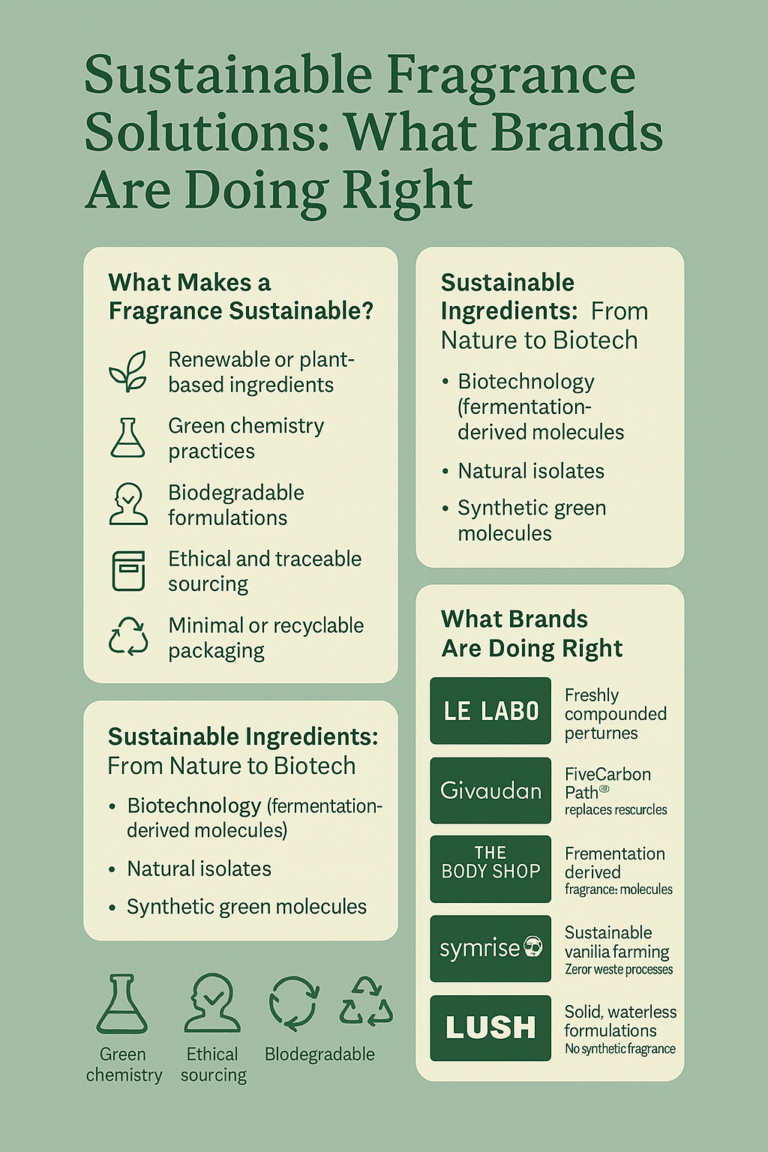
    🌿 Sustainable Fragrance Solutions: What Brands Are Doing Right Sustainability has become a defining force in the fragrance industry. With growing environmental concerns, consumer awareness, and regulatory pressure, fragrance brands and suppliers are reimagining how scents are created—from ingredient sourcing to production, formulation, and packaging. In this article, we explore what “sustainable fragrance” actually means,…

  • The Role of Aroma Chemicals in Household Products Manufacturing

    The Role of Aroma Chemicals in Household Products Manufacturing Introduction — scent is product experience Scent is more than decoration. In household products—laundry detergents, fabric softeners, surface cleaners, air fresheners and dishwashing liquids—fragrance is a powerful driver of perceived cleanliness, emotional response and repeat purchase. Aroma chemicals are the molecular ingredients that create those scent…

  • أهمية النكهات في صناعة الأغذية

    Importance of flavors in the food industry Introduction With the rapid development of the food industry, people have put forward higher requirements for the flavor, taste and overall sensory experience of food. In this process, flavors, as an important food additive, have played an irreplaceable role in improving food flavor, enhancing appetite, extending food shelf…

  • Exploring the World of Aroma Chemicals

    Exploring the World of Aroma Chemicals Aroma chemicals are everywhere, yet often go unnoticed. They are the unsung heroes behind the scents and flavors we love. These compounds are crucial in creating fragrances and flavors in countless products. From perfumes to food, they play a vital role. Aroma chemicals can be natural or synthetic. Synthetic versions are more common due to their consistency and cost-effectiveness. The fragrance industry relies heavily on these chemicals. They ensure that scents are long-lasting and consistent across products. Flavoring agents, another type of aroma chemical, enhance the taste of food and beverages. They make our favorite treats even more enjoyable. The history of aroma chemicals is rich and fascinating. Ancient civilizations used natural extracts for scenting, laying the groundwork for modern perfumery. Today, the balance between natural and synthetic ingredients is key. This balance creates unique fragrance profiles that captivate our senses. As we explore the world of aroma chemicals, we uncover their impact on our daily lives. They shape our experiences and evoke emotions, making them indispensable.   What Are Aroma Chemicals? Aroma chemicals are specialized compounds used in creating scents and flavors. They are the building blocks of fragrance and flavor industries, essential in many products. These compounds can be derived from both natural and synthetic sources. Natural aroma compounds are extracted from plants or animal products, while synthetic ones are manufactured in labs. Synthetic aroma chemicals offer several advantages. They provide consistency, purity, and often a more cost-effective solution than their natural counterparts. Aroma chemicals are utilized in various applications. This includes perfumes, cosmetics, food products, and even cleaning supplies. They are selected based on their ability to enhance the user experience. Common uses of aroma chemicals include: Perfumes: creating distinctive and lasting scents. Food and beverages: enhancing flavors. Household products: masking odors. Cosmetics: adding pleasant fragrances. The science behind aroma chemicals is complex, involving intricate molecule interactions. This fascinating chemistry allows them to mimic natural scents effectively. A key aspect of their success lies in their ability to evoke emotions and trigger memories. This emotional connection is why aroma chemicals are so effective in marketing.   The History and Evolution of Aroma Chemicals The use of aroma chemicals can be traced back to ancient civilizations. Early societies used natural extracts for incense and personal scenting. During the Renaissance, advances in distillation improved the extraction of aromatic compounds. This period saw the rise of perfumery in Europe, laying the groundwork for modern developments. The 19th century marked a significant shift. Synthetic production techniques expanded the palette of available scents. This innovation revolutionized the industry, leading to mass-market fragrances. In the 20th century, chemistry and technology advanced further. New methods allowed for complex fragrance compositions, combining both natural and synthetic ingredients. Key milestones in aroma chemicals’ evolution include: Ancient times: Use of natural extracts. Renaissance: Improved distillation techniques. 19th century: Introduction of synthetic aroma compounds. 20th century: Complex fragrance formulations. The evolution of aroma chemicals reflects broader trends in science and technology. It has continually adapted to consumer preferences and industry demands. Today, the focus is on sustainability and innovation. Efforts are underway to create eco-friendly processes and new, sustainable aroma compounds. by Emile Mbunzama (https://unsplash.com/@emilembunzama) Natural vs. Synthetic Aroma Chemicals Aroma chemicals can be either natural or synthetic. Each type offers unique attributes and advantages in fragrance and flavor production. Natural aroma compounds are derived from plant and animal sources. Essential oils and extracts provide natural scent profiles. These compounds are often favored for their purity and aromatic qualities. Synthetic aroma chemicals, however, are created in laboratories. They replicate both familiar and novel scents. This method allows for cost-effective production and greater scent variety. Choosing between natural and synthetic aromas involves several considerations. Factors include cost, availability, scent longevity, and consumer preferences. Many products today blend both types for optimal results. Key differences between natural and synthetic aroma chemicals include: Natural: Sourced from plants and animals. Synthetic: Lab-created, often more consistent and durable. Scent Profile: Natural for purity, synthetic for variety. Cost: Natural can be pricier; synthetic is more economical. Availability: Natural sources can be limited. The balance between these two forms of aroma chemicals is crucial. It influences fragrance formulation and appeals to diverse consumer needs. Ultimately, the choice depends on the desired product attributes and market trends. Both natural and synthetic types continue to play vital roles in the industry. by Ela De Pure (https://unsplash.com/@eladepure) Key Types of Fragrance Compounds and Flavoring Agents Fragrance compounds are essential elements in perfumery and flavoring. They provide unique scent and taste profiles, enhancing product appeal. Esters are a common type of fragrance compound. They offer fruity and floral scents. Widely used in perfumes, they provide fresh, sweet aromas. Aldehydes are another vital group. They contribute to fresh and citrusy scents. Found in many household and personal care products, they bring a lively aroma. Ketones are notable for their versatility. They range from sweet to woody scents. Ketones add depth and complexity to many fragrances and flavors….

  • نكهات السجائر الإلكترونية: استكشاف طلب المستهلكين وابتكارات تكنولوجيا النكهات

    Electronic Cigarette Flavors: Exploring Consumer Demand and Flavor Technology Innovation Introduction The electronic cigarette (e-cigarette) industry has witnessed rapid development globally, fueled by the increasing diversification of flavor options. In this competitive landscape, flavor compounds play a crucial role in defining user experience, influencing both satisfaction and brand loyalty. This article, inspired by innovation leaders…

اترك تعليقاً