What Does Aroma Mean? Definition, Origins, and Everyday Examples
🌿 What Does Aroma Mean? Definition, Origins, and Everyday Examples
Aroma is more than just a pleasant smell—it’s a powerful sensory experience that connects memory, mood, taste, and perception. From the scent of freshly brewed coffee to the fragrance of spring flowers, aromas play a critical role in how we perceive the world around us.
In this article, we’ll explore the definition of aroma, how it works, and how it’s used in food, fragrance, and everyday life.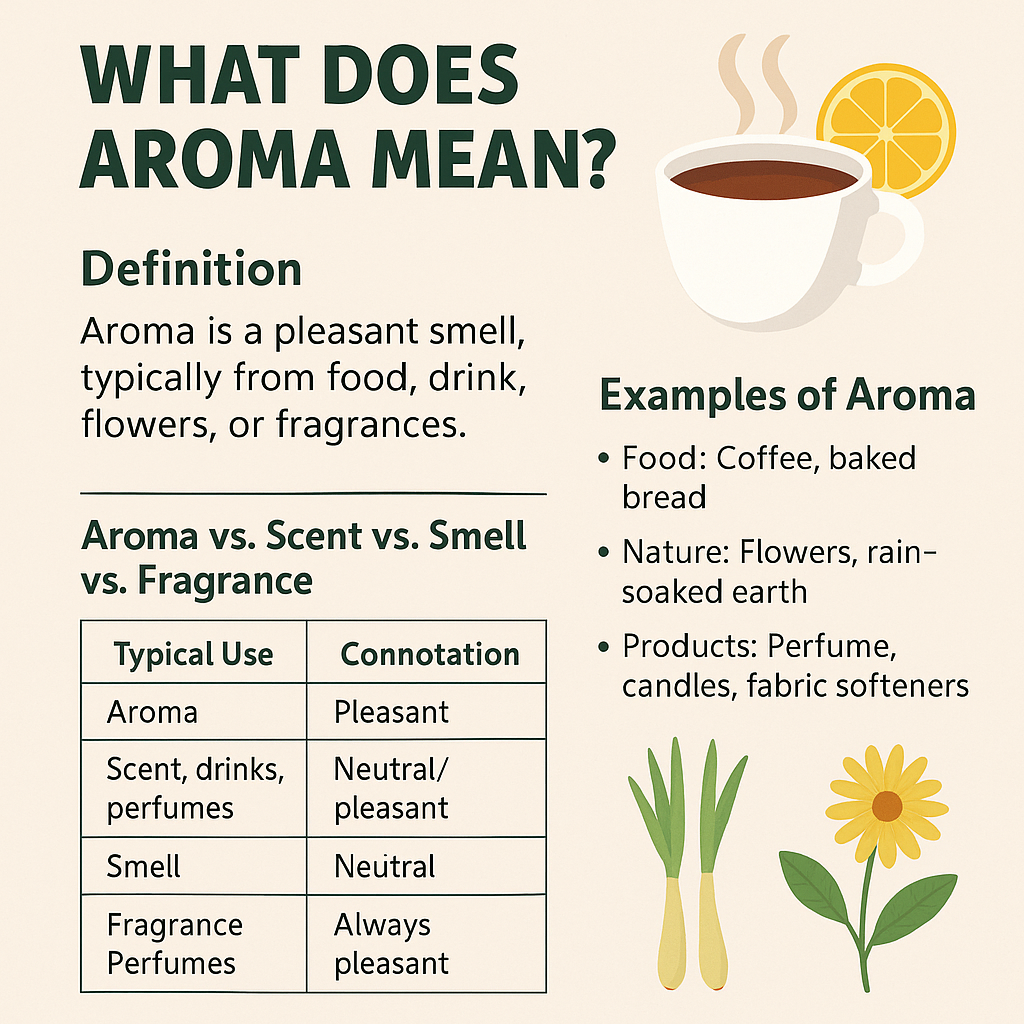
📖 What Is the Definition of Aroma?
Aroma refers to a smell or odor, especially one that is pleasant. While commonly associated with food and beverages, aroma can describe any fragrant or distinctive scent in the air.
Simple definition:
Aroma is a pleasant smell, typically from food, drink, flowers, or fragrances.
Although “aroma” and “smell” are often used interchangeably, aroma generally carries a positive or desirable connotation—whereas “odor” may imply something unpleasant.
🧬 The Origin and Etymology of “Aroma”
The word “aroma” comes from Latin “arōma”, which itself was borrowed from Greek “ἄρωμα” (arōma), meaning spice or fragrant herb. Originally, the term referred to fragrant spices used in medicine or rituals, gradually evolving into the modern usage of pleasant smells.
- First English use: Late 14th century
- Evolved meaning: From “fragrant spices” → “pleasant smells” → broader applications in food and fragrance
👃 Aroma vs. Scent vs. Smell vs. Fragrance
| Term | Typical Use | Connotation |
|---|---|---|
| Aroma | Food, drinks, perfumes | Pleasant |
| Scent | Animals, perfumes, flowers | Neutral/pleasant |
| Smell | General descriptor for olfactory stimuli | Neutral |
| Fragrance | Perfumes, cosmetics, personal care products | Always pleasant |
✅ “Aroma” is most often used in culinary, beverage, and sensory evaluation contexts.
🔬 How Does Aroma Work? The Science of Smelling
Our perception of aroma begins when volatile compounds—tiny airborne molecules—enter the nose and stimulate the olfactory receptors. These signals are then transmitted to the brain’s olfactory bulb, where they’re processed and linked to memories and emotions.
🔄 Aroma & Taste Are Connected
What we perceive as “flavor” is actually a combination of:
- Taste (sweet, salty, sour, bitter, umami)
- Aroma (via retro-nasal olfaction)
- Texture and temperature
That’s why food tastes bland when you have a blocked nose—you’ve lost the aroma perception.
🍒 Examples of Aroma in Everyday Life
- Food: The warm aroma of baked bread, grilled meat, or cherry ice cream
- Drinks: Coffee, wine, herbal teas, and citrus-based sodas
- Nature: Flowers, fresh-cut grass, rain-soaked earth (petrichor)
- Home Products: Fabric softeners, candles, incense, air fresheners
🧪 Aroma in Industry and Professional Use
Food & Beverage:
Flavorists design aroma profiles for ice cream, beverages, baked goods, and snacks. For example, FY Flavor & Fragrance develops high-purity, heat-stable cherry and citrus aromas for global food brands.
Fragrance Industry:
Aroma compounds are the building blocks of perfumes, room sprays, and personal care products.
Coffee & Wine:
Tasting professionals use aroma wheels to classify and describe subtle scent notes like “dark cherry,” “earthy,” or “floral.”
⚠️ Common Misunderstandings About Aroma
- Is aroma always pleasant?
Not necessarily. While “aroma” usually implies something pleasant, it can be subjective. Some people may dislike strong cheese or herbal aromas, even if others enjoy them. - Is aroma only related to food?
No. Aroma applies to perfumes, plants, essential oils, cleaning products, and more. - Is aroma natural or synthetic?
Both. Aromas can be derived naturally (from essential oils or fruit extractions) or created synthetically in labs for consistency, cost, and safety.
💬 FAQ: What People Ask About Aroma
Q1: Is aroma the same as smell?
No. “Smell” is a general term, while “aroma” usually refers to a pleasant scent, especially in food or beverages.
Q2: What are aroma compounds?
They are volatile molecules responsible for the scent of a substance. In flavor chemistry, they determine how we perceive flavor through the nose.
Q3: How is aroma used in food manufacturing?
Aroma compounds are added to enhance or simulate natural food smells—especially in flavored ice cream, snacks, and beverages. FY Flavor & Fragrance offers both synthetic and natural aroma solutions for global applications.
Q4: Why is aroma important?
Aroma influences flavor perception, appetite, mood, and even memory. It plays a major role in how we experience food, fragrance, and our environment.
Q5: Can aroma be unpleasant?
Technically, yes—but we typically use other words like “odor” or “stench” for unpleasant smells.
🧭 Summary: Why Aroma Matters
Aroma is more than just a pleasant smell—it’s a vital part of how we experience food, emotion, and memory. Whether you’re enjoying the scent of your morning coffee, evaluating cherry notes in ice cream, or choosing a fabric softener with a citrus burst, aroma enhances the way we engage with the world.
If you’re in the food, fragrance, or product development industry, understanding and using aroma effectively can elevate your product appeal, strengthen your brand identity, and influence consumer satisfaction.