Top 10 Fragrance Trends Shaping 2025 | FY Flavors & Fragrances

Top 10 Fragrance Trends Shaping 2025

How culture, science & sustainability are rewriting the scent rule‑book — and what it means for FY’s next creations.Fragrance Trends
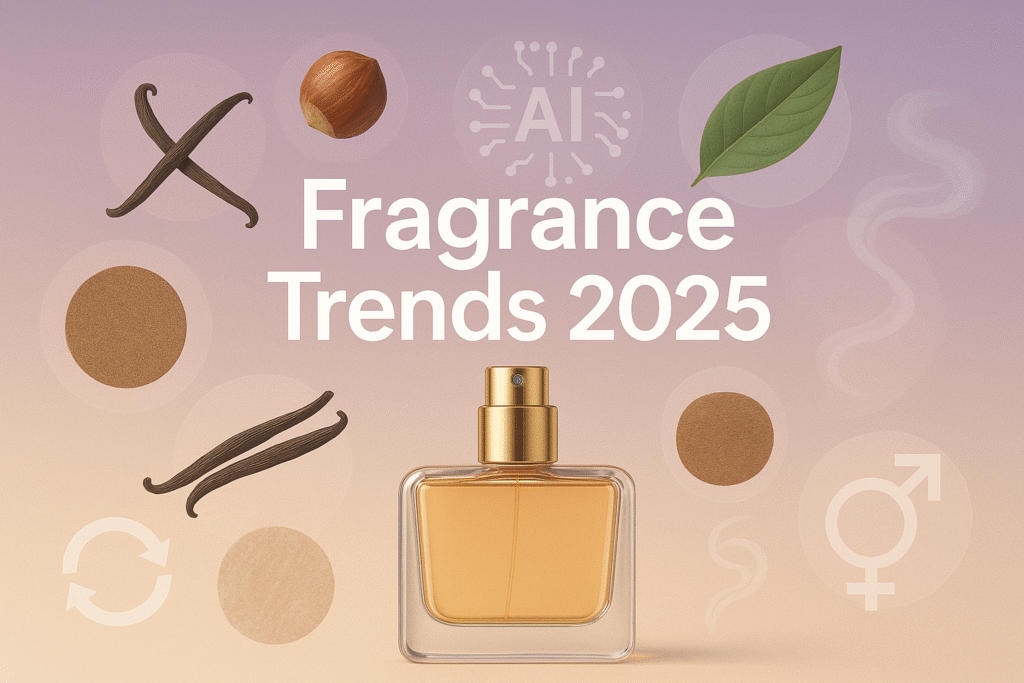

1. Neo Gourmand 2.0 – Dessert Gets Sophisticated

Classic cupcake sweetness is out; think roasted hazelnut praline laced with saffron or salty caramel spiked with black sesame. Search interest for “gourmand perfume” is forecast to jump +33.9 % in 2025 while editors tout “refined gourmands” as the season’s hero category. (Byrdie, 福布斯)
FY angle: Blend lactonic milks with browned‑butter maltol or savory miso facets to win adult palates without cloying sugar highs.


2. Vanilla Suede & Comfort Woods

Febreze crowned Vanilla Suede its Scent‑of‑the‑Year: a plush mix of smoked vanilla, mahogany and golden amber — signalling that “comfort notes” are scaling from home care into fine fragrance. (febreze.com, Happi)
FY angle: Pair biotech vanillin with trace smoky guaiacol for air‑care, or with cashmeran for fabric softeners aimed at the premium‑cozy segment.


3. Functional Fragrances for Emotional Well‑Being

“Wear your mood” is the new dress code. Functional compositions promise calm (cedar‑lavender), focus (sage‑peppermint) or energy (citrus‑ginger) and dominate lifestyle media round‑ups. (Cosmopolitan, Free Yourself)
FY angle: Leverage micro‑encapsulated aromachology blends in laundry beads so every tumble releases a stress‑soothing accord.


4. Tea Tones & Verdant Botanicals

Green‑tea, iced‑matcha and dewy herb facets refresh an overheated gourmand market. Community chatter on Reddit and TikTok confirms tea scents are “already on the rise.” (Byrdie, Reddit)
FY angle: Marry gyokuro absolute with cucumber aldehydes for RTD‑beverage flavors or “spa‑clean” air‑freshener spritzes.


5. AI‑Powered, Hyper‑Personalised Perfume

From Olfactory Intelligence algorithms that design novel molecules to TikTok data mining that predicts next week’s viral note, tech is fracturing the one‑scent‑fits‑all era. (Marie Claire UK, 巴黎化妆, Generation by Osmo)
FY angle: Feed FY’s GC‑MS library into generative models to auto‑prototype accords that match a client’s brand DNA within hours.


6. Upcycled & Biotech Sustainability

Lab‑grown musk, fermented rose ketones and citrus peels upcycled from juice factories are becoming table stakes; SIMPPAR 2025 spotlighted circular supply chains as the #1 ingredient trend. (Vogue Arabia, Perfumer & Flavorist, Petite Histoire)
FY angle: Highlight FY’s ethanol‑free, carbon‑neutral sandalwood lactone produced via white‑biotechnology on product sheets.


7. Genderless “Skin Scents” & Minimalism

Unisex juices now command ≈40 % of premium sales, blending soft woods, sheer musks and transparent florals that read more “you” than “perfume.” (onscent.com, Lèlior)
FY angle: Develop low‑diffusion, ISO‑E‑Super‑rich bases for body‑care lines targeting Gen Z’s inclusive mindset.


8. Maximalist Virality & #PerfumeTok

At the other extreme, OTT power‑houses—beast‑mode ouds, boozy cherries—explode on TikTok, driving sell‑outs within days. Publishers cite social data as a primary creative brief for 2025 launches. (Generation by Osmo, Perfumer & Flavorist, Refinery29)
FY angle: Coordinate launches with influencer seeding, then retarget viral SKUs in display ads where AdSense CPMs peak.


9. Multi‑Placement Layering & Hair Perfumes

Consumers are spraying fragrance‑infused mists onto hair and fabrics for longer sillage; Google searches for “hair perfume” have surged alongside specialized low‑alcohol formulas. (太阳报)
FY angle: Offer silicone‑free, quaternary‑compatible fragrance bases that condition strands while scenting them.


10. Incense, Moss & “Medieval Modern” Nostalgia

Earthy incense sticks, moss‑laden chypres and candlelit cathedral vibes answer the crave for grounding ritual. Online forums predict violet, cocoa butter and plum as key accessories to this mood. (Reddit, Marie Claire)
FY angle: Craft incense/amber accords with sustainable oakmoss substitutes for candle and diffuser lines aimed at the “slow living” aesthetic.


How FY Can Capitalise

Action Timeline Expected Impact
Launch Neo Gourmand sample kit (4 accords) Q3 2025 Capture R&D briefs from confectionery & niche perfume clients
Pilot AI‑assisted co‑creation portal Q4 2025 Reduce concept‑to‑submission cycle by 40 %
Switch 30 % of palette to biotech/upcycled feedstocks 2026 Strengthen ESG pitch; support premium pricing

Call‑to‑Action

Need a trend‑ready, custom scent or flavor? Contact FY’s innovation team for complimentary ideation or request our “2025 – 2026 Trend Deck” PDF.
Similar Posts

  • Discover the future of fragrance formulation as we explore the balance between natural and synthetic ingredients. Learn how these choices affect scent and sustainability.

    Discover the future of fragrance formulation as we explore the balance between natural and synthetic ingredients. Learn how these choices affect scent and sustainability. Fragrance formulation is an art and science. It blends natural and synthetic ingredients to create unique scents. The balance between these ingredients is crucial. It affects not only the scent but…

  • Exploring the World of Aroma Chemicals

    Exploring the World of Aroma Chemicals Aroma chemicals are everywhere, yet often go unnoticed. They are the unsung heroes behind the scents and flavors we love. These compounds are crucial in creating fragrances and flavors in countless products. From perfumes to food, they play a vital role. Aroma chemicals can be natural or synthetic. Synthetic versions are more common due to their consistency and cost-effectiveness. The fragrance industry relies heavily on these chemicals. They ensure that scents are long-lasting and consistent across products. Flavoring agents, another type of aroma chemical, enhance the taste of food and beverages. They make our favorite treats even more enjoyable. The history of aroma chemicals is rich and fascinating. Ancient civilizations used natural extracts for scenting, laying the groundwork for modern perfumery. Today, the balance between natural and synthetic ingredients is key. This balance creates unique fragrance profiles that captivate our senses. As we explore the world of aroma chemicals, we uncover their impact on our daily lives. They shape our experiences and evoke emotions, making them indispensable.   What Are Aroma Chemicals? Aroma chemicals are specialized compounds used in creating scents and flavors. They are the building blocks of fragrance and flavor industries, essential in many products. These compounds can be derived from both natural and synthetic sources. Natural aroma compounds are extracted from plants or animal products, while synthetic ones are manufactured in labs. Synthetic aroma chemicals offer several advantages. They provide consistency, purity, and often a more cost-effective solution than their natural counterparts. Aroma chemicals are utilized in various applications. This includes perfumes, cosmetics, food products, and even cleaning supplies. They are selected based on their ability to enhance the user experience. Common uses of aroma chemicals include: Perfumes: creating distinctive and lasting scents. Food and beverages: enhancing flavors. Household products: masking odors. Cosmetics: adding pleasant fragrances. The science behind aroma chemicals is complex, involving intricate molecule interactions. This fascinating chemistry allows them to mimic natural scents effectively. A key aspect of their success lies in their ability to evoke emotions and trigger memories. This emotional connection is why aroma chemicals are so effective in marketing.   The History and Evolution of Aroma Chemicals The use of aroma chemicals can be traced back to ancient civilizations. Early societies used natural extracts for incense and personal scenting. During the Renaissance, advances in distillation improved the extraction of aromatic compounds. This period saw the rise of perfumery in Europe, laying the groundwork for modern developments. The 19th century marked a significant shift. Synthetic production techniques expanded the palette of available scents. This innovation revolutionized the industry, leading to mass-market fragrances. In the 20th century, chemistry and technology advanced further. New methods allowed for complex fragrance compositions, combining both natural and synthetic ingredients. Key milestones in aroma chemicals’ evolution include: Ancient times: Use of natural extracts. Renaissance: Improved distillation techniques. 19th century: Introduction of synthetic aroma compounds. 20th century: Complex fragrance formulations. The evolution of aroma chemicals reflects broader trends in science and technology. It has continually adapted to consumer preferences and industry demands. Today, the focus is on sustainability and innovation. Efforts are underway to create eco-friendly processes and new, sustainable aroma compounds. by Emile Mbunzama (https://unsplash.com/@emilembunzama) Natural vs. Synthetic Aroma Chemicals Aroma chemicals can be either natural or synthetic. Each type offers unique attributes and advantages in fragrance and flavor production. Natural aroma compounds are derived from plant and animal sources. Essential oils and extracts provide natural scent profiles. These compounds are often favored for their purity and aromatic qualities. Synthetic aroma chemicals, however, are created in laboratories. They replicate both familiar and novel scents. This method allows for cost-effective production and greater scent variety. Choosing between natural and synthetic aromas involves several considerations. Factors include cost, availability, scent longevity, and consumer preferences. Many products today blend both types for optimal results. Key differences between natural and synthetic aroma chemicals include: Natural: Sourced from plants and animals. Synthetic: Lab-created, often more consistent and durable. Scent Profile: Natural for purity, synthetic for variety. Cost: Natural can be pricier; synthetic is more economical. Availability: Natural sources can be limited. The balance between these two forms of aroma chemicals is crucial. It influences fragrance formulation and appeals to diverse consumer needs. Ultimately, the choice depends on the desired product attributes and market trends. Both natural and synthetic types continue to play vital roles in the industry. by Ela De Pure (https://unsplash.com/@eladepure) Key Types of Fragrance Compounds and Flavoring Agents Fragrance compounds are essential elements in perfumery and flavoring. They provide unique scent and taste profiles, enhancing product appeal. Esters are a common type of fragrance compound. They offer fruity and floral scents. Widely used in perfumes, they provide fresh, sweet aromas. Aldehydes are another vital group. They contribute to fresh and citrusy scents. Found in many household and personal care products, they bring a lively aroma. Ketones are notable for their versatility. They range from sweet to woody scents. Ketones add depth and complexity to many fragrances and flavors….

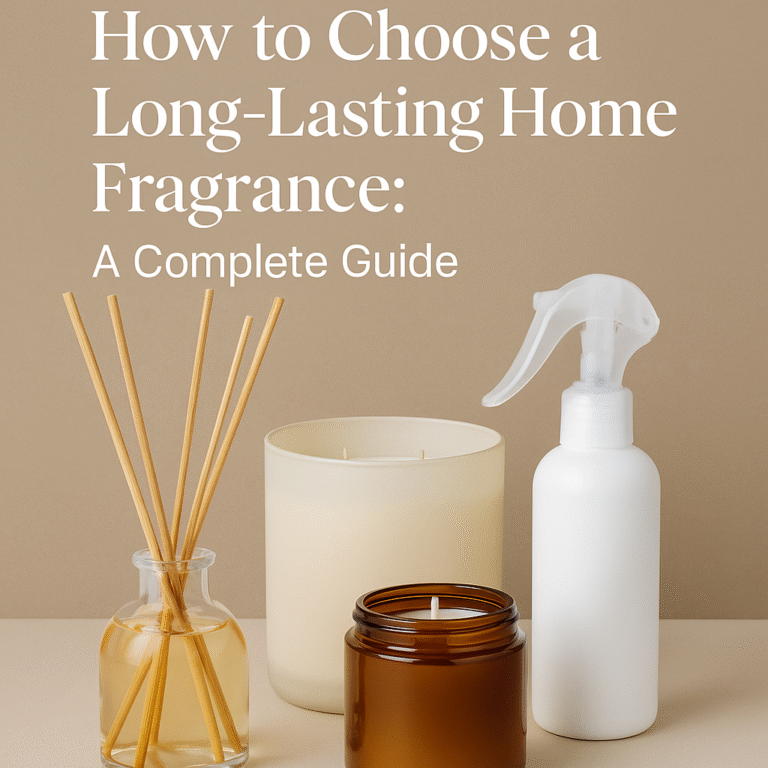
  • How to Choose a Long-Lasting Home Fragrance: A Complete Guide

    How to Choose a Long-Lasting Home Fragrance: A Complete Guide Introduction: Why Home Fragrance Matters A well-chosen home fragrance can transform your living space, elevate your mood, and express your personal style. Beyond simply masking odors, scents can soothe, energize, or bring back fond memories. As consumer awareness grows, long-lasting home fragrances have become more…

  • Perfumers: The Art and Science Behind Every Scent

    Perfumers: The Art and Science Behind Every Scent How creativity, chemistry, and compliance shape modern fragrances Introduction A perfumer—often called a nose—designs fragrances that are emotionally resonant, technically robust, and legally compliant. Beyond poetic accords and brand storytelling, modern perfumers operate at the intersection of sensory art, analytical chemistry, and regulatory science. They balance natural…

  • The Flavorful World: Exploring the Essence of Taste

    Flavor is a sensory experience that combines taste, smell, and texture to create a perception of food or drink. It’s a multi-dimensional concept that goes beyond simple taste, encompassing a complex interplay of sensations that can evoke memories, emotions, and cultural connections. Taste: The basic tastes—sweet, sour, salty, bitter, and umami—are detected by taste buds…

  • The Evolution of Fragrances: Tracing the Aromatic Journey Through Time

    The world of fragrances has experienced a remarkable transformation over the centuries, evolving from ancient rituals to sophisticated products in the modern beauty industry. This article explores the rich history and dynamic changes in the art of perfumery, reflecting cultural, technological, and artistic shifts. Ancient Beginnings and Royal Decrees Fragrances date back to ancient civilizations…

Fikr bildirish