The Benefits of Synthetic Fragrances in Commercial Products
The Benefits of Synthetic Fragrances in Commercial Products
Introduction
Fragrance plays a powerful role in shaping how consumers perceive and interact with products. From the refreshing scent of a citrus dishwashing liquid to the soothing aroma of a lavender-scented fabric softener, fragrance transforms ordinary products into memorable sensory experiences. For many consumers, scent is not just an added feature—it is a critical factor in product selection, loyalty, and emotional connection.
In the commercial world, fragrance is more than just a luxury; it is a strategic tool. Brands across household care, personal care, cosmetics, and even home ambiance products rely heavily on fragrances to differentiate their offerings in crowded markets. While natural fragrances derived from flowers, herbs, and essential oils have their place, synthetic fragrances have become indispensable in modern product development.
Synthetic fragrances are not simply “cheap replacements” for natural scents. They are scientifically designed aroma compounds that offer unique benefits—stability, cost-effectiveness, sustainability, and creativity. These advantages make synthetic fragrances one of the most valuable innovations in the fragrance and flavor industry, especially for manufacturers and B2B buyers seeking to optimize cost, ensure product consistency, and appeal to consumers at scale.
This article will explore the major benefits of synthetic fragrances in commercial products, their role in different industries, and why they are vital for global brands competing in today’s market.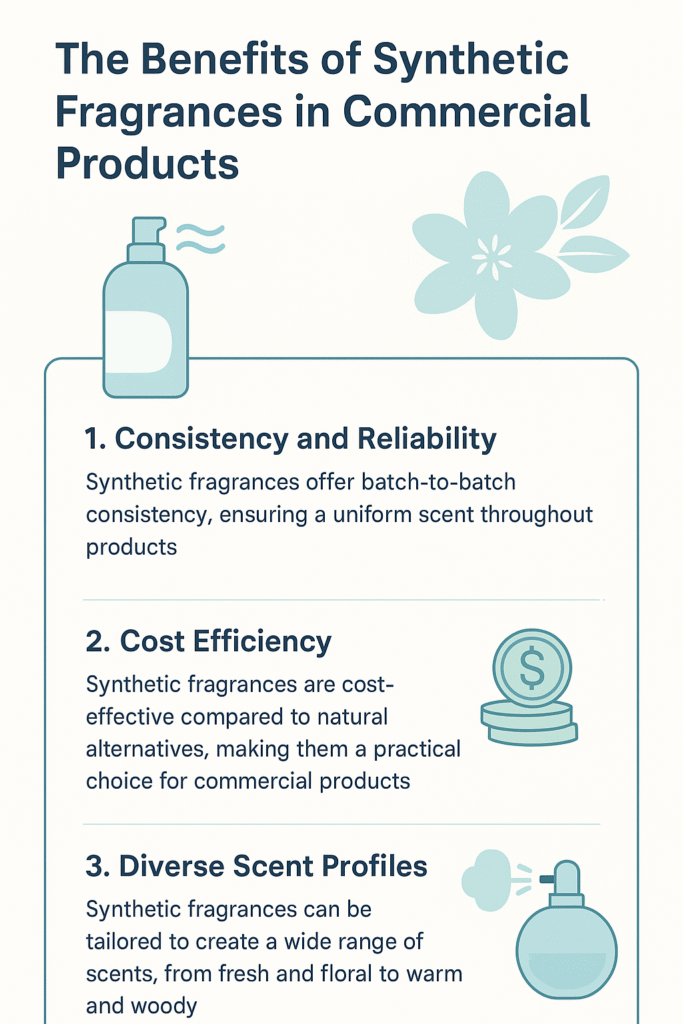
1. The Importance of Synthetic Fragrances in Commercial Applications
1.1 Consistency and Reliability
One of the most critical advantages of synthetic fragrances is batch-to-batch consistency. Natural raw materials such as rose petals, jasmine flowers, or sandalwood are subject to seasonal changes, climate variations, and supply disruptions. This means that natural fragrance oils may vary in intensity, profile, or availability. For a global brand manufacturing millions of bottles of shampoo or laundry detergent every year, such inconsistency can lead to uneven consumer experiences.
Synthetic fragrances, however, are created under controlled laboratory conditions. This allows manufacturers to reproduce the exact same fragrance profile repeatedly, ensuring that every unit of product smells identical. For brands, this consistency is crucial to maintaining consumer trust and strengthening brand identity.
1.2 Cost Efficiency
From a commercial standpoint, cost is always a significant consideration. Natural fragrance extraction often requires large amounts of raw material. For example, producing just 1 kilogram of rose oil requires 3 to 4 tons of rose petals. Such processes are labor-intensive, resource-heavy, and costly.
Synthetic fragrances provide a much more cost-effective solution. Since they are chemically synthesized, they can be produced at scale with predictable pricing. This cost reduction allows brands to invest more in marketing, packaging, and product innovation, while still delivering pleasant fragrances to their consumers. For B2B buyers, synthetic fragrances make it possible to maintain competitive pricing without sacrificing product quality.
1.3 Innovation and Diversity of Scents
One of the most exciting aspects of synthetic fragrances is their limitless creative potential. While natural sources provide a wide range of aromas, they are inherently limited to what exists in nature. Synthetic chemistry allows perfumers and fragrance houses to go beyond nature and create entirely new, unique scent molecules that would be impossible to extract from natural resources.
This capability is particularly valuable for brand differentiation. For instance, a home care company may want a signature scent that becomes instantly recognizable, setting its products apart from competitors. Synthetic fragrance design allows companies to create exclusive, trademarked scent identities that cannot be easily replicated.
2. Key Advantages of Synthetic Fragrances
2.1 Supply Chain Stability
Unlike natural fragrance oils that depend on agriculture and harvest cycles, synthetic fragrances are produced in controlled environments, ensuring year-round supply stability. This makes them less vulnerable to price fluctuations caused by droughts, political instability in growing regions, or global logistics disruptions.
For international brands supplying multiple regions, this stability reduces the risk of production delays and supply shortages, ensuring smoother operations and better forecasting.
2.2 Regulatory and Safety Compliance
Contrary to common misconceptions, synthetic fragrances are not “unsafe.” In fact, many synthetic molecules are designed to be safer and more predictable than their natural counterparts. For example, some natural oils may contain allergens or irritants that are difficult to remove. Synthetic versions can be engineered to reduce or eliminate such risks.
Synthetic fragrances are subject to rigorous global regulatory standards such as:
- IFRA (International Fragrance Association) guidelines
- REACH (Registration, Evaluation, Authorisation and Restriction of Chemicals) in the European Union
- FDA and EPA regulations in the United States
Compliance with these standards ensures that synthetic fragrances meet strict safety requirements, protecting both consumers and brands from potential health risks or legal liabilities.
2.3 Sustainability and Environmental Benefits
Sustainability is an increasingly important concern for both consumers and manufacturers. Harvesting natural raw materials for fragrance can place pressure on ecosystems, particularly when it involves endangered plants such as sandalwood or oud. Overharvesting not only threatens biodiversity but also raises ethical concerns.
Synthetic fragrances offer a sustainable alternative, reducing dependence on fragile ecosystems. By replicating the aroma of rare natural ingredients, synthetic fragrances help protect biodiversity while still delivering desirable scents. In addition, synthetic fragrance production requires less land, water, and energy compared to large-scale agricultural extraction.
3. Common Applications of Synthetic Fragrances
3.1 Household Cleaning Products
Fragrance is essential in household care, not only to provide a pleasant scent but also to mask chemical odors. Products such as:
- Laundry detergents
- Dishwashing liquids
- Floor cleaners
- Air fresheners
heavily rely on synthetic fragrances for their long-lasting freshness. Synthetic compounds also ensure that the fragrance remains stable even in harsh cleaning formulas containing surfactants, bleaches, or antibacterial agents.
3.2 Personal Care and Cosmetics
Consumers choose personal care products based on scent as much as functionality. Synthetic fragrances are widely used in:
- Shampoos and conditioners
- Body washes and soaps
- Skin creams and lotions
- Deodorants
In these categories, synthetic fragrances provide better longevity, resistance to heat or light, and a more diverse palette of scent options, from fruity and floral to woody and musky.
3.3 Home Ambiance Products
The booming home fragrance market—candles, reed diffusers, room sprays, and fragrance beads—relies heavily on synthetics for their stable burn profiles and diffusion qualities. Unlike some natural oils that degrade when exposed to heat, synthetics are engineered to maintain their aroma under various conditions, making them ideal for home ambiance applications.
3.4 Beyond Consumer Products
Synthetic fragrances are also making their way into experiential marketing and brand environments. Retail stores, hotels, and airlines use signature synthetic fragrances to create unique sensory experiences that reinforce brand loyalty. In such cases, consistency and scalability—key strengths of synthetics—are non-negotiable.
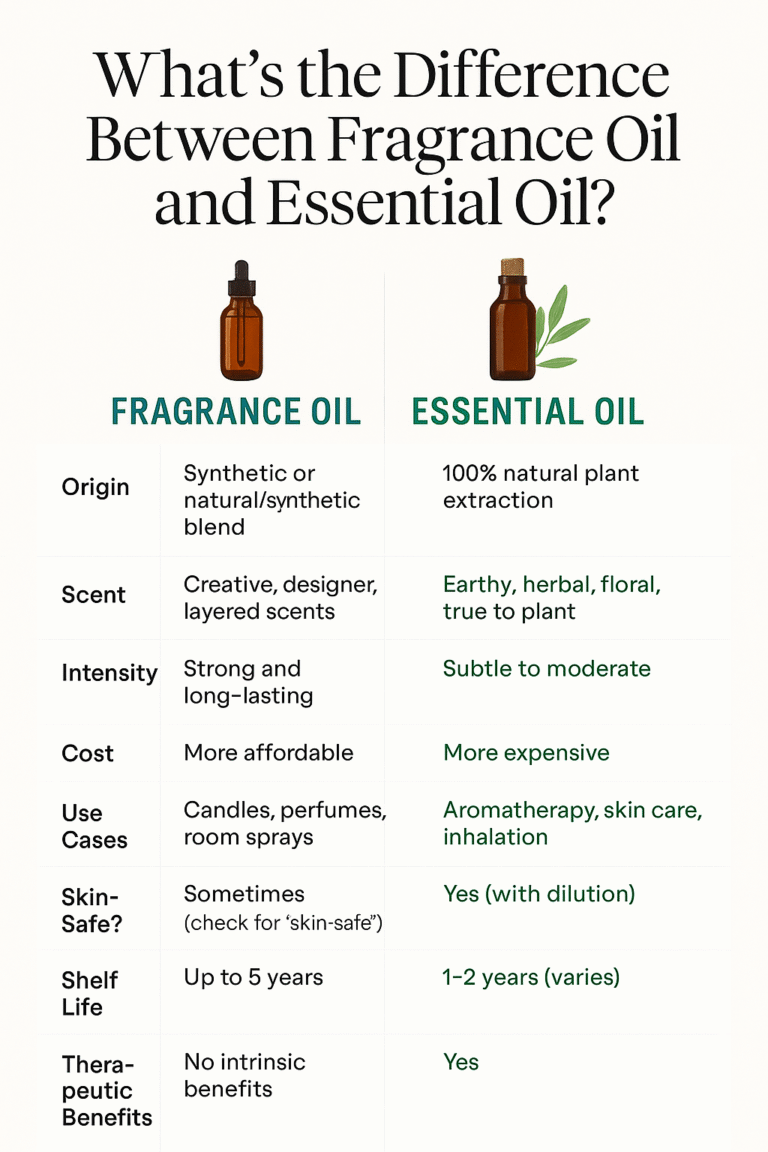
4. Synthetic vs. Natural Fragrances: A Comparison
| Feature | Synthetic Fragrance | Natural Fragrance |
|---|---|---|
| Cost | Affordable and scalable | Expensive due to resource needs |
| Consistency | Uniform, controlled production | Variable due to climate and harvest |
| Innovation | Unlimited creative possibilities | Limited to existing natural sources |
| Sustainability | Reduces pressure on ecosystems | May involve overharvesting |
| Safety Control | Can be designed allergen-free | May contain natural allergens |
For most commercial applications, synthetic fragrances provide a superior balance of performance, cost, and innovation, while natural fragrances remain popular in niche, luxury, and artisanal products.
5. Industry Trends and Future Outlook
The fragrance industry continues to evolve with technology, and synthetic fragrances are at the forefront of innovation. Key trends shaping the future include:
- Green Chemistry & Bio-based Fragrances: Using renewable resources and biotechnological processes to create synthetic molecules with a lower environmental footprint.
- Hybrid Formulations: Blending synthetic and natural ingredients to achieve the best of both worlds—authentic natural aromas enhanced with synthetic stability.
- Consumer Perception Shifts: As consumers become more educated about sustainability and safety, the stigma around synthetic fragrances is fading. Transparency in labeling and storytelling will further improve acceptance.
- Customization and Digital Scent Technology: Advances in AI and biotechnology are enabling brands to design personalized fragrance experiences, which often rely on synthetics for precision and scalability.
Conclusion
Synthetic fragrances are not merely substitutes for natural scents—they are essential building blocks of the modern fragrance industry. Their advantages in consistency, cost-efficiency, innovation, sustainability, and regulatory compliance make them indispensable for commercial products across household care, personal care, home ambiance, and beyond.
For businesses, especially in the B2B sector, synthetic fragrances offer a strategic edge: they enable scalable production, secure supply chains, and unique brand differentiation. As consumer expectations grow and sustainability becomes a central focus, synthetic fragrances will continue to play a vital role in shaping the future of commercial products.
By embracing synthetic fragrances responsibly, companies can not only meet global demand more effectively but also create memorable, safe, and sustainable fragrance experiences that resonate with consumers worldwide.
🔹 FAQ
Q1: What are synthetic fragrances?
Synthetic fragrances are lab-created aromatic compounds designed to mimic or enhance natural scents. They are widely used in commercial products such as detergents, shampoos, cosmetics, and air fresheners for consistent and long-lasting scent performance.
Q2: Why are synthetic fragrances preferred in commercial products?
They are cost-effective, stable, and highly versatile. Unlike natural extracts, synthetic fragrances maintain consistent quality and performance, even under high heat, strong chemicals, or long storage periods.
Q3: Are synthetic fragrances safe to use?
Yes. Reputable manufacturers comply with global regulations such as IFRA (International Fragrance Association) and REACH (Registration, Evaluation, Authorisation and Restriction of Chemicals) to ensure safety for consumers and the environment.
Q4: How do synthetic fragrances support sustainability?
By reducing the reliance on natural raw materials such as flowers, wood, and resins, synthetic fragrances help protect biodiversity and ecosystems. They also allow scalable production with a lower environmental footprint.
Q5: What industries benefit most from synthetic fragrances?
Key industries include home care (detergents, fabric softeners, air fresheners), personal care (cosmetics, soaps, shampoos), and industrial products where long-lasting, durable scents are required.
Q6: Can synthetic fragrances replicate luxury perfume scents?
Yes. Advanced aroma chemistry enables manufacturers to replicate high-end perfume notes at lower costs, making premium fragrance experiences more accessible across various product categories.